
WHI low-fat diet,
does it really help with Reduced invasive breast-cancer incidence in postmenopausal women?
research showsThe grade is D. WHI randomized 48,835 postmenopausal women. Over a mean 8.1 years, invasive breast cancer occurred in 655 intervention participants and 1,072 comparison participants. The primary HR was 0.91 (95% CI 0.83 to 1.01; P=.09). Prevention superiority was not established, although up to a 17% lower hazard remained compatible with the data, giving D with 34 points.
ads claimThe dietary fat reduction is real, but it cannot be converted into proven breast-cancer prevention when the primary event endpoint was null.
Useful facts when choosing a product
- At year 1, fat intake was 24.3% versus 35.1% of energy.
- At year 6, the between-group fat-intake difference remained about 8.1 to 8.2 percentage points.
- The behavioral intervention had no calorie restriction or weight-loss target, and the weight difference was small.
- The intervention bundled lower fat with more fruits, vegetables, and grains, so it does not isolate fat alone.
- Verdict 1719 is D with 22 points for breast self-examination and breast-cancer mortality; this verdict concerns a dietary pattern and new invasive cancer incidence.
Chamgap Semantic Classification Code
Candidate index · review held
D.whi-low-fat-dietary-pattern.dietary.invasive-breast-cancer-incidence.reduce.UNKDietary patterns and eating practices > WHI low-fat dietary pattern > Dietary regimen > invasive breast-cancer incidence > Reduction claim > Unknown
An automated migration candidate, not an issued permanent code; exact claim scope remains under review. This machine-generated migration candidate helps retrieval but is not a permanent assignment. The original verdict ID and URL remain authoritative.
What the research actually shows
WHI randomized 48,835 postmenopausal women aged 50 to 79: 19,541 to the low-fat pattern and 29,294 to usual diet, with intention-to-treat analysis. Targets were no more than 20% of energy from fat, at least five daily fruit and vegetable servings, and at least six grain servings. At year 1, FFQ estimates were 24.3% versus 35.1% energy from fat; separation remained about 8.1 to 8.2 percentage points at year 6. Missing the 20% target was an avoidable intervention-fidelity limitation, but differences of about 10.7 points at year 1 and 8.1 to 8.2 points at year 6 preserved a valid comparison. This behavioral intervention had no calorie restriction or weight-loss target, and the weight difference was small. Recruitment began in 1993, while registration was submitted in 1999. Invasive breast cancer was objectively and centrally adjudicated, so inability to blind diet was not counted separately. NHLBI funded the trial, and authors disclosed pharmaceutical employment, research funding, and consulting relationships.
Why this is classified as D (34)
A very large, long, publicly funded trial had a null primary endpoint while retaining possible benefit, giving D with 34 points.
Counterpoint. D does not mean the pattern is harmful; it means this cancer-prevention claim was not established.
Rejudgment record. Cross-check applied — Failure of the WHI invasive breast-cancer primary endpoint with a confidence interval still allowing benefit
| Endpoint | H | Hard endpoint - actual events such as death |
| Replication | R1 | Single confirmatory trial |
| Independence | I2 | Decisive evidence is publicly or non-profit funded |
| Effect size | E0 | Null |
| Precision | C0 | The confidence interval leaves room for benefit |
Stored derived and displayed grades match; this is not a current recalculation or validity check (D).
Sub-claim grades by effect
This ingredient is marketed for several effects. A single overall grade blends strong and weak claims together, so each effect is graded separately here. The overall grade reflects the strongest disconfirming or core claim.
| Effect (sub-claim) | Grade | Basis |
|---|---|---|
| Reduced invasive breast-cancer incidence | D | The 95% confidence interval for HR 0.91 included 1. |
Cross-check — AI research and Codex final gate
Evidence Table
| Study | Design | Sample | Funding | Endpoint | Result | Weight |
|---|---|---|---|---|---|---|
| Prentice RL et al. 2006 WHI Dietary Modification Trial | Large long-term randomized dietary trial | 48,835 randomized and analyzed (19,541/29,294) | US National Heart, Lung, and Blood Institute | Primary endpoint of invasive breast-cancer incidence | 655 versus 1,072 events, HR 0.91 (95% CI 0.83 to 1.01), P=.09 | Decisive hard-outcome evidence |
| WHI 1993-2005 protocol | Prespecified trial protocol | Approximately 48,000 planned for dietary modification | US National Heart, Lung, and Blood Institute | Incidence of invasive breast and colorectal cancer | Prespecified both cancer-incidence outcomes as major dietary-modification objectives | Confirms endpoint prespecification |
Receipt — 1 References
All 1 cited sources were verified for existence at the original page (as of 2026-08-04).
Final verification and publication gate: Codex · Evidence date: 2026-08-04 · Corrections: none
Cite this verdict
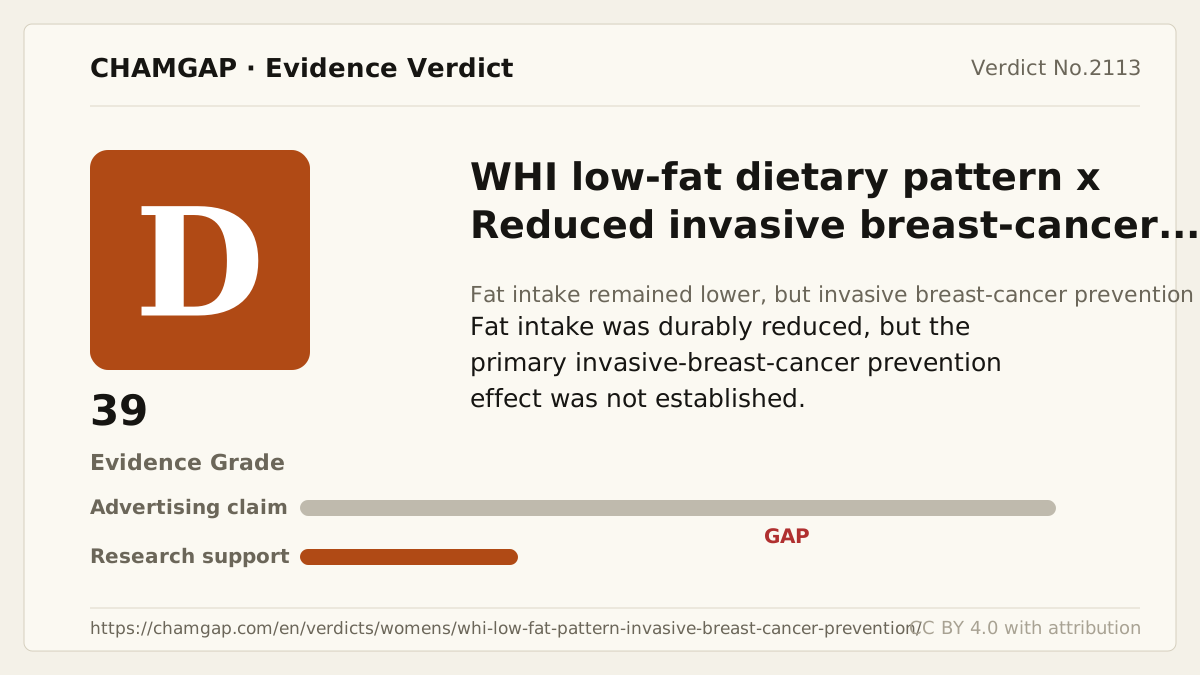
[Chamgap] WHI low-fat diet x prevention of invasive breast cancer — Evidence Grade D·34. 1 cited sources checked. Source: https://chamgap.com/en/verdicts/womens/whi-low-fat-pattern-invasive-breast-cancer-prevention/ · CC BY 4.0CC BY 4.0 — free to use with attribution; do not distort grades, numbers, or verdict meaning.
What this document does and does not do
Chamgap is an information source. It reports what research has and has not confirmed; it does not tell readers what to take or buy. That decision belongs to readers and, when needed, medical or legal professionals. This verdict reflects literature available up to the search date and may change as new research appears. Nothing here is medical advice.