
Tamoxifen,
does it really help with Reduced recurrence and breast-cancer mortality after surgery for estrogen-receptor-positive early breast cancer?
research showsTamoxifen has grade A evidence for reducing both recurrence and breast-cancer mortality after surgery for estrogen-receptor-positive early breast cancer. The EBCTCG individual-participant meta-analysis of 20 randomized trials and 21,457 patients found that about five years of treatment substantially reduced recurrence during the first ten years among 10,645 patients with estrogen-receptor-positive disease, while breast-cancer mortality was about one third lower throughout the first 15 years. The absolute 15-year risk of breast-cancer death fell from 33% to 24%, a hard clinical endpoint. The manufacturer-concentration ceiling does not apply to large prescription-drug trials with hard endpoints. Endometrial cancer, venous thromboembolism, hot flashes, and cataracts remain separate safety issues.
ads claimAs a prescription endocrine cancer therapy, tamoxifen is not ordinarily marketed directly as a consumer wellness product, but explanations can still turn reduced recurrence risk into an implied guarantee that recurrence will never occur. The evidence shows a large population-level risk reduction in estrogen-receptor-positive disease, not complete prevention for each individual or comparable efficacy in estrogen-receptor-negative disease.
Useful facts when choosing a product
- Tamoxifen citrate is a prescription selective estrogen receptor modulator available as Nolvadex-associated and generic products. The specific dispensed product and prescribing instructions take priority.
- A common adjuvant regimen for early breast cancer provides 20 mg of tamoxifen daily, but duration and switching to another endocrine therapy depend on menopausal status, recurrence risk, and tolerability.
- Abnormal vaginal bleeding, unilateral leg pain or swelling, sudden chest pain or breathlessness, neurologic symptoms, or visual change require assessment for uterine disease, thromboembolism, stroke, or ocular complications.
- Tamoxifen can harm a fetus, and drug interactions together with hepatic and hematologic status require review. Patients should not stop or alter the dose without their oncology team.
Chamgap Semantic Classification Code
Candidate index · review held
M.tamoxifen-citrate.UNK.recurrence-and-breast-cancer-mortality-after-surgery-for-estrogen-receptor-positive-early-breast-cancer.reduce.UNKMedicinal interventions > Tamoxifen citrate > Unknown > recurrence and breast-cancer mortality after surgery for estrogen-receptor-positive early breast cancer > Reduction claim > Unknown
An automated migration candidate, not an issued permanent code; exact claim scope remains under review. This machine-generated migration candidate helps retrieval but is not a permanent assignment. The original verdict ID and URL remain authoritative.
What the research actually shows
The 2011 EBCTCG analysis followed individual participants from 20 randomized trials of about five years of tamoxifen versus no adjuvant tamoxifen. Reductions in recurrence during the first ten years and breast-cancer mortality during the first 15 years were broadly consistent across age, nodal status, progesterone-receptor status, and chemotherapy use in estrogen-receptor-positive disease. Estrogen-receptor-negative disease showed little or no benefit, making receptor positivity an essential scope condition. ATLAS subsequently showed that, among 6,846 women with estrogen-receptor-positive disease who had completed five years, continuing to ten years further reduced recurrence and breast-cancer mortality compared with stopping at five years. Treatment duration still requires an individualized balance of recurrence, uterine, and thrombotic risks. Regulatory approval defines conditions of use; the grade comes from randomized long-term hard endpoints.
Why this is classified as A (96)
The individual-participant meta-analysis of 20 randomized trials and 21,457 patients found recurrence rate ratios of 0.53 in years 0 to 4 and 0.68 in years 5 to 9 in estrogen-receptor-positive disease, with breast-cancer mortality rate ratios of about 0.66 to 0.71 through 15 years. The absolute 15-year breast-cancer mortality risk was 33% versus 24%. Independent large long-term hard endpoints support A with 96 points. Endometrial cancer, thromboembolism, hot flashes, and cataracts remain independent safety considerations rather than efficacy downgrades.
Counterpoint. Estrogen-receptor positivity and individual absolute recurrence risk are prerequisites. Menopausal status and comorbidity may make an aromatase inhibitor, ovarian suppression, extension, or switching more appropriate.
Rejudgment record. New verdict — Applied A because an individual-participant meta-analysis of 20 randomized trials and 21,457 patients showed large, consistent reductions in direct recurrence and 15-year breast-cancer mortality endpoints in estrogen-receptor-positive disease; the manufacturer-concentration ceiling does not apply to large prescription-drug hard-endpoint trials
Sub-claim grades by effect
This ingredient is marketed for several effects. A single overall grade blends strong and weak claims together, so each effect is graded separately here. The overall grade reflects the strongest disconfirming or core claim.
| Effect (sub-claim) | Grade | Basis |
|---|---|---|
| Reduced recurrence after surgery for estrogen-receptor-positive early breast cancer | A | Individual data from 20 randomized trials showed a large, consistent recurrence reduction during the first ten years. |
| Reduced breast-cancer mortality after surgery for estrogen-receptor-positive early breast cancer | A | Breast-cancer mortality was about one third lower throughout the first 15 years, with absolute 15-year risk falling from 33% to 24%. |
Cross-check — AI research and Codex final gate
Evidence Table
| Study | Design | Sample | Funding | Endpoint | Result | Weight |
|---|---|---|---|---|---|---|
| Early Breast Cancer Trialists' Collaborative Group (EBCTCG). 2011 | Individual-participant meta-analysis of 20 randomized trials | 21,457 patients with early breast cancer; 10,645 with estrogen-receptor-positive disease | Public and nonprofit support from Cancer Research UK, the British Heart Foundation, and the UK Medical Research Council | Recurrence and breast-cancer mortality over 15 years | In estrogen-receptor-positive disease, recurrence rate ratios were 0.53 in years 0 to 4 and 0.68 in years 5 to 9; breast-cancer mortality rate ratios were 0.66 to 0.71 across years 0 to 14. Absolute 15-year breast-cancer mortality was 24% versus 33%. | Core large independent hard-endpoint evidence |
| Davies C et al.; ATLAS Collaborative Group. 2013 | International randomized open controlled trial | 12,894 participants overall; 6,846 in the estrogen-receptor-positive analysis | Public support including Cancer Research UK and the UK MRC, with partial support from AstraZeneca UK | Recurrence, breast-cancer mortality, and all-cause mortality when continuing from five to ten years | In estrogen-receptor-positive disease, continuing to ten years further reduced recurrence, 617 versus 711 events, and breast-cancer deaths, 331 versus 397, compared with stopping at five years. | Large hard-endpoint randomized trial supporting extended treatment |
Receipt — 3 References
All 3 cited sources were verified for existence at the original page (as of 2026-07-21).
Final verification and publication gate: Codex · Evidence date: 2026-07-21 · Corrections: none
Cite this verdict
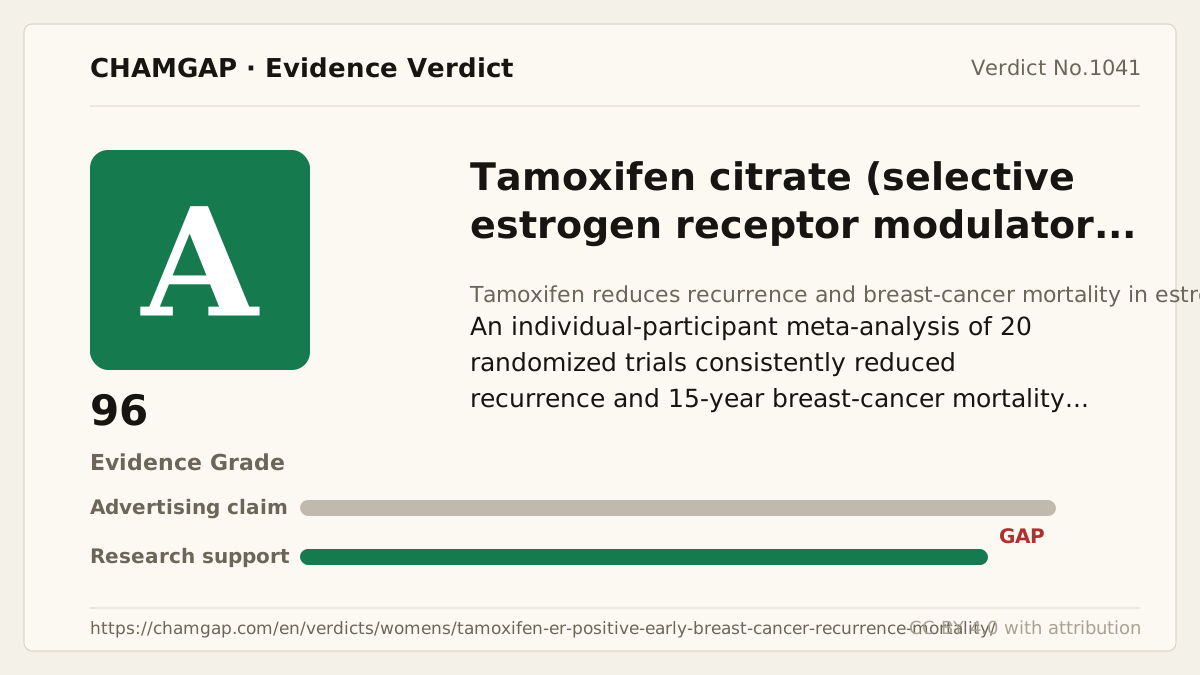
[Chamgap] Tamoxifen x reduced recurrence and breast-cancer mortality in estrogen-receptor-positive early breast cancer — Evidence Grade A·96. 3 cited sources checked. Source: https://chamgap.com/en/verdicts/womens/tamoxifen-er-positive-early-breast-cancer-recurrence-mortality/ · CC BY 4.0CC BY 4.0 — free to use with attribution; do not distort grades, numbers, or verdict meaning.
What this document does and does not do
Chamgap is an information source. It reports what research has and has not confirmed; it does not tell readers what to take or buy. That decision belongs to readers and, when needed, medical or legal professionals. This verdict reflects literature available up to the search date and may change as new research appears. Nothing here is medical advice.