
Vaginal micronized progesterone,
does it really help with Increased live birth in women with unexplained recurrent miscarriage?
research showsVaginal micronized progesterone did not significantly increase live birth across women with unexplained recurrent miscarriage, earning D with 30 points. PROMISE randomized 836 women and found RR 1.04 (95% CI 0.94 to 1.15). Overall PRISM randomized 4,153 and found RR 1.03 (1.00 to 1.07), with an absolute-difference CI of minus 0.4 to 5.0 percentage points. Prior-miscarriage categories of 0, 1 to 2, and at least 3 were prespecified; the at-least-3 subgroup was positive at 72% versus 57%, RR 1.28 (1.08 to 1.51). Because the overall primary endpoint was null, rule ⑤ keeps this as a note rather than an upgrade.
ads claimThe physiological requirement for progesterone is expanded into a proven live-birth treatment for all recurrent miscarriage. Large direct trials did not establish a significant overall primary-endpoint benefit.
Useful facts when choosing a product
- PROMISE used 400 mg vaginally twice daily from soon after pregnancy confirmation through 12 weeks.
- This verdict concerns live birth after unexplained recurrent miscarriage, not preterm-birth prevention with a short cervix.
- Recommendations may differ according to current bleeding and number of previous miscarriages.
Chamgap Semantic Classification Code
Candidate index · review held
M.vaginal-micronized-progesterone.vaginal.live-birth-with-unexplained-recurrent-miscarriage.increase.placeboMedicinal interventions > Vaginal micronized progesterone > Vaginal > live birth with unexplained recurrent miscarriage > Increase claim > Placebo
An automated migration candidate, not an issued permanent code; exact claim scope remains under review. This machine-generated migration candidate helps retrieval but is not a permanent assignment. The original verdict ID and URL remain authoritative.
What the research actually shows
PROMISE randomized 836 women and failed with live-birth RR 1.04 (95% CI 0.94 to 1.15). Overall PRISM randomized 4,153 and failed with RR 1.03 (1.00 to 1.07), with an absolute-difference CI of minus 0.4 to 5.0 percentage points. Prior-miscarriage categories of 0, 1 to 2, and at least 3 were prespecified; the at-least-3 subgroup was positive at 72% versus 57%, RR 1.28 (1.08 to 1.51). Combining all women with any prior miscarriage was post hoc. Even a prespecified subgroup does not upgrade a null overall primary endpoint under rule ⑤, so the subgroup remains a note. Verdict 1374, which is C with 59 points, uses the same formulation for short-cervix preterm-birth prevention, a different indication, and its evidence was not transferred.
Why this is classified as D (30)
PROMISE randomized 836 and analyzed 826, while PRISM randomized 4,153 and analyzed 4,038; both overall live-birth primary endpoints failed. The subgroup does not upgrade the result, and conflicting evidence retains D with 30 points rather than F.
Counterpoint. Pregnancy with current bleeding and previous miscarriage requires separate guideline-based obstetric assessment; this verdict is not a self-treatment instruction.
Rejudgment record. Cross-check applied — Prioritized failed overall primary endpoints in PROMISE and PRISM, kept the prespecified subgroup from upgrading the grade under rule ⑤, and distinguished it from the post hoc combined prior-miscarriage analysis
Sub-claim grades by effect
This ingredient is marketed for several effects. A single overall grade blends strong and weak claims together, so each effect is graded separately here. The overall grade reflects the strongest disconfirming or core claim.
| Effect (sub-claim) | Grade | Basis |
|---|---|---|
| Increased live birth after unexplained recurrent miscarriage | D | The primary endpoint failed in the actual 826-person PROMISE analysis. |
| Increased live birth across women with early-pregnancy bleeding | D | The primary endpoint failed in the overall 4,038-person PRISM analysis. |
| Increased live birth in women with current bleeding and previous recurrent miscarriage | D | Prior-miscarriage categories of 0, 1 to 2, and at least 3 were prespecified; the at-least-3 subgroup was positive at 72% versus 57%, RR 1.28 (1.08 to 1.51), but rule ⑤ keeps it as a note because the overall primary endpoint was null. Combining all women with any prior miscarriage was post hoc. |
Cross-check — AI research and Codex final gate
Evidence Table
| Study | Design | Sample | Funding | Endpoint | Result | Weight |
|---|---|---|---|---|---|---|
| Coomarasamy A et al. 2015 PROMISE | International multicenter double-blind randomized placebo-controlled trial | 836 randomized; actual primary analysis 826 | Public funding from the United Kingdom NIHR Health Technology Assessment program | Live birth after 24 completed weeks | 65.8% versus 63.3%, RR 1.04, P=0.45; primary endpoint failed. | Key direct negative recurrent-miscarriage trial |
| Coomarasamy A et al. 2019 PRISM | Multicenter double-blind randomized placebo-controlled trial | 4,153 randomized; actual primary analysis 4,038 | Public funding from the United Kingdom NIHR Health Technology Assessment program | Live birth after at least 34 weeks of gestation | 75% versus 72%, RR 1.03, P=0.08; overall primary endpoint failed. | Large overall negative trial with subgroup signal |
Receipt — 2 References
All 2 cited sources were verified for existence at the original page (as of 2026-07-24).
Final verification and publication gate: Codex · Evidence date: 2026-07-24 · Corrections: none
Cite this verdict
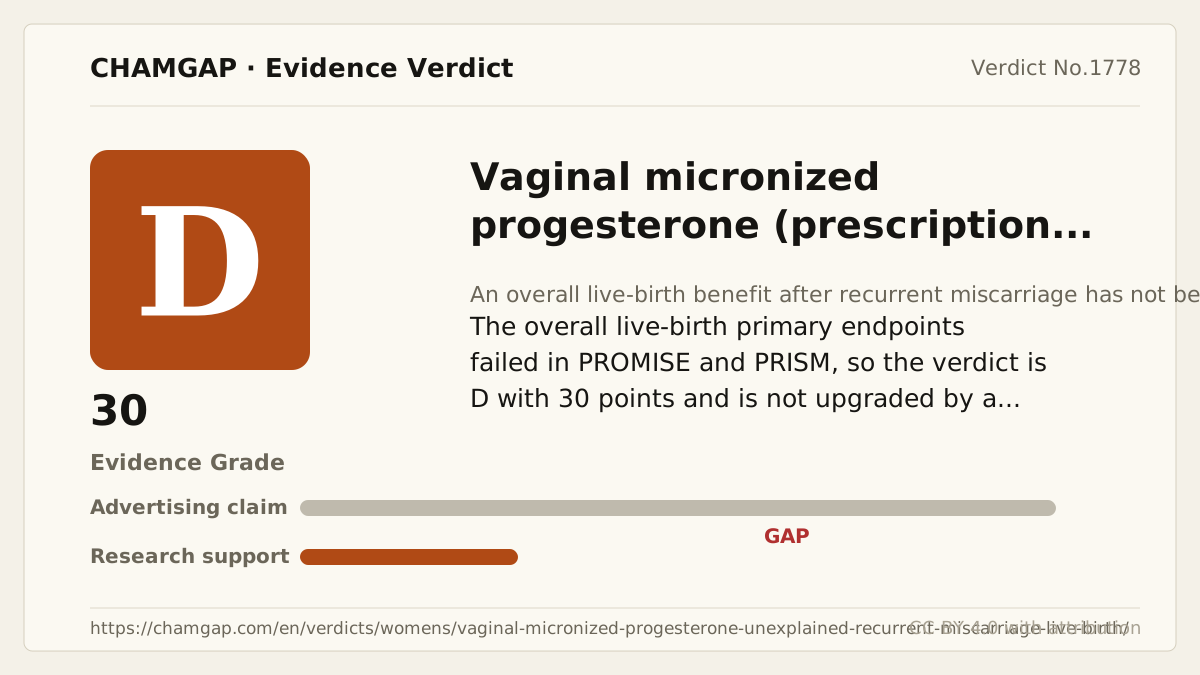
[Chamgap] Vaginal micronized progesterone x increased live birth after unexplained recurrent miscarriage — Evidence Grade D·30. 2 cited sources checked. Source: https://chamgap.com/en/verdicts/womens/vaginal-micronized-progesterone-unexplained-recurrent-miscarriage-live-birth/ · CC BY 4.0CC BY 4.0 — free to use with attribution; do not distort grades, numbers, or verdict meaning.
What this document does and does not do
Chamgap is an information source. It reports what research has and has not confirmed; it does not tell readers what to take or buy. That decision belongs to readers and, when needed, medical or legal professionals. This verdict reflects literature available up to the search date and may change as new research appears. Nothing here is medical advice.