
Vaginal micronized progesterone,
does it really help with Prevention of spontaneous birth before 34 weeks in mid-trimester singleton pregnancy with a short cervix?
research showsVaginal micronized progesterone is rated C. Individual-participant-data (IPD) meta-analysis supports fewer births before 34 weeks in women with a mid-trimester singleton pregnancy and a short cervix, but the large OPPTIMUM trial was null on its primary outcomes, so this conflicting large trial caps the grade. In EPPPIC, nine vaginal-progesterone trials involving 3,769 high-risk singleton pregnancies produced an RR of 0.78 (95% CI 0.68 to 0.90) for birth before 34 weeks, and a separate short-cervix IPD analysis also supported reductions in preterm birth and some neonatal morbidity. The 1,228-participant OPPTIMUM trial found no significant primary obstetric, neonatal, or two-year outcomes. Because the high-quality IPD meta-analysis is positive it is not D, but the coexisting large null trial keeps it below B at the top of C; guidelines still recommend it for a short cervix.
ads claimMarketing may imply that a natural hormone safely prevents preterm birth in every pregnancy. Evidence fits a singleton pregnancy with a mid-trimester short cervix; the same conclusion does not extend to unselected or multifetal pregnancy or to injectable 17-OHPC.
Useful facts when choosing a product
- Micronized progesterone is chemically identical to endogenous progesterone, and trials used differing vaginal capsules, suppositories, gels, and doses.
- Authorization for preterm-birth prevention varies by country and product and may be off-label in Korea, so an obstetric specialist must confirm cervical length, history, formulation, and regimen.
- Vaginal discharge, local irritation, and discomfort can occur, while randomized evidence has not shown a consistent increase in serious maternal or fetal harm.
- Bleeding, suspected membrane rupture, regular contractions, fever, or reduced fetal movement requires urgent obstetric assessment rather than self-adjustment of treatment.
Chamgap Semantic Classification Code
Candidate index · review held
M.vaginal-micronized-progesterone.vaginal.spontaneous-birth-before-in-mid-trimester-singleton-pregnancy-with-a-short-cervix.prevent.placeboMedicinal interventions > Vaginal micronized progesterone > Vaginal > spontaneous birth before in mid-trimester singleton pregnancy with a short cervix > Occurrence-prevention claim > Placebo
An automated migration candidate, not an issued permanent code; exact claim scope remains under review. This machine-generated migration candidate helps retrieval but is not a permanent assignment. The original verdict ID and URL remain authoritative.
What the research actually shows
The EPPPIC Group assembled individual data from 31 progestogen trials and estimated an RR of 0.78 for birth before 34 weeks across nine vaginal-progesterone trials with 3,769 high-risk singleton pregnancies. Other birth and neonatal outcomes were generally favorable but less certain. Romero and colleagues analyzed 974 women with singleton pregnancy and a short cervix, reporting an RR of 0.62 for birth before 33 weeks and lower composite neonatal morbidity and mortality. Norman and colleagues, however, found no significant primary benefit in 1,228 OPPTIMUM participants; the multiplicity-adjusted obstetric OR was 0.86.
Why this is classified as C (59)
IPD meta-analyses found fewer early births and some neonatal benefit in high-risk singleton pregnancy and specifically short cervix, but the null OPPTIMUM trial and population and formulation heterogeneity conflict. Under the principle that conflicting large trials are graded C, the positive meta keeps it above D while the large null trial keeps it below B, giving C with 59 points.
Counterpoint. This verdict is limited to vaginal micronized progesterone with a short cervix. It does not grade injectable 17-OHPC, DHA, multifetal pregnancy, or unselected pregnancy.
Rejudgment record. Cross-check applied — Credited reductions in birth before 34 weeks and neonatal morbidity in EPPPIC and short-cervix IPD analyses, but reflected the large null OPPTIMUM trial as a conflicting large trial, adjusting the B draft to C at cross-check; the positive high-quality IPD meta-analysis keeps it above D.
Sub-claim grades by effect
This ingredient is marketed for several effects. A single overall grade blends strong and weak claims together, so each effect is graded separately here. The overall grade reflects the strongest disconfirming or core claim.
| Effect (sub-claim) | Grade | Basis |
|---|---|---|
| Prevention of birth before 34 weeks in singleton pregnancy with a short cervix | C | Individual-data meta-analysis supports benefit, but a large individual trial conflicts and formulations and populations vary. |
| Reduced neonatal morbidity in singleton pregnancy with a short cervix | C | A separate individual-data meta-analysis reduced composite morbidity and mortality, while other EPPPIC neonatal outcomes were less certain. |
| Universal preterm-birth prevention in unselected singleton or multifetal pregnancy | D | Evidence best fits high-risk singleton pregnancy with a short cervix and does not support benefit in multifetal pregnancy. |
Cross-check — AI research and Codex final gate
Evidence Table
| Study | Design | Sample | Funding | Endpoint | Result | Weight |
|---|---|---|---|---|---|---|
| EPPPIC Group. 2021 | Systematic review and individual-participant-data meta-analysis of randomized trials | 31 trials and 11,644 women overall; nine vaginal-progesterone trials and 3,769 high-risk singleton pregnancies | Patient-Centered Outcomes Research Institute | Birth before 34 weeks and birth and neonatal outcomes | The RR for birth before 34 weeks with vaginal progesterone in high-risk singleton pregnancy was 0.78; other outcomes were generally favorable but less certain. | Key synthesis |
| Romero R et al. 2018 | Individual-participant-data meta-analysis of randomized trials in singleton pregnancy with a short cervix | Five trials and 974 women | United States NIH and NICHD intramural support; included-trial funding varied | Birth before 33 weeks and neonatal morbidity and mortality | The RR for birth before 33 weeks was 0.62, with lower composite neonatal morbidity and mortality. | Population-specific supportive evidence |
| Norman JE et al.; OPPTIMUM Study Group. 2016 | Multicenter randomized double-blind placebo-controlled trial | 1,228 high-risk singleton pregnancies | United Kingdom MRC and NIHR EME Programme | Primary obstetric, neonatal, and two-year childhood outcomes | No primary obstetric, neonatal, or childhood outcome improved significantly after multiplicity adjustment. | Large conflicting evidence |
Receipt — 3 References
All 3 cited sources were verified for existence at the original page (as of 2026-07-23).
Final verification and publication gate: Codex · Evidence date: 2026-07-23 · Corrections: none
Cite this verdict
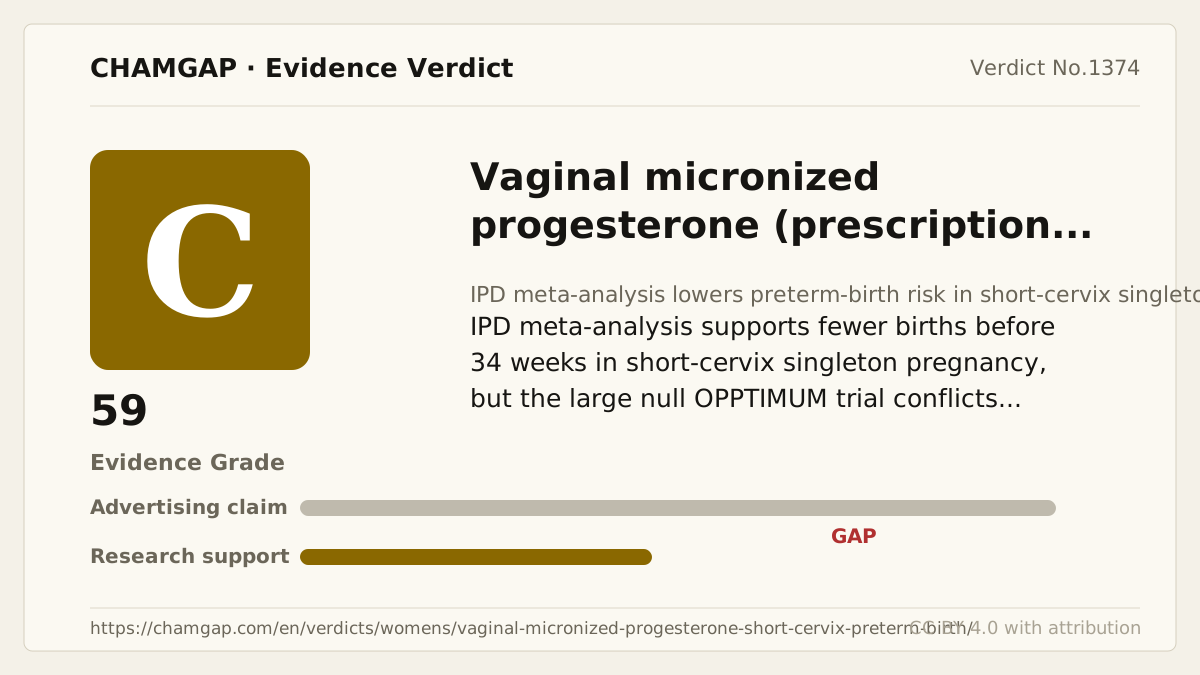
[Chamgap] Vaginal micronized progesterone x prevention of birth before 34 weeks in singleton pregnancy with a short cervix — Evidence Grade C·59. 3 cited sources checked. Source: https://chamgap.com/en/verdicts/womens/vaginal-micronized-progesterone-short-cervix-preterm-birth/ · CC BY 4.0CC BY 4.0 — free to use with attribution; do not distort grades, numbers, or verdict meaning.
What this document does and does not do
Chamgap is an information source. It reports what research has and has not confirmed; it does not tell readers what to take or buy. That decision belongs to readers and, when needed, medical or legal professionals. This verdict reflects literature available up to the search date and may change as new research appears. Nothing here is medical advice.