
Ulipristal acetate,
does it really help with Emergency contraception and pregnancy prevention within 120 hours after unprotected intercourse?
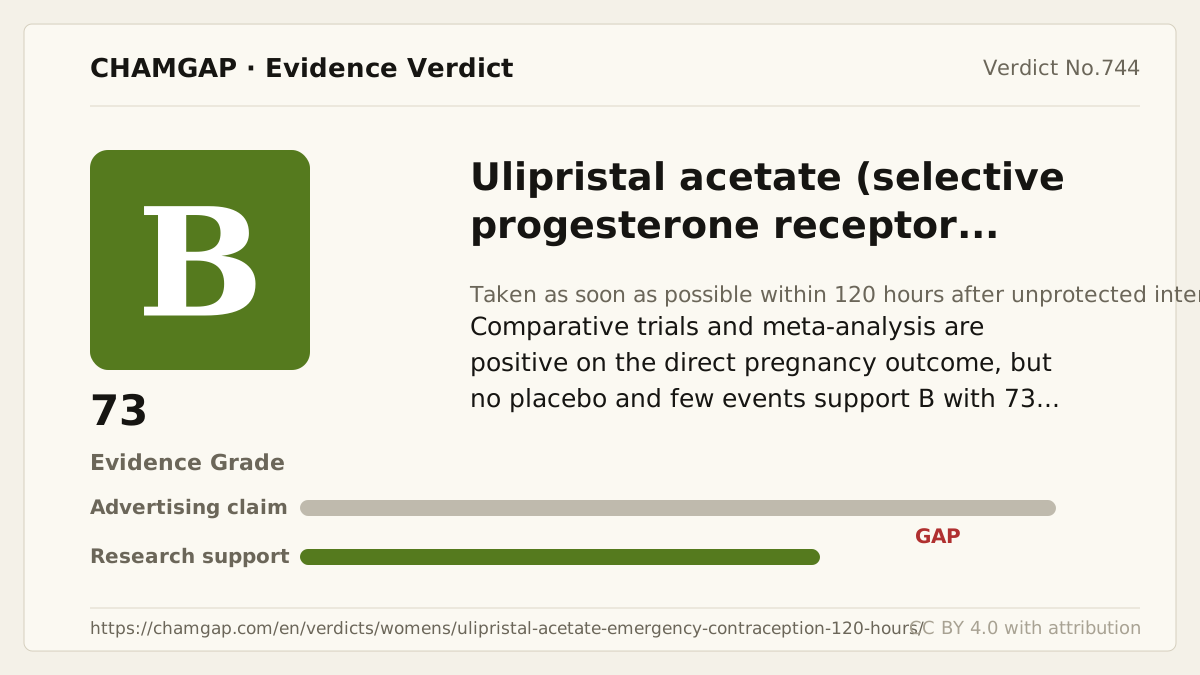
research showsUlipristal acetate 30 mg is rated B for preventing pregnancy when used as emergency contraception within 120 hours after unprotected intercourse. In a 2,221-participant comparative trial, pregnancy within 72 hours was 1.8% versus 2.6% with levonorgestrel; a meta-analysis of two trials found 1.4% versus 2.2% among 3,242 women (OR 0.58). In the 72-to-120-hour subgroup, all three pregnancies occurred with levonorgestrel, and a 1,241-participant single-arm study found a 2.1% pregnancy rate from 48 to 120 hours. Pregnancy is a direct outcome, but placebo is ethically difficult and event counts plus the late-window sample were small, supporting B.
ads claimEmergency contraception can be misunderstood as equally certain throughout the full 120 hours or as protection for later intercourse. It should be taken as soon as possible and does not protect a new episode of unprotected intercourse after dosing.
Useful facts when choosing a product
- Ulipristal acetate is a prescription emergency contraceptive taken as a single 30-mg dose as soon as possible and no later than 120 hours after unprotected intercourse or contraceptive failure.
- Vomiting within three hours calls for advice about another dose, and a pregnancy test is appropriate if the next period is more than one week late or unusual symptoms occur.
- Progestin contraception can reduce ulipristal's effect, so it is generally started or resumed five days later with barrier contraception used meanwhile and until the regular method becomes effective.
- It does not replace regular contraception, does not terminate an established pregnancy, and does not protect intercourse occurring after the dose.
Chamgap Semantic Classification Code
Candidate index · review held
M.ulipristal-acetate.UNK.emergency-contraception-and-pregnancy-prevention-within-after-unprotected-intercourse.prevent.activeMedicinal interventions > Ulipristal acetate > Unknown > Emergency contraception and pregnancy prevention within after unprotected intercourse > Occurrence-prevention claim > Active comparator
An automated migration candidate, not an issued permanent code; exact claim scope remains under review. This machine-generated migration candidate helps retrieval but is not a permanent assignment. The original verdict ID and URL remain authoritative.
What the research actually shows
Glasier 2010 randomized 2,221 women presenting within five days to ulipristal 30 mg or levonorgestrel 1.5 mg. Among those evaluable within 72 hours, pregnancies were 15/844 versus 22/852; the two-trial meta-analysis found 22/1,617 versus 35/1,625. Among 203 treated from 72 to 120 hours, all three pregnancies occurred with levonorgestrel. The Fine 2010 single-arm study reported a 2.1% pregnancy rate among 1,241 women treated from 48 to 120 hours. Cochrane 2019 synthesized pregnancy RR 0.59 for ulipristal versus levonorgestrel.
Why this is classified as B (73)
Comparative trials and the Cochrane synthesis found fewer pregnancies with ulipristal than levonorgestrel and provide direct pregnancy data through 120 hours. An untreated placebo is absent for ethical reasons and pregnancy events plus the randomized late-window sample are small, supporting B with 73 points. Menstrual effects, nausea, and progestin interaction are separate safety considerations.
Counterpoint. The influence of weight and body mass index on oral emergency contraception remains uncertain. A copper intrauterine device can be discussed when the greatest efficacy and ongoing contraception are desired.
Rejudgment record. New verdict — Assigned B for positive direct pregnancy outcomes in levonorgestrel-comparator trials and Cochrane meta-analysis while accounting for the ethically unavoidable absence of placebo, few pregnancy events, and limited randomized data from 72 to 120 hours
Sub-claim grades by effect
This ingredient is marketed for several effects. A single overall grade blends strong and weak claims together, so each effect is graded separately here. The overall grade reflects the strongest disconfirming or core claim.
| Effect (sub-claim) | Grade | Basis |
|---|---|---|
| Emergency contraception and pregnancy prevention within 120 hours after unprotected intercourse | B | Comparative trials and synthesis use direct pregnancy outcomes, but event counts and the late-window sample are small. |
| A definitive 120-hour effect size resolving the absence of placebo and small event counts | ? | No untreated placebo trial exists for ethical reasons, and randomized events from 72 to 120 hours are too few. |
| Replacement for regular contraception or termination of an established pregnancy | ? | This is outside emergency-contraception efficacy trials and is not an appropriate use. |
Cross-check — AI research and Codex final gate
Evidence Table
| Study | Design | Sample | Funding | Endpoint | Result | Weight |
|---|---|---|---|---|---|---|
| Glasier AF et al. 2010 | Multicenter randomized single-blind noninferiority active-controlled trial with prespecified meta-analysis | 2,221 randomized; 1,696 evaluable within 72 hours | HRA Pharma | Follow-up pregnancy rate | Within 72 hours, rates were 1.8% versus 2.6%; the two-trial meta-analysis gave OR 0.58 (95% CI 0.33 to 0.99). | Key direct comparative pregnancy outcome |
| Shen J et al. Cochrane 2019 | Systematic review and meta-analysis of randomized and quasi-randomized emergency-contraception trials | Two ulipristal-versus-levonorgestrel trials with 3,448 women | Academic Cochrane synthesis with disclosed author conflicts | Pregnancy | Ulipristal produced fewer pregnancies than levonorgestrel; RR 0.59 (95% CI 0.35 to 0.99), high-quality evidence. | Independent synthesis |
Receipt — 3 References
All 3 cited sources were verified for existence at the original page (as of 2026-07-20).
Final verification and publication gate: Codex · Evidence date: 2026-07-20 · Corrections: none
Cite this verdict
[Chamgap] Ulipristal acetate x emergency contraception within 120 hours — Evidence Grade B·73. 3 cited sources checked. Source: https://chamgap.com/en/verdicts/womens/ulipristal-acetate-emergency-contraception-120-hours/ · CC BY 4.0CC BY 4.0 — free to use with attribution; do not distort grades, numbers, or verdict meaning.
What this document does and does not do
Chamgap is an information source. It reports what research has and has not confirmed; it does not tell readers what to take or buy. That decision belongs to readers and, when needed, medical or legal professionals. This verdict reflects literature available up to the search date and may change as new research appears. Nothing here is medical advice.