
Mefenamic acid,
does it really help with Reduction of pain and need for additional analgesics in primary dysmenorrhea?
research showsMefenamic acid is rated B because it reduces pain and the use of additional analgesics in primary dysmenorrhea. Small double-blind crossover trials directly improved pain, disruption of normal activities, and rescue-analgesic use versus placebo, and a Cochrane review of 80 NSAID trials with 5,820 participants confirmed that the NSAID class relieves pain better than placebo. The mefenamic-acid-specific estimate also favored treatment, but trials are old and small, pain is self-reported, and many trials in the class review had commercial sponsorship or did not report funding. Parity with the B grade for ibuprofen in dysmenorrhea verdict 857 supports B with 70 points. Gastrointestinal bleeding, kidney, cardiovascular, asthma, and pregnancy risks are separated from efficacy under safety.
ads claimA dysmenorrhea-specific image does not mean that mefenamic acid is stronger or safer than other NSAIDs. The established effect is short-term relief of pain and reduced need for additional analgesics in primary dysmenorrhea; it does not treat secondary causes such as endometriosis, infection, or fibroids. The lowest effective dose should be used for the shortest period without combining other NSAIDs.
Useful facts when choosing a product
- Mefenamic acid is a prescription NSAID usually used for a short period beginning with menstrual pain or bleeding. The exact initial dose, maintenance dose, and maximum duration must follow the local product label and prescription.
- Combining it with ibuprofen, naproxen, aspirin, or another NSAID can increase gastrointestinal bleeding and kidney risk. Combination cold products should also be checked for NSAID ingredients.
- Indigestion, abdominal pain, and diarrhea can occur, while ulceration or gastrointestinal bleeding can appear without warning. Black stools, vomiting blood, or severe abdominal pain requires immediate assessment.
- People with kidney disease, cardiovascular disease, NSAID-induced asthma or allergy, anticoagulant use, or possible pregnancy should consult a clinician before use. Use from 20 weeks of pregnancy onward is particularly restricted.
Chamgap Semantic Classification Code
Candidate index · review held
M.mefenamic-acid.UNK.pain-and-need-for-additional-analgesics-in-primary-dysmenorrhea.reduce.MULTIMedicinal interventions > Mefenamic acid > Unknown > pain and need for additional analgesics in primary dysmenorrhea > Reduction claim > Multiple: primary unresolved
An automated migration candidate, not an issued permanent code; exact claim scope remains under review. This machine-generated migration candidate helps retrieval but is not a permanent assignment. The original verdict ID and URL remain authoritative.
What the research actually shows
Anderson in 1978 assigned 30 women with primary dysmenorrhea across three treatments in crossover fashion and reported fewer symptoms, days absent, and additional analgesics with mefenamic acid. Budoff in 1979 used a 46-participant double-blind placebo-controlled crossover design and found that mefenamic acid 250 mg four times daily significantly reduced symptoms and additional analgesic use. Langrick in 1989 randomized 64 participants through mebeverine, mefenamic acid, and placebo over three cycles, finding pain improvement at P<0.02 and less disruption of normal activities at P<0.01 with mefenamic acid. The 2015 Marjoribanks Cochrane review included 80 randomized trials and 5,820 participants, finding better pain relief with NSAIDs than placebo and a favorable mefenamic-acid-specific pain estimate, but it rated the evidence low because of methodological and reporting limitations. Ginger verdict 453 and fennel verdict 575 are C, while ibuprofen verdict 857 shares the B NSAID dysmenorrhea axis.
Why this is classified as B (70)
Several double-blind placebo- and active-controlled crossover trials of mefenamic acid repeatedly improved the direct patient-important outcomes of pain and additional analgesic use, and the 80-trial Cochrane analysis supports both the NSAID class effect and the mefenamic-acid-specific placebo comparison. Individual mefenamic acid trials were generally small, with 30 to 64 participants, old, self-reported, and vulnerable to crossover-design limitations; the class review noted low evidence quality and a high proportion of commercial sponsorship. Consistent direct outcomes are stronger than C but do not constitute large independent randomized evidence. Parity with ibuprofen dysmenorrhea verdict 857 therefore supports B with 70 points, distinct from C grades for ginger and fennel. NSAID harms remain separate.
Counterpoint. Severe pain that persists despite appropriate early dosing, or pain accompanied by fainting, fever, abnormal bleeding, or painful intercourse, requires evaluation for secondary dysmenorrhea. Another NSAID may fit an individual better, and analgesic response does not diagnose the underlying cause.
Rejudgment record. Cross-verification incorporated — Prioritized concordant direct pain, rescue-analgesic, and activity-disruption outcomes from mefenamic-acid placebo-controlled crossover trials plus the 80-trial NSAID Cochrane synthesis, while deducting for small older samples, self-report, crossover methods, low overall evidence quality, and commercial-funding concentration, with parity to ibuprofen dysmenorrhea verdict 857
Sub-claim grades by effect
This ingredient is marketed for several effects. A single overall grade blends strong and weak claims together, so each effect is graded separately here. The overall grade reflects the strongest disconfirming or core claim.
| Effect (sub-claim) | Grade | Basis |
|---|---|---|
| Pain relief in primary dysmenorrhea | B | Several double-blind placebo-controlled trials and the NSAID meta-analysis repeatedly support direct pain reduction. |
| Reduced need for additional analgesics in primary dysmenorrhea | B | The Budoff and Anderson crossover trials found reduced rescue-analgesic use, but samples were small and old. |
| Reduced disruption of normal activities from primary dysmenorrhea | B | A 64-participant crossover trial found less activity disruption than placebo, but this was a short-term self-reported outcome. |
Cross-check — AI research and Codex final gate
Evidence Table
| Study | Design | Sample | Funding | Endpoint | Result | Weight |
|---|---|---|---|---|---|---|
| Budoff PW. 1979 | Randomized double-blind placebo-controlled crossover trial | 46 participants | Limited reporting | Dysmenorrhea symptoms and additional analgesic use | Mefenamic acid significantly reduced symptoms and the need for additional analgesics compared with placebo. | Pivotal direct placebo-controlled evidence |
| Langrick AF et al. 1989 | Double-blind prospective randomized three-way crossover trial | 64 participants over three menstrual cycles | Limited reporting | Pain severity, disruption of normal activities, and rescue analgesia | Mefenamic acid reduced pain versus placebo, P<0.02, and reduced disruption of normal activities, P<0.01. | Direct pain and functional support |
| Anderson AB et al. 1978 | Double-blind randomized active-controlled crossover trial | 30 participants with three cycles per treatment | Limited reporting | Pain, associated symptoms, absence, and additional analgesics | Mefenamic acid, along with active comparators, reduced symptoms, absence, and the need for additional analgesics. | Replicated active-controlled support |
| Marjoribanks J et al. 2015 | Cochrane systematic review and meta-analysis of randomized trials | 80 randomized trials and 5,820 participants | Cochrane and academic work; 59% of included trials commercially funded and 31% unreported | Pain relief, additional analgesia, activity restriction, and adverse events | NSAIDs produced better pain relief than placebo, odds ratio 4.37, and the mefenamic-acid-specific estimate also favored treatment, but evidence quality was low. | Key class synthesis with methodological limitations |
Receipt — 5 References
All 5 cited sources were verified for existence at the original page (as of 2026-07-21).
Final verification and publication gate: Codex · Evidence date: 2026-07-21 · Corrections: none
Cite this verdict
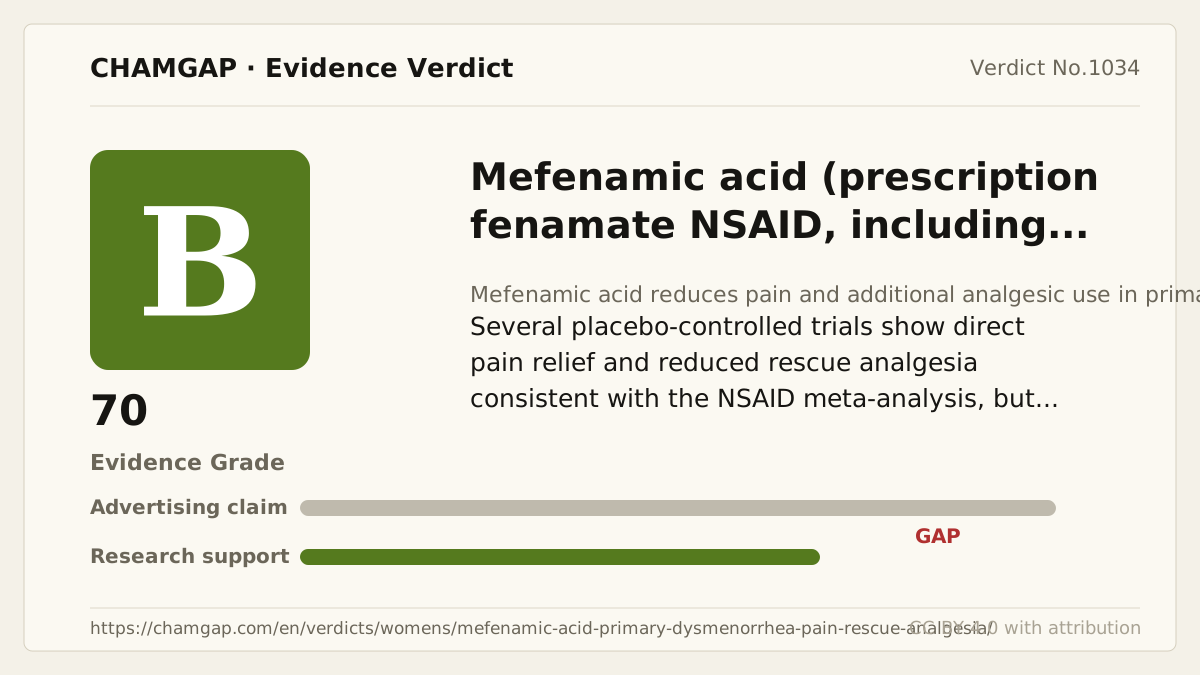
[Chamgap] Mefenamic acid x reduced pain and rescue analgesia in primary dysmenorrhea — Evidence Grade B·70. 5 cited sources checked. Source: https://chamgap.com/en/verdicts/womens/mefenamic-acid-primary-dysmenorrhea-pain-rescue-analgesia/ · CC BY 4.0CC BY 4.0 — free to use with attribution; do not distort grades, numbers, or verdict meaning.
What this document does and does not do
Chamgap is an information source. It reports what research has and has not confirmed; it does not tell readers what to take or buy. That decision belongs to readers and, when needed, medical or legal professionals. This verdict reflects literature available up to the search date and may change as new research appears. Nothing here is medical advice.