
An extra 1.5 L of water daily,
does it really help with Prevention of recurrent cystitis in premenopausal women with low baseline fluid intake?
research showsThe grade is C. In a 12-month randomized trial of 140 premenopausal low-volume drinkers, analyzed as randomized, cystitis averaged 1.7 versus 3.2 episodes per year, a difference of 1.5 (95% CI 1.2 to 1.8). Twenty-four-hour urine volume also separated to 2.2 versus 1.0 L/day. However, Danone Research, which sells the Evian water used, funded the study and participated in design, interpretation, and publication decisions. One small manufacturer-led trial gives C with 54 points.
ads claimMore dilute urine and more voiding were real, and recurrence fell in this low-intake high-risk group. That does not establish that one bottled-water brand prevents every urinary infection in the general population.
Useful facts when choosing a product
- At 12 months, self-reported total fluid had risen 1.7 L/day from baseline in the intervention arm and about 0 in controls; plain water rose 1.15 L/day.
- Twenty-four-hour urine volume was 2.2 versus 1.0 L/day and urine osmolality about 329 versus 713 mOsm/kg, objectively confirming separation.
- The study used Evian, and Danone Research funded the trial and participated in design, interpretation, and publication decisions.
- Verdict 1088 is D with 30 points for postexercise rehydration; this verdict concerns 12-month clinical cystitis events in low-volume drinkers.
Chamgap Semantic Classification Code
Candidate index · review held
UNK.additional-of-water-on-top-of-usual-intake.oral.recurrent-cystitis-in-premenopausal-women-with-low-baseline-fluid-intake.prevent.addonUnknown > additional of water on top of usual intake > Oral > recurrent cystitis in premenopausal women with low baseline fluid intake > Occurrence-prevention claim > Added intervention on common background care
An automated migration candidate, not an issued permanent code; exact claim scope remains under review. This machine-generated migration candidate helps retrieval but is not a permanent assignment. The original verdict ID and URL remain authoritative.
What the research actually shows
S-HYDRACYST randomized 70 women per arm at one Bulgarian center and included all 140 in the primary cystitis analysis. Sixty-four versus 66 completed 12 months, but the primary analysis remained intention to treat. Self-reported total fluid rose 1.7 L/day from baseline in the water group, plain water rose 1.15 L/day, and neither changed in controls. At 12 months, 24-hour urine volume was 2.2 versus 1.0 L/day and osmolality about 329 versus 713 mOsm/kg. The trial began in December 2013, while NCT02444975 was first posted on May 15, 2015, confirming retrospective registration. Danone Research funded the trial and participated in design, interpretation, manuscript preparation, and the publication decision; Evian was used.
Why this is classified as C (54)
A large event reduction and objective hydration separation were shown in all 140 randomized participants, but one small manufacturer-only trial gives C with 54 points.
Counterpoint. Industry funding does not automatically erase the result, but absent independent replication it limits generalization across populations and products.
Rejudgment record. Cross-check applied — All-randomized reduction in cystitis with separated urine volume and osmolality, limited to one manufacturer-led trial
| Endpoint | H | Hard endpoint - actual events such as death |
| Replication | R1 | Single confirmatory trial |
| Independence | I0 | Evidence comes only from manufacturer studies |
| Effect size | E+ | Meets the clinically important threshold |
Stored derived and displayed grades match; this is not a current recalculation or validity check (C).
Sub-claim grades by effect
This ingredient is marketed for several effects. A single overall grade blends strong and weak claims together, so each effect is graded separately here. The overall grade reflects the strongest disconfirming or core claim.
| Effect (sub-claim) | Grade | Basis |
|---|---|---|
| Reduced cystitis recurrence in premenopausal low-volume drinkers | C | The mean was 1.7 versus 3.2 episodes per year, but evidence is one manufacturer-led trial. |
Cross-check — AI research and Codex final gate
Evidence Table
| Study | Design | Sample | Funding | Endpoint | Result | Weight |
|---|---|---|---|---|---|---|
| Hooton TM et al. 2018 S-HYDRACYST | Twelve-month open-label single-center randomized clinical trial | 140 randomized (70/70), all 140 in the primary analysis, 130 completing 12 months (64/66) | Danone Research funding and participation in design, interpretation, and publication; Evian used | Primary endpoint of clinical cystitis episodes over 12 months | 1.7 versus 3.2 episodes/year; difference 1.5 (95% CI 1.2 to 1.8); 24-hour urine volume 2.2 versus 1.0 L/day | Pivotal manufacturer-led event evidence |
| ClinicalTrials.gov NCT02444975 | Trial registry record | Target enrollment of 140 | Danone Research | Frequency of clinical recurrent urinary tract infection over 12 months | Matches the published primary endpoint but was publicly registered after recruitment began | Supporting endpoint-prespecification evidence |
Receipt — 2 References
All 2 cited sources were verified for existence at the original page (as of 2026-08-04).
Final verification and publication gate: Codex · Evidence date: 2026-08-04 · Corrections: none
Cite this verdict
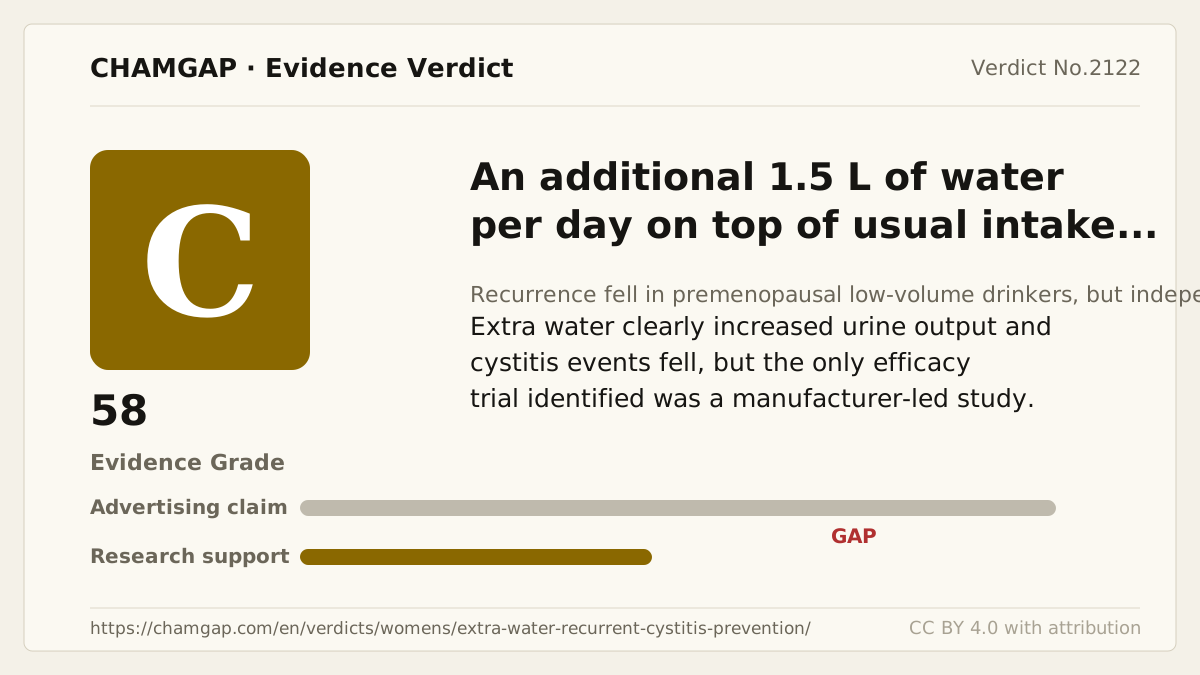
[Chamgap] An extra 1.5 L of water daily x prevention of recurrent cystitis — Evidence Grade C·54. 2 cited sources checked. Source: https://chamgap.com/en/verdicts/womens/extra-water-recurrent-cystitis-prevention/ · CC BY 4.0CC BY 4.0 — free to use with attribution; do not distort grades, numbers, or verdict meaning.
What this document does and does not do
Chamgap is an information source. It reports what research has and has not confirmed; it does not tell readers what to take or buy. That decision belongs to readers and, when needed, medical or legal professionals. This verdict reflects literature available up to the search date and may change as new research appears. Nothing here is medical advice.