
Spironolactone,
does it really help with Improvement of persistent or hormonally influenced acne in adult women?
research showsThe grade is B for persistent acne in adult women. In the independently publicly funded 410-person SAFA trial, the 12-week Acne-QoL between-group difference was 1.27 points (95% CI 0.07 to 2.46), a small and borderline effect that still supports placebo-controlled efficacy. The 24-week difference, participant-reported improvement, and investigator success were clearer. Additional trials and meta-analyses support efficacy, but evidence does not extend to men or every nonhormonal acne phenotype. The modest week-12 effect yields B with 70 points. Hyperkalemia, diuresis, menstrual changes, and the risk of feminization of a male fetus during pregnancy are separate from efficacy.
ads claimMarketing expands evidence in adult women into a hormonal-acne cure for every sex and acne phenotype. The best-supported population is adult women with persistent facial acne inadequately controlled by topical therapy.
Useful facts when choosing a product
- Spironolactone is a prescription diuretic and antiandrogen, and its use for acne is off-label in many countries.
- SAFA began at 50 mg/day and increased to 100 mg/day after six weeks; the treatment difference was larger at 24 than at 12 weeks.
- Diuresis, dizziness, headache, breast tenderness, and menstrual irregularity can occur, and kidney disease or potassium-raising medicines increase hyperkalemia concern.
- It should be avoided in pregnancy because of potential feminization of a male fetus; contraception, pregnancy plans, and any potassium or kidney monitoring require prescriber review.
Chamgap Semantic Classification Code
Candidate index · review held
M.spironolactone.UNK.persistent-or-hormonally-influenced-acne.improve.placeboMedicinal interventions > Spironolactone > Unknown > persistent or hormonally influenced acne > Improvement claim > Placebo
An automated migration candidate, not an issued permanent code; exact claim scope remains under review. This machine-generated migration candidate helps retrieval but is not a permanent assignment. The original verdict ID and URL remain authoritative.
What the research actually shows
SAFA gave women with persistent facial acne 50 mg/day for six weeks followed by 100 mg/day through week 24 or placebo, with overall improvement in symptom, participant, and investigator outcomes. A 12-week Thai trial supported 25 to 50 mg/day plus benzoyl peroxide over placebo plus benzoyl peroxide. FASCE compared spironolactone with doxycycline in 133 women and supported six-month efficacy. Randomized-trial meta-analyses in 2025 also found greater treatment success, although trial number and population breadth remain limited.
Why this is classified as B (70)
The independently publicly funded 410-person SAFA trial found a week-12 Acne-QoL difference of 1.27 points (95% CI 0.07 to 2.46), which was small and borderline but still favored active treatment. The placebo-controlled direction, clearer week-24 results, and supporting evidence retain B, while the modest early effect and limited population and duration yield 70 points. Pregnancy and hyperkalemia risks remain separate safety issues.
Counterpoint. It can reduce reliance on prolonged antibiotics in selected adult women, but acne phenotype, pregnancy plans, kidney function, and concomitant medicines require clinical review.
Rejudgment record. New verdict — Applied B because the large independently publicly funded SAFA placebo trial and additional randomized and synthesized evidence support direct acne outcomes in adult women, while the modest 12-week effect and narrow population limit certainty
Sub-claim grades by effect
This ingredient is marketed for several effects. A single overall grade blends strong and weak claims together, so each effect is graded separately here. The overall grade reflects the strongest disconfirming or core claim.
| Effect (sub-claim) | Grade | Basis |
|---|---|---|
| Improvement of persistent or hormonally influenced acne in adult women | B | Direct symptom outcomes improved in SAFA and supporting trials. |
| Extension to men or all nonhormonal acne | ? | No human efficacy literature directly establishing this broader population was identified. |
Cross-check — AI research and Codex final gate
Evidence Table
| Study | Design | Sample | Funding | Endpoint | Result | Weight |
|---|---|---|---|---|---|---|
| Santer M et al., SAFA 2023 | Multicenter phase 3 double-blind placebo-controlled randomized trial | 410 adult women | Public funding from the United Kingdom NIHR | Acne-QoL, participant improvement, and IGA success | The week-12 Acne-QoL difference was small and borderline at 1.27 points (95% CI 0.07 to 2.46); by week 24 it was 3.45 points and improvement was 82% versus 63%. | Key large independent direct-outcome trial |
| Patiyasikunt M et al. 2020 | Double-blind placebo-controlled randomized trial | 63 adult women with moderate acne | Academic single-center study with limited external-funding detail | Lesion counts, Acne-QoL, and tolerability | Low-dose oral spironolactone plus benzoyl peroxide was superior to placebo plus benzoyl peroxide. | Small supporting randomized trial |
| Ghanem L et al. 2025 | Systematic review and meta-analysis of placebo-controlled randomized trials | Synthesis of placebo-controlled randomized trials | No specific commercial funding reported by the authors | Acne severity, treatment success, and adverse events | Supported efficacy over placebo in women, while trial count and long-term data remained limited. | Current synthesis |
Receipt — 3 References
All 3 cited sources were verified for existence at the original page (as of 2026-07-20).
Final verification and publication gate: Codex · Evidence date: 2026-07-20 · Corrections: none
Cite this verdict
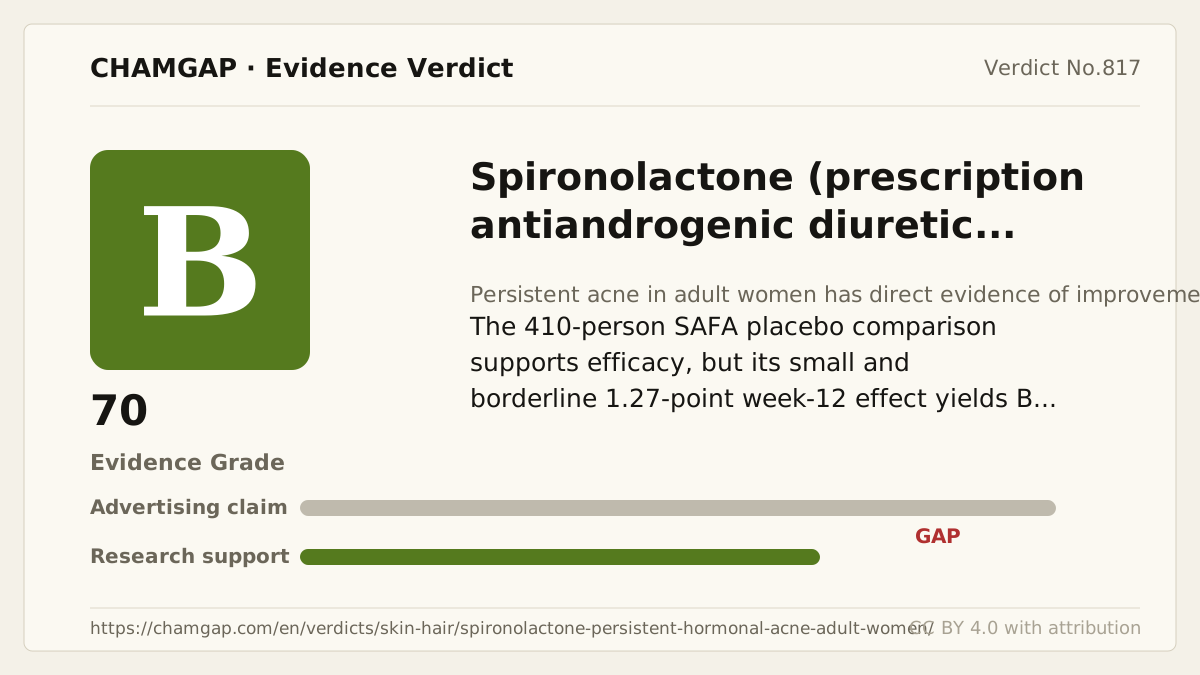
[Chamgap] Spironolactone x improvement of persistent or hormonally influenced acne in adult women — Evidence Grade B·70. 3 cited sources checked. Source: https://chamgap.com/en/verdicts/skin-hair/spironolactone-persistent-hormonal-acne-adult-women/ · CC BY 4.0CC BY 4.0 — free to use with attribution; do not distort grades, numbers, or verdict meaning.
What this document does and does not do
Chamgap is an information source. It reports what research has and has not confirmed; it does not tell readers what to take or buy. That decision belongs to readers and, when needed, medical or legal professionals. This verdict reflects literature available up to the search date and may change as new research appears. Nothing here is medical advice.