
Permethrin 5%,
does it really help with Mite clearance and clinical cure of classic scabies?
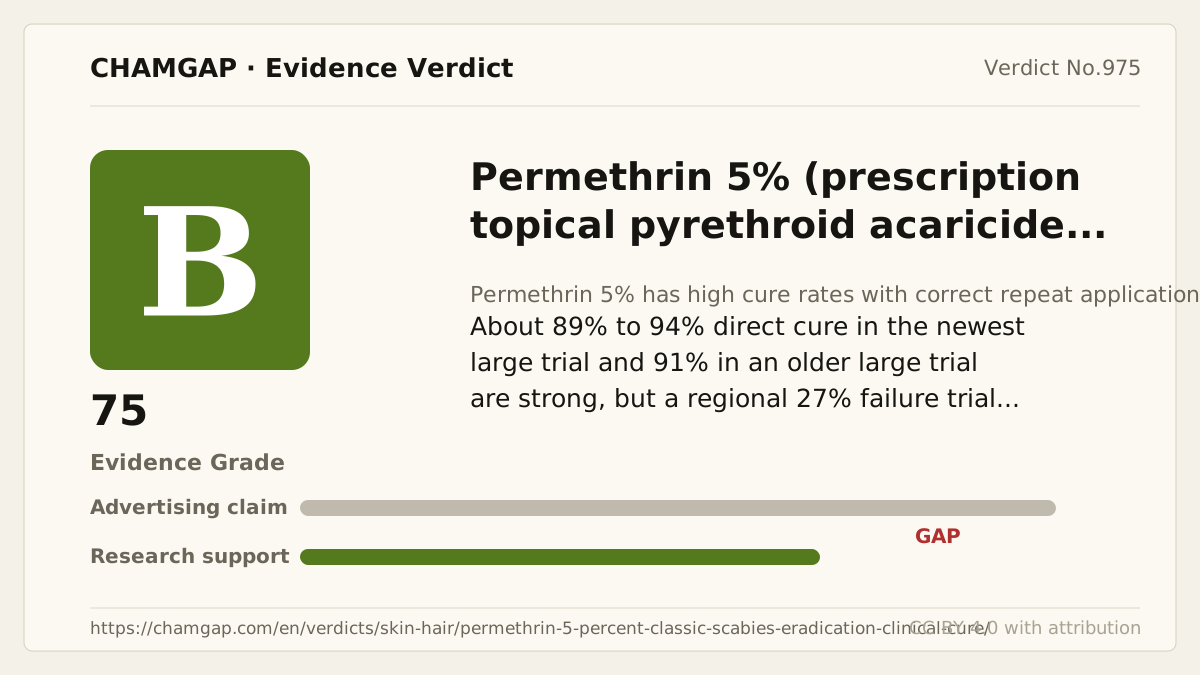
research showsPermethrin 5% is rated B because correct whole-body application with simultaneous contact treatment cures classic scabies at a high rate. In a 2026 cluster-randomized trial of 1,075 people in 289 households, applications on days 0 and 10 produced day-28 cure rates of 88.5% for whole households, 91.5% for index cases, and 94.2% for individuals, outperforming oral ivermectin. A 467-person trial in 1990 reported 91% complete resolution after one application. The 2018 Cochrane review, however, rated most comparative evidence low to moderate certainty, and a 2024 Austrian double-blind trial found only 27% dermoscopy-confirmed cure, signaling regional susceptibility loss or treatment failure. The newest large direct cure endpoint is strong, but heterogeneity supports B with 75 points rather than A.
ads claimPromotion can imply that one application instantly eliminates both mites and itching. Success actually requires complete application over the instructed body area, adequate contact time, commonly a repeat application, simultaneous treatment of household and close contacts, and textile management. Itching can persist for weeks after mites are cleared.
Useful facts when choosing a product
- Permethrin 5% cream is a standard topical acaricide for classic scabies. Depending on age and product instructions, it is applied thoroughly from the neck down or head to toe on dry skin and usually washed off after 8 to 14 hours.
- Egg killing can be incomplete, so repeat application after about 7 to 14 days is common. The large 2026 trial used applications on days 0 and 10 and should not be represented as a single-use result.
- Household members, sexual contacts, and other close contacts should be treated during the same period, and recently used clothing and bedding managed as directed, to reduce reinfestation and apparent treatment failure.
- Burning, stinging, redness, dryness, and itching can occur but are usually local. Post-scabetic itching can persist for two to four weeks or longer after successful treatment and does not by itself prove live mites remain.
Chamgap Semantic Classification Code
Candidate index · review held
M.permethrin-5-percent.topical-skin.mite-clearance-and-clinical-cure-of-classic-scabies.treat.activeMedicinal interventions > Permethrin 5% > Topical skin > Mite clearance and clinical cure of classic scabies > Treatment or remission claim > Active comparator
An automated migration candidate, not an issued permanent code; exact claim scope remains under review. This machine-generated migration candidate helps retrieval but is not a permanent assignment. The original verdict ID and URL remain authoritative.
What the research actually shows
Schultz 1990 randomized 467 patients to a single whole-body application of permethrin 5% or lindane 1%; complete resolution at day 28 occurred in 181 of 199 permethrin patients, 91%, and 176 of 205 lindane patients, 86%. The Rosumeck 2018 Cochrane review synthesized 15 trials with 1,896 participants and illustrated permethrin clearance rates of 65% at one week, 74% at two weeks, and 93% at four weeks, but certainty was mostly low to moderate. Meyersburg 2024 randomized 110 dermoscopy-confirmed cases to three consecutive days of permethrin 5% or benzyl benzoate 25% and found three-week dermoscopy cure of 27% versus 87%. Boralevi 2026 cluster-randomized 1,075 people at 28 French hospitals, treated contacts simultaneously on days 0 and 10, and found permethrin cure of 88.5% for clusters, 91.5% for index cases, and 94.2% for individuals.
Why this is classified as B (75)
The newest 1,075-person cluster-randomized trial found direct day-28 cure rates of 88.5% to 94.2%, and a 467-person trial found 91% complete resolution, strongly supporting clinical efficacy. Active-comparator evidence, low-to-moderate Cochrane certainty, dependence on application and reinfestation control, and only 27% dermoscopy cure in an independent 2024 trial indicate regional susceptibility variation and justify B with 75 points. Local irritation and post-treatment itching are separate safety and use considerations.
Counterpoint. If new burrows or lesions continue or mites remain after two correctly performed applications with simultaneous contact treatment, clinicians should reassess application error, reinfestation, misdiagnosis, crusted scabies, or resistance and consider an alternative regimen.
Rejudgment record. New verdict — Accepted high direct clinical-cure rates in a 1,075-person 2026 cluster-randomized trial and a 467-person multicenter trial while accounting for active-comparator evidence, low-to-moderate synthesis certainty, dependence on application and contact treatment, and the low dermoscopy cure rate and regional susceptibility signal in an independent 2024 trial
Sub-claim grades by effect
This ingredient is marketed for several effects. A single overall grade blends strong and weak claims together, so each effect is graded separately here. The overall grade reflects the strongest disconfirming or core claim.
| Effect (sub-claim) | Grade | Basis |
|---|---|---|
| Clinical cure of classic scabies | B | The newest large cluster trial found 94.2% individual cure after two applications, but regional failure is heterogeneous. |
| Dermoscopy-confirmed clearance of scabies mites | B | Direct eradication evidence exists, but a 2024 regional trial found only 27% cure, precluding a claim of consistent complete clearance. |
| Resolution of scabies-related itching and lesions | C | Lesions usually improve, but 14% still had pruritus at day 28 in the 1990 trial and post-scabetic itch can persist for weeks. |
Cross-check — AI research and Codex final gate
Evidence Table
| Study | Design | Sample | Funding | Endpoint | Result | Weight |
|---|---|---|---|---|---|---|
| Boralevi F et al. 2026 | Multicenter assessor-blinded household cluster-randomized active-controlled trial | 289 households and 1,075 participants; 568 received permethrin | French public clinical-research context; stopped early for resource limitations | Day-28 household, index-case, and individual clinical cure after treatment on days 0 and 10 | Permethrin cure was 88.5% for households, 91.5% for index cases, and 94.2% for individuals, superior to ivermectin. | Newest large direct-cure evidence |
| Schultz MW et al. 1990 | Multicenter randomized investigator-blinded permethrin-versus-lindane trial | 467 participants; 199 permethrin recipients assessed at day 28 | Product trial conducted by Burroughs Wellcome researchers | Active lesions, pruritus, and complete resolution at day 28 | Complete resolution occurred in 181 of 199 permethrin recipients, 91%, and pruritus persisted in 14%. | Large direct clinical-cure evidence from an older industry trial |
| Rosumeck S et al. 2018 Cochrane review | Systematic review and meta-analysis of permethrin and ivermectin randomized trials | 15 trials and 1,896 participants | Academic Cochrane review | Complete clearance, retreatment, and adverse events | Illustrative permethrin clearance was 65% at one week, 74% at two weeks, and 93% at four weeks, with mostly low-to-moderate certainty. | Independent synthesis limited by reporting quality |
| Meyersburg D et al. 2024 | Double-blind randomized permethrin-versus-benzyl-benzoate trial | 110 dermoscopy-confirmed patients; 55 per group | Austrian university-hospital study with no manufacturer funding reported | Dermoscopy-confirmed mite clearance and cure at three weeks | Cure was 27% with permethrin and 87% with benzyl benzoate, signaling regional reduced susceptibility. | Independent conflicting direct eradication endpoint |
Receipt — 4 References
All 4 cited sources were verified for existence at the original page (as of 2026-07-21).
Final verification and publication gate: Codex · Evidence date: 2026-07-21 · Corrections: none
Cite this verdict
[Chamgap] Permethrin 5% x mite clearance and clinical cure of classic scabies — Evidence Grade B·75. 4 cited sources checked. Source: https://chamgap.com/en/verdicts/skin-hair/permethrin-5-percent-classic-scabies-eradication-clinical-cure/ · CC BY 4.0CC BY 4.0 — free to use with attribution; do not distort grades, numbers, or verdict meaning.
What this document does and does not do
Chamgap is an information source. It reports what research has and has not confirmed; it does not tell readers what to take or buy. That decision belongs to readers and, when needed, medical or legal professionals. This verdict reflects literature available up to the search date and may change as new research appears. Nothing here is medical advice.