
Oral tranexamic acid,
does it really help with Reduction in melasma area and pigmentation intensity?
research showsOral tranexamic acid is rated C because two small placebo-controlled trials reproduced a short-term reduction in melasma scores. Colferai 2019 randomized 47 participants and analyzed 37 completers; it had no prespecified single primary endpoint, and no registered protocol could be confirmed. In contrast, Del Rosario 2018 randomized 44 participants, had 39 completers, and succeeded on its prespecified primary mMASI endpoint with reductions of 49% versus 18% at three months. Both trials analyzed about 40 participants, and the confirmatory trial lacked a prespecified primary endpoint. Rule ①-ⓒ therefore limits the verdict to C with 48 points.
ads claimMarketing can turn a short-term reduction in pigmentation scores into claims of a cure, permanent lightening, or relapse prevention. The evidence more closely supports a selected three-month adjunctive treatment.
Useful facts when choosing a product
- A common research regimen was tranexamic acid 250 mg twice daily for 12 weeks, and treatment of melasma is off label.
- Sun protection accompanied treatment in the trials, and benefit may diminish after discontinuation.
- A clinician should assess thrombotic history and risk factors, estrogen-containing contraceptive use, and pregnancy potential before prescribing.
Chamgap Semantic Classification Code
Candidate index · review held
M.tranexamic-acid.oral.melasma-area-and-pigmentation-intensity.reduce.placeboMedicinal interventions > Tranexamic acid > Oral > melasma area and pigmentation intensity > Reduction claim > Placebo
An automated migration candidate, not an issued permanent code; exact claim scope remains under review. This machine-generated migration candidate helps retrieval but is not a permanent assignment. The original verdict ID and URL remain authoritative.
What the research actually shows
The single-center double-blind trial by Colferai, Miquelin, and Steiner randomized 47 participants; 20 active and 17 placebo recipients, 37 total, completed 12 weeks and were analyzed. It had no prespecified single primary endpoint, and no registered protocol could be confirmed; the combined main efficacy assessment was positive at 50.0% versus 5.9% with P below 0.005. The independent double-blind trial by Del Rosario and colleagues randomized 44 participants, had 39 completers, and succeeded on its prespecified primary mMASI endpoint with reductions of 49% versus 18% at three months. Some benefit, particularly in severe cases, diminished after treatment stopped.
Why this is classified as C (48)
The prespecified primary mMASI endpoint succeeded in Del Rosario 2018, but the Colferai 2019 confirmatory trial had no prespecified single primary endpoint or confirmed registered protocol. Both trials were small, with actual analyses of 37 and 39 participants, so rule ①-ⓒ yields C with 48 points.
Counterpoint. If treatment is considered, thrombotic risk should be assessed within a dermatology plan that also includes sun protection and standard topical care.
Rejudgment record. Cross-check applied — Distinguished Colferai 2019, with 47 randomized, 37 completers analyzed, no prespecified single primary endpoint, and no confirmed registered protocol, from Del Rosario 2018, with 44 randomized, 39 completers, and a successful prespecified primary mMASI reduction of 49% versus 18% at three months; downgraded for the absent prespecified primary endpoint in the confirmatory trial and the roughly 40-person size of both trials
Sub-claim grades by effect
This ingredient is marketed for several effects. A single overall grade blends strong and weak claims together, so each effect is graded separately here. The overall grade reflects the strongest disconfirming or core claim.
| Effect (sub-claim) | Grade | Basis |
|---|---|---|
| Reduction in melasma area and pigmentation scores at 12 weeks | C | Two small placebo-controlled trials were positive, but the actual analyzed samples were only 37 and 39. |
| Maintenance of melasma improvement after treatment stops | D | Some benefit, particularly in severe cases, diminished after discontinuation and long-term controlled data are inadequate. |
| Long-term prevention of melasma relapse | ? | A repeat search found no human randomized trial directly testing long-term relapse prevention as the efficacy endpoint. |
Cross-check — AI research and Codex final gate
Evidence Table
| Study | Design | Sample | Funding | Endpoint | Result | Weight |
|---|---|---|---|---|---|---|
| Colferai MMT, Miquelin GM, and Steiner D. 2019 | Single-center randomized double-blind placebo-controlled trial | 47 selected and randomized; 37 analyzed at 12 weeks (20 tranexamic acid and 17 placebo) | No manufacturer-led large program was identified in the article report | No prespecified single primary endpoint; no registered protocol confirmed | The combined main efficacy assessment succeeded, with improvement in 50.0% versus 5.9%, P below 0.005. | Pivotal direct evidence, limited by small size and completer analysis |
| Del Rosario E et al. 2018 | Randomized double-blind placebo-controlled trial | 44 randomized; 39 completed and contributed observed data | Academic dermatology research | Prespecified primary endpoint: change in mMASI at three months | Primary endpoint succeeded: mMASI declined by 49% versus 18% at three months; some benefit diminished after discontinuation. | Independent small replication |
Receipt — 2 References
All 2 cited sources were verified for existence at the original page (as of 2026-07-24).
Final verification and publication gate: Codex · Evidence date: 2026-07-24 · Corrections: none
Cite this verdict
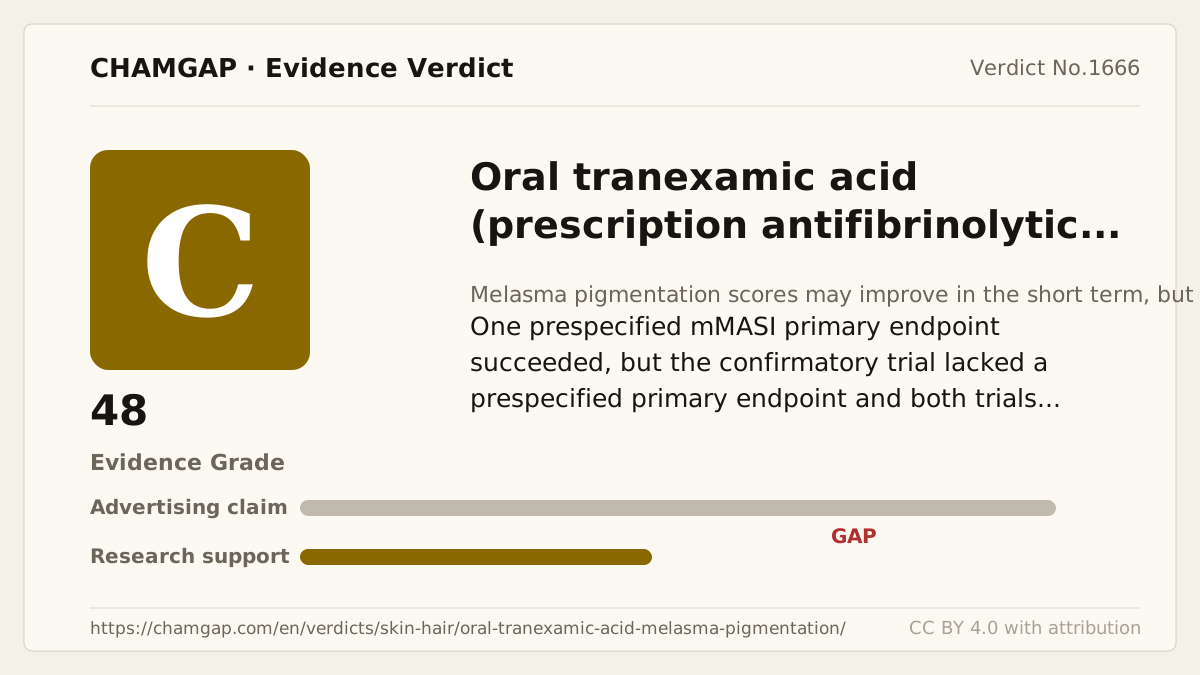
[Chamgap] Oral tranexamic acid x reduction in melasma area and pigmentation intensity — Evidence Grade C·48. 2 cited sources checked. Source: https://chamgap.com/en/verdicts/skin-hair/oral-tranexamic-acid-melasma-pigmentation/ · CC BY 4.0CC BY 4.0 — free to use with attribution; do not distort grades, numbers, or verdict meaning.
What this document does and does not do
Chamgap is an information source. It reports what research has and has not confirmed; it does not tell readers what to take or buy. That decision belongs to readers and, when needed, medical or legal professionals. This verdict reflects literature available up to the search date and may change as new research appears. Nothing here is medical advice.