
Oral tranexamic acid,
does it really help with Reduced facial pigmentation and MASI severity in adults with melasma?
research showsOral tranexamic acid 250 mg is rated C because positive evidence shows short-term reductions in facial pigmentation and MASI or modified MASI severity in adult melasma. In a nonblinded 90-patient 12-week trial, MASI fell by 65.91% with 250 mg twice daily versus 17.22% with placebo cream. A separate double-blind 44-patient trial found a three-month modified MASI reduction of 49% versus 18%, and a 130-patient trial adding oral treatment to topical combination cream also improved responses at weeks 12 and 24. Most trials are single-center, small, and eight to twelve weeks long, however, with heterogeneous monotherapy, combination therapy, scales, ethnic groups, and masking. They are also too small to establish long-term recurrence prevention or rare thromboembolic safety. Repeated short-term positive signals are accepted, but rule ①-ⓒ supports C with 55 points.
ads claimPromotion can expand the evidence into an oral melasma drug, a cure, or recurrence-free whitening. Actual evidence largely concerns 250 mg twice daily for eight to twelve weeks and short-term pigmentation-severity reduction, often with sunscreen and topical therapy. Use for melasma is off label and distinct from efficacy in bleeding. Postpartum hemorrhage in verdict 1145, which is B with 76 points, concerns early intravenous tranexamic acid for life-threatening bleeding, a completely different indication, route, and endpoint.
Useful facts when choosing a product
- Representative melasma trials used tranexamic acid 250 mg by mouth twice daily for 12 weeks. Melasma treatment is off label and requires dermatologist-led selection and follow-up.
- Photoprotection remains foundational, and many trials combined oral treatment with topical hydroquinone, tretinoin, and fluocinolone, so monotherapy and add-on effects should not be conflated.
- Current or prior thromboembolic disease, intrinsic thrombotic risk such as thrombogenic valvular or rhythm disease or hypercoagulability, and combined hormonal contraception are contraindications or strong reasons to avoid use. Smoking, obesity, and family history also require review.
- Headache, abdominal symptoms, menstrual changes, and visual symptoms can occur, and renal impairment requires dose adjustment. Leg swelling, chest pain, dyspnea, sudden neurologic symptoms, or visual changes require urgent evaluation.
Chamgap Semantic Classification Code
Candidate index · review held
UNK.tranexamic-acid.oral.facial-pigmentation-and-masi-severity-with-melasma.reduce.MULTIUnknown > Tranexamic acid > Oral > facial pigmentation and MASI severity with melasma > Reduction claim > Multiple: primary unresolved
An automated migration candidate, not an issued permanent code; exact claim scope remains under review. This machine-generated migration candidate helps retrieval but is not a permanent assignment. The original verdict ID and URL remain authoritative.
What the research actually shows
A meta-analysis of 24 randomized trials supported oral tranexamic acid for melasma, but superiority over comparator treatments was not detected for topical or intradermal administration; evidence from different routes must not be pooled into one claim. This verdict concerns oral 250 mg dosing. Prathyoosha and colleagues assigned 90 patients with melasma to oral tranexamic acid 250 mg twice daily, modified Kligman's formula, or placebo cream. Twelve-week MASI reductions were 65.91%, 54.78%, and 17.22%, respectively, but the trial was small and nonblinded. Del Rosario and colleagues assigned 44 patients to oral tranexamic acid 250 mg twice daily or placebo capsules with sunscreen; modified MASI fell by 49% versus 18% at three months. Minni and Poojary randomized 130 patients to topical combination cream plus oral tranexamic acid or placebo; among 120 completers, improvement greater than 75% occurred in 65.6% versus 27.1% at week 12, and recurrence at week 24 was 18.03% versus 64.4%. All were single-center studies, and none was a large long-term thromboembolic-safety trial.
Why this is classified as C (55)
Oral tranexamic acid 250 mg twice daily reduced 12-week MASI by 65.91% versus 17.22% in a 90-patient nonblinded trial and three-month modified MASI by 49% versus 18% in a 44-patient double-blind trial, while an add-on trial was also positive. The evidence remains predominantly single-center, small, short term, heterogeneous in masking, comparator, ethnic group, and concurrent treatment, and unable to establish long-term recurrence or rare thrombosis. Rule ①-ⓒ therefore supports C with 55 points.
Counterpoint. An adult with moderate-to-severe refractory melasma despite standard topical therapy and photoprotection, and with no thrombotic risk factor, can discuss a time-limited off-label course with a dermatologist. Response, recurrence after withdrawal, and safety still require follow-up.
Rejudgment record. Cross-check applied — Rule ①-ⓒ states that evidence weakened by small size, a single manufacturer, short duration, or inconsistency has a maximum grade of C. Although several direct randomized trials are positive, they are predominantly single-center, small, and eight to twelve weeks long; some are nonblinded, and monotherapy, add-on treatment, and comparators are heterogeneous. Short-term MASI or modified MASI improvement is accepted, but durable recurrence prevention and rare thromboembolic safety remain unconfirmed, so C is maintained.
Sub-claim grades by effect
This ingredient is marketed for several effects. A single overall grade blends strong and weak claims together, so each effect is graded separately here. The overall grade reflects the strongest disconfirming or core claim.
| Effect (sub-claim) | Grade | Basis |
|---|---|---|
| Reduced MASI or modified MASI in adult melasma with oral tranexamic acid monotherapy | C | A 90-patient nonblinded trial and a 44-patient double-blind trial were positive short term, but both were small, single-center, and brief. |
| Improved melasma severity when oral tranexamic acid is added to topical triple therapy | C | A 130-patient single-center add-on trial improved week-12 response and week-24 maintenance, but used a completer analysis and lacks long-term replication. |
| Prevention of melasma recurrence for at least one year after stopping oral tranexamic acid | ? | Post-withdrawal follow-up is generally limited to about 12 weeks, with no adequately powered randomized trial of long-term recurrence. |
Cross-check — AI research and Codex final gate
Evidence Table
| Study | Design | Sample | Funding | Endpoint | Result | Weight |
|---|---|---|---|---|---|---|
| Prathyoosha S et al. 2024 | Randomized three-group nonblinded comparative trial | 90 adults with melasma, 30 per group | External funding was not stated in the abstract; no conflicts were reported | Change in MASI at weeks 4, 8, and 12 | At week 12, MASI fell by 65.91% with oral tranexamic acid, 54.78% with modified Kligman's formula, and 17.22% with placebo cream. | Large short-term positive signal limited by nonblinding and small size |
| Del Rosario E et al. 2018 | Single-center randomized double-blind placebo-controlled trial | 44 patients with moderate-to-severe melasma enrolled and 39 completed | Detailed funding was not stated in the PubMed abstract | Modified MASI at three months and maintenance three months after withdrawal | Modified MASI fell by 49% versus 18% at three months; three months after withdrawal, reductions from baseline were 26% versus 19%. | Direct double-blind short-term efficacy with a small sample |
| Minni K and Poojary S. 2020 | Single-center triple-blind randomized placebo-controlled add-on trial | 130 randomized and 120 in the completer analysis | Detailed funding was not stated in the PubMed abstract | Modified MASI response at week 12 and recurrence at week 24 with topical triple-combination cream | Improvement greater than 75% occurred in 65.6% versus 27.1% at week 12, and recurrence was 18.03% versus 64.4% at week 24. | Supportive add-on and short-term maintenance evidence from one center |
| United States Food and Drug Administration LYSTEDA label. 2020 | Prescribing information and integrated safety review | Heavy-menstrual-bleeding approval trials and postmarketing data; not melasma trials | United States FDA regulatory document | Thromboembolic contraindications, visual effects, and renal dose adjustment | Contraindicates thromboembolic disease, intrinsic thrombotic risk, and combined hormonal contraception and warns about thrombosis, visual effects, and renal impairment. | Key safety evidence for off-label melasma prescribing |
Receipt — 5 References
All 5 cited sources were verified for existence at the original page (as of 2026-07-24).
Final verification and publication gate: Codex · Evidence date: 2026-07-24 · Corrections: none
Cite this verdict
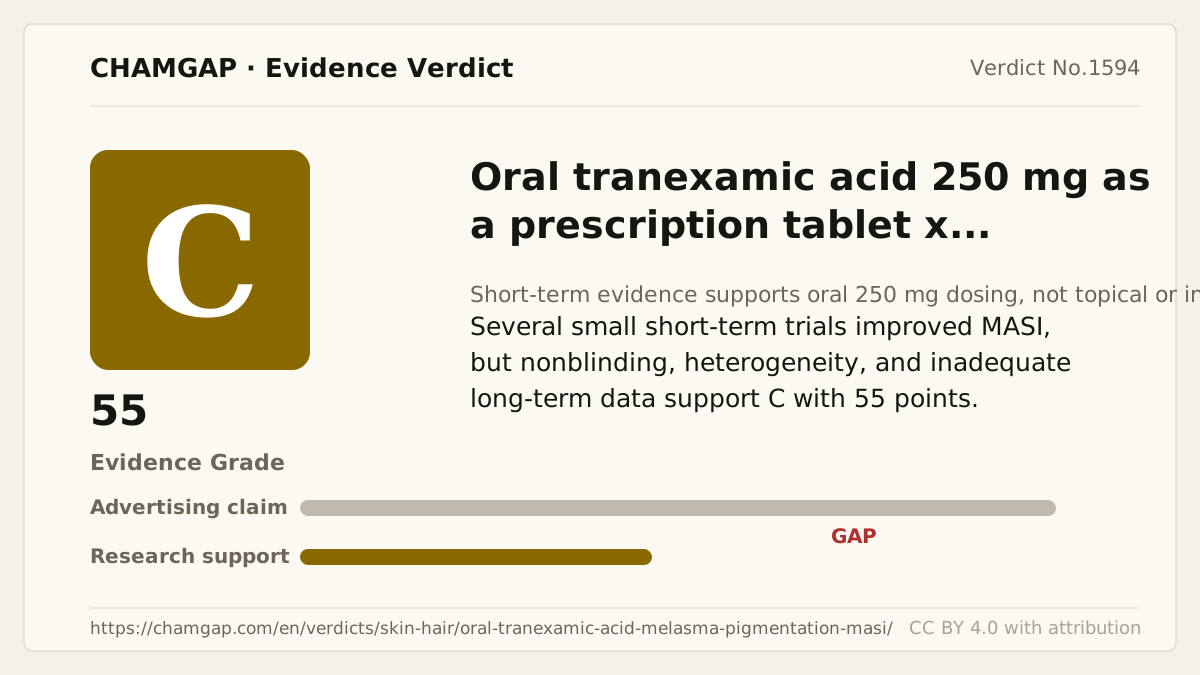
[Chamgap] Oral tranexamic acid x reduced facial pigmentation and MASI severity in adult melasma — Evidence Grade C·55. 5 cited sources checked. Source: https://chamgap.com/en/verdicts/skin-hair/oral-tranexamic-acid-melasma-pigmentation-masi/ · CC BY 4.0CC BY 4.0 — free to use with attribution; do not distort grades, numbers, or verdict meaning.
What this document does and does not do
Chamgap is an information source. It reports what research has and has not confirmed; it does not tell readers what to take or buy. That decision belongs to readers and, when needed, medical or legal professionals. This verdict reflects literature available up to the search date and may change as new research appears. Nothing here is medical advice.