
Oral terbinafine,
does it really help with Mycological and clinical cure of dermatophyte toenail onychomycosis?
research showsOral terbinafine is rated at the top of B as an effective oral standard for dermatophyte toenail onychomycosis. A placebo-controlled trial found about 73% versus 6% mycological cure, and the Cochrane clinical-cure RR was 6.00. At week 72 in LION, mycological cure was 75.7% after 12 weeks and 80.8% after 16 weeks. Complete cure requiring both fungal clearance and a normal nail was lower, about 38% in licensing trials and 55% with the 16-week LION regimen, and recurrence occurs. It is more effective than topical efinaconazole but does not guarantee normal nails or permanent cure, supporting B with 79 points.
ads claimClaims of a completely new nail for everyone turn fungal clearance into guaranteed cosmetic normalization and no recurrence. Diagnosis, nail growth, relapse management, liver risk, and interactions still matter.
Useful facts when choosing a product
- A common prescription for dermatophyte toenail infection is terbinafine 250 mg once daily for 12 weeks after confirming the fungal diagnosis.
- Appearance may continue improving for months after treatment while healthy nail grows out, so final assessment is delayed.
- Liver disease should be assessed before treatment, and symptoms or laboratory evidence of hepatic injury require prompt medical review.
- CYP2D6 interactions, taste or smell disturbance, gastrointestinal symptoms, rash, and rare severe liver injury can occur.
Chamgap Semantic Classification Code
Candidate index · review held
M.terbinafine.oral.mycological-and-clinical-cure-of-dermatophyte-toenail-onychomycosis.assess.MULTIMedicinal interventions > Terbinafine > Oral > Mycological and clinical cure of dermatophyte toenail onychomycosis > Association or change assessment > Multiple: primary unresolved
An automated migration candidate, not an issued permanent code; exact claim scope remains under review. This machine-generated migration candidate helps retrieval but is not a permanent assignment. The original verdict ID and URL remain authoritative.
What the research actually shows
A 1992 placebo trial found 73% versus 6% intention-to-treat mycological cure after 12 weeks at 250 mg daily. The 2017 Cochrane review found clinical-cure RR 6.00 and mycological-cure RR 4.53 across eight trials and 1,006 participants. At week 72 in LION, mycological cure was 75.7% after 12 weeks and 80.8% after 16 weeks, while complete cure was 46% and 55%, respectively. United States licensing data for the 12-week toenail trial reported 70% mycological cure but only 38% complete cure, showing that fungal clearance is more common than full cosmetic normalization.
Why this is classified as B (79)
Placebo-controlled mycological cure of about 73% versus 6%, Cochrane clinical-cure RR 6.00, and LION mycological cure of 75.7% to 80.8% establish strong direct efficacy. Complete cure is lower at about 38% in licensing data and 55% after 16 weeks in LION, and recurrence occurs, supporting the top of B with 79 points. Liver injury, taste loss, and interactions are separate safety concerns rather than efficacy subclaims.
Counterpoint. It offers a higher cure probability than topical therapy for confirmed dermatophyte toenail infection, but risk factors can require another choice.
Rejudgment record. New verdict — Accepted placebo-controlled mycological cure of 73% versus 6%, Cochrane clinical-cure RR 6.00, LION 72-week mycological cure of 75.7% to 80.8%, and superiority over topical therapy as an oral standard, while incorporating complete cure of 38% to 55% and recurrence
Sub-claim grades by effect
This ingredient is marketed for several effects. A single overall grade blends strong and weak claims together, so each effect is graded separately here. The overall grade reflects the strongest disconfirming or core claim.
| Effect (sub-claim) | Grade | Basis |
|---|---|---|
| Mycological cure of toenail onychomycosis | B | A placebo-controlled trial found about 73% versus 6%, and LION found 75.7% to 80.8% at week 72. |
| Complete cure combining fungal clearance and a normal-appearing nail | B | Complete cure was about 38% in licensing data and 55% after 16 weeks in LION, lower than mycological cure, and recurrence can occur. |
Cross-check — AI research and Codex final gate
Evidence Table
| Study | Design | Sample | Funding | Endpoint | Result | Weight |
|---|---|---|---|---|---|---|
| Goodfield MJD et al. 1992 | Multicenter double-blind placebo-controlled trial | 112 participants | Limited reporting | Mycological and clinical cure | Toenail intention-to-treat mycological cure was 73% versus 6%. | Direct placebo control |
| Kreijkamp-Kaspers S et al. 2017 | Cochrane systematic review | Eight terbinafine-placebo trials and 1,006 participants | Academic Cochrane review | Clinical and mycological cure | Clinical cure RR 6.00 and mycological cure RR 4.53. | High-quality synthesis |
| Evans EGV and Sigurgeirsson B. 1999 LION | Double-blind active-controlled trial | 496 participants | Supported by Novartis and Janssen | Mycological and complete cure at week 72 | Mycological cure was 75.7% after 12 weeks and 80.8% after 16 weeks; complete cure was 46% and 55%, respectively. | Large active comparison |
| United States terbinafine prescribing information | Summary of licensing-trial results | Twelve-week toenail onychomycosis trial | Regulatory drug-label evidence | Mycological and complete cure at week 48 | Mycological cure was 70%, while complete cure combining fungal clearance and a normal nail was 38%. | Source for the complete-cure rate |
Receipt — 4 References
All 4 cited sources were verified for existence at the original page (as of 2026-07-20).
Final verification and publication gate: Codex · Evidence date: 2026-07-20 · Corrections: none
Cite this verdict
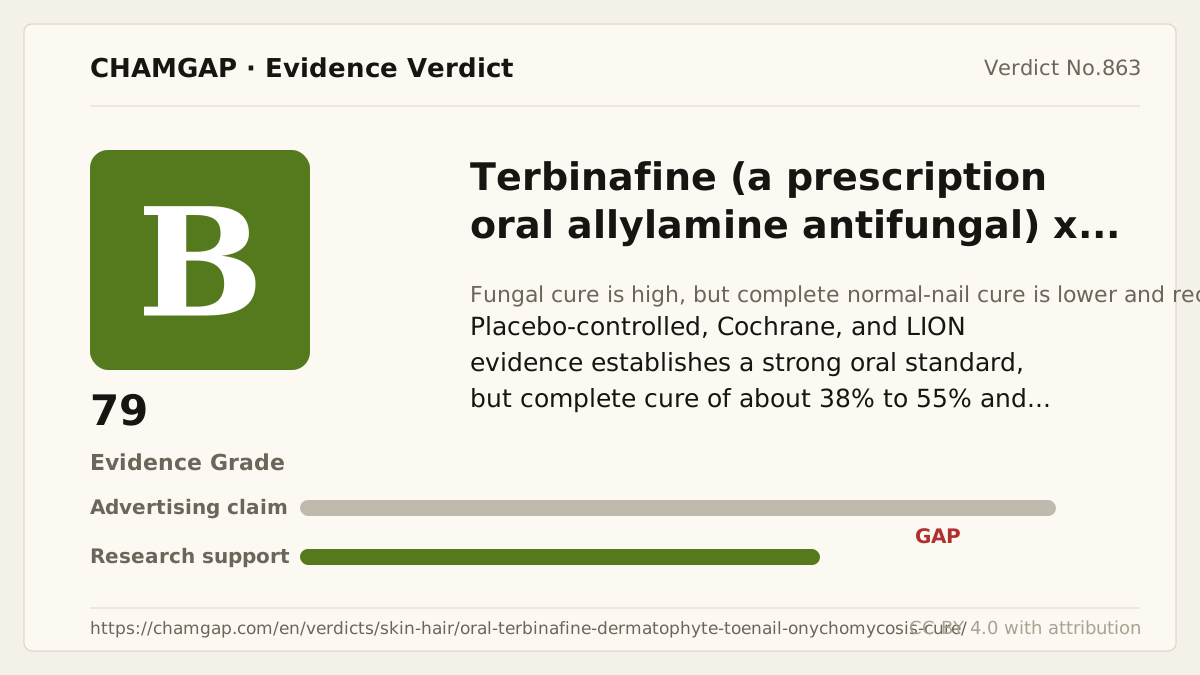
[Chamgap] Oral terbinafine x cure of dermatophyte toenail onychomycosis — Evidence Grade B·79. 4 cited sources checked. Source: https://chamgap.com/en/verdicts/skin-hair/oral-terbinafine-dermatophyte-toenail-onychomycosis-cure/ · CC BY 4.0CC BY 4.0 — free to use with attribution; do not distort grades, numbers, or verdict meaning.
What this document does and does not do
Chamgap is an information source. It reports what research has and has not confirmed; it does not tell readers what to take or buy. That decision belongs to readers and, when needed, medical or legal professionals. This verdict reflects literature available up to the search date and may change as new research appears. Nothing here is medical advice.