
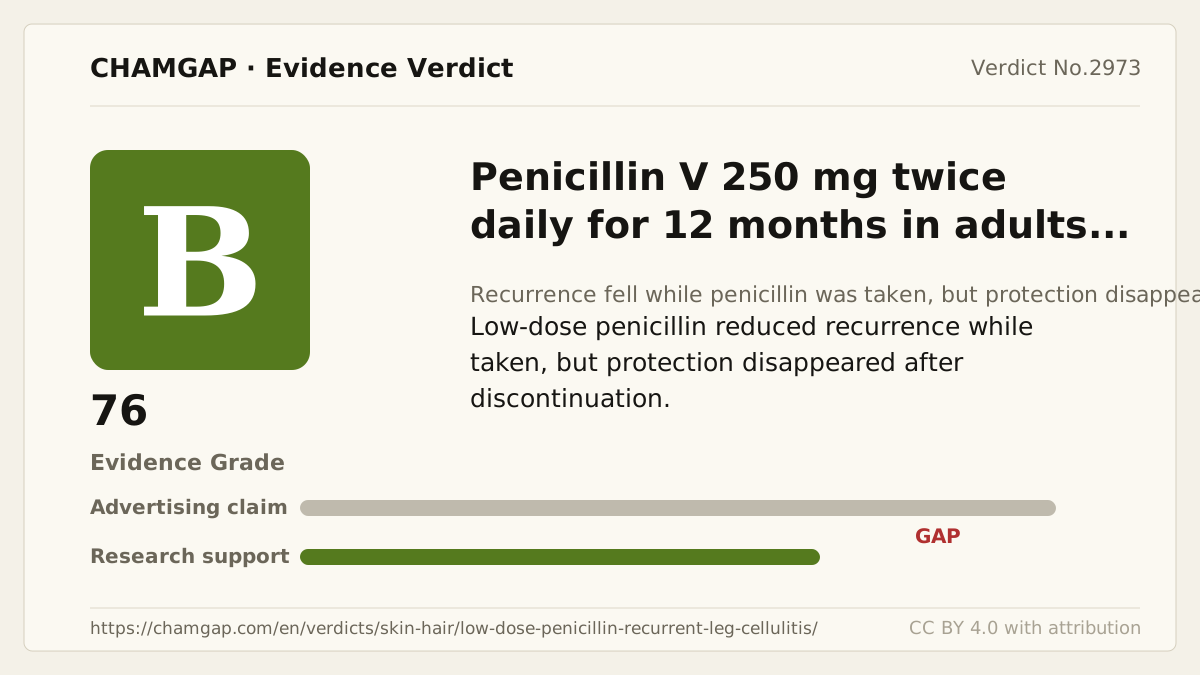
Penicillin V 250 mg twice daily for 12 months in adults with at least two leg-cellulitis episodes in the previous three years,
does it really help with Reduced first recurrence of leg cellulitis during prophylaxis?
research showsGrade B. During prophylaxis, recurrence was 30/136 (22%) versus 51/138 (37%), HR 0.55 (95% CI 0.35 to 0.86), P=.01, absolute difference -15 points, NNT 5 (4 to 9). After treatment stopped, 27% in each group recurred, so protection did not persist.
ads claimThis does not cover prevention after a first episode, other antibiotics, doses, or injection routes. It is not permanent protection after one course.
Useful facts when choosing a product
- Penicillin V 250 mg was taken twice daily for 12 months.
- Recurrences were clinically confirmed, not counted from participant report alone.
- Both registries preceded recruitment.
Chamgap Semantic Classification Code
Candidate index · review held
UNK.penicillin-v-twice.UNK.first-recurrence-of-leg-cellulitis-during-prophylaxis.reduce.placeboUnknown > Penicillin V twice > Unknown > first recurrence of leg cellulitis during prophylaxis > Reduction claim > Placebo
An automated migration candidate, not an issued permanent code; exact claim scope remains under review. This machine-generated migration candidate helps retrieval but is not a permanent assignment. The original verdict ID and URL remain authoritative.
What the research actually shows
PATCH I randomized 274 participants at 28 hospitals, 136/138. Action Medical Research funded it, the University of Nottingham sponsored it, and pharmaceutical cash, product, or analysis support was not identified.
Axis 6 B0 evidence ① Allocation concealment: "study medications ... were dispensed by a central pharmacy." ② Masking: "double-blind, randomized, controlled trial" ③ Analysis population and missing data: "All analyses were performed according to the intention-to-treat principle." ④ Prespecified primary endpoint: "The primary outcome was the time to a first recurrence." — matches ISRCTN34716921 · EudraCT 2006-000381-36
Why this is classified as B (76)
A clean single confirmatory trial reduced clinician-confirmed recurrence by 15 points during treatment, giving B with 76 points.
Counterpoint. Allergy, gastrointestinal adverse effects, and antimicrobial resistance remain burdens of long-term antibiotics.
Rejudgment record. Cross-check applied — A 15-point reduction in clinician-confirmed recurrence during prophylaxis, NNT 5, and one confirmatory trial
| Endpoint | H | Hard endpoint - actual events such as death |
| Replication | R1 | Single confirmatory trial |
| Independence | I2 | Decisive evidence is publicly or non-profit funded |
| Effect size | E+ | Meets the clinically important threshold |
Stored derived and displayed grades match; this is not a current recalculation or validity check (B).
Sub-claim grades by effect
This ingredient is marketed for several effects. A single overall grade blends strong and weak claims together, so each effect is graded separately here. The overall grade reflects the strongest disconfirming or core claim.
| Effect (sub-claim) | Grade | Basis |
|---|---|---|
| Reduced first recurrence during 12 months of treatment | B | 22% versus 37%, NNT 5. |
| Persistent protection after discontinuation | D | Both groups had 27% recurrence off treatment. |
Cross-check — AI research and Codex final gate
Evidence Table
| Study | Design | Sample | Funding | Endpoint | Result | Weight |
|---|---|---|---|---|---|---|
| Thomas KS et al. 2013 PATCH I | Multicenter double-blind randomized placebo-controlled trial | 274 participants (136/138) | Nonprofit funding from Action Medical Research | Time to first clinician-confirmed recurrence of leg cellulitis | 30/136 (22%) vs 51/138 (37%); HR 0.55 (0.35 to 0.86), P=.01; NNT 5 (4 to 9) | Pivotal trial establishing benefit during treatment |
Receipt — 2 References
All 2 cited sources were verified for existence at the original page (as of 2026-08-26).
Final verification and publication gate: Codex · Evidence date: 2026-08-26 · Corrections: none
Cite this verdict
[Chamgap] Benefit of Low-Dose Penicillin for Recurrent Leg Cellulitis During Treatment — Evidence Grade B·76. 2 cited sources checked. Source: https://chamgap.com/en/verdicts/skin-hair/low-dose-penicillin-recurrent-leg-cellulitis/ · CC BY 4.0CC BY 4.0 — free to use with attribution; do not distort grades, numbers, or verdict meaning.
What this document does and does not do
Chamgap is an information source. It reports what research has and has not confirmed; it does not tell readers what to take or buy. That decision belongs to readers and, when needed, medical or legal professionals. This verdict reflects literature available up to the search date and may change as new research appears. Nothing here is medical advice.