
Acitretin,
does it really help with Prevention of new cutaneous squamous cell carcinoma in high-risk kidney-transplant recipients with multiple skin cancers?
research showsA 6-month placebo-controlled trial reduced the proportion developing new SCC from 47% to 11%, but only 38 patients were assessable and maintenance and rebound concerns limit the grade to C with 54 points. A double-blind placebo-controlled trial in 38 assessable patients was positive for new SCC and keratotic lesions, satisfying rule ③ for C. Small size, six-month follow-up, treatment burden, and a rebound signal after stopping preclude a higher grade.
ads claimPromotion may broaden this into long-term prevention of every skin cancer, whereas the evidence concerns short-term SCC chemoprevention under specialist care in exceptionally high-risk transplant recipients.
Useful facts when choosing a product
- Acitretin is a systemic prescription retinoid, not an immunosuppressant; this verdict is distinct from isotretinoin for acne, topical adapalene, topical 5-fluorouracil, and nicotinamide.
- Cheilitis, dry skin, and hair loss are common; triglycerides, cholesterol, and liver enzymes require monitoring, and renal or hepatic status and interacting medicines need specialist review.
- Because acitretin is strongly teratogenic, it is contraindicated in pregnancy and pregnancy must be avoided before and during treatment and for three years after stopping.
Chamgap Semantic Classification Code
Candidate index · review held
M.acitretin.oral.new-cutaneous-squamous-cell-carcinoma-in-high-risk-kidney-transplant-recipients-with-multiple-skin-cancers.prevent.placeboMedicinal interventions > Acitretin > Oral > new cutaneous squamous cell carcinoma in high-risk kidney-transplant recipients with multiple skin cancers > Occurrence-prevention claim > Placebo
An automated migration candidate, not an issued permanent code; exact claim scope remains under review. This machine-generated migration candidate helps retrieval but is not a permanent assignment. The original verdict ID and URL remain authoritative.
What the research actually shows
Bavinck 1995 randomized 44 kidney-transplant recipients with numerous keratotic lesions and assessed 38. Over six months, 2 of 19 acitretin patients (11%) developed two new SCCs versus 9 of 19 placebo patients (47%) developing 18 (P=.01). Keratotic lesions fell 13.4% with acitretin but rose 28.2% with placebo. In the open randomized crossover study by George 2002, SCCs were also fewer during treatment, but 52% withdrew, nine because of adverse effects, and one severe rebound occurred after cessation.
Why this is classified as C (54)
A double-blind placebo-controlled trial in 38 assessable patients was positive for new SCC and keratotic lesions, satisfying rule ③ for C. Small size, six-month follow-up, treatment burden, and a rebound signal after stopping preclude a higher grade.
Counterpoint. The absolute benefit can be important in transplant recipients with extreme SCC risk, so clinical use can be reasonable. Toxicity and discontinuation nevertheless require individualized dermatology-transplant-team decisions and continuing surveillance.
Rejudgment record. New verdict — A double-blind placebo-controlled trial in 38 assessable patients was positive for new SCC and keratotic lesions, satisfying rule ③ for C. Small size, six-month follow-up, treatment burden, and a rebound signal after stopping preclude a higher grade.
Sub-claim grades by effect
This ingredient is marketed for several effects. A single overall grade blends strong and weak claims together, so each effect is graded separately here. The overall grade reflects the strongest disconfirming or core claim.
| Effect (sub-claim) | Grade | Basis |
|---|---|---|
| Reduction in new cutaneous squamous cell carcinoma | C | The six-month trial found 47% versus 11% developing SCC, but only 38 patients were assessable. |
| Reduction in keratotic skin lesions | C | Lesion counts fell 13.4% with acitretin and rose 28.2% with placebo. |
| Maintenance of long-term prevention after discontinuation | C | Durability evidence is inadequate, and one severe SCC rebound after cessation was reported in an open crossover trial. |
Cross-check — AI research and Codex final gate
Evidence Table
| Study | Design | Sample | Funding | Endpoint | Result | Weight |
|---|---|---|---|---|---|---|
| Bavinck JN et al. 1995 | Randomized double-blind placebo-controlled trial | 44 enrolled and 38 assessed over six months | Inadequately reported | New SCC and keratotic lesions | New SCC occurred in 11% versus 47%; keratotic-lesion change was -13.4% versus +28.2%. | Key small direct randomized trial |
| George R et al. 2002 | Prospective open randomized crossover trial | 23 enrolled and 11 completed two years | Inadequately reported | SCC counts during treatment and off treatment | SCCs were fewer on treatment, but 12 withdrew and one severe rebound occurred after cessation. | Supportive efficacy, tolerability, and rebound evidence |
Receipt — 2 References
All 2 cited sources were verified for existence at the original page (as of 2026-07-23).
Final verification and publication gate: Codex · Evidence date: 2026-07-23 · Corrections: none
Cite this verdict
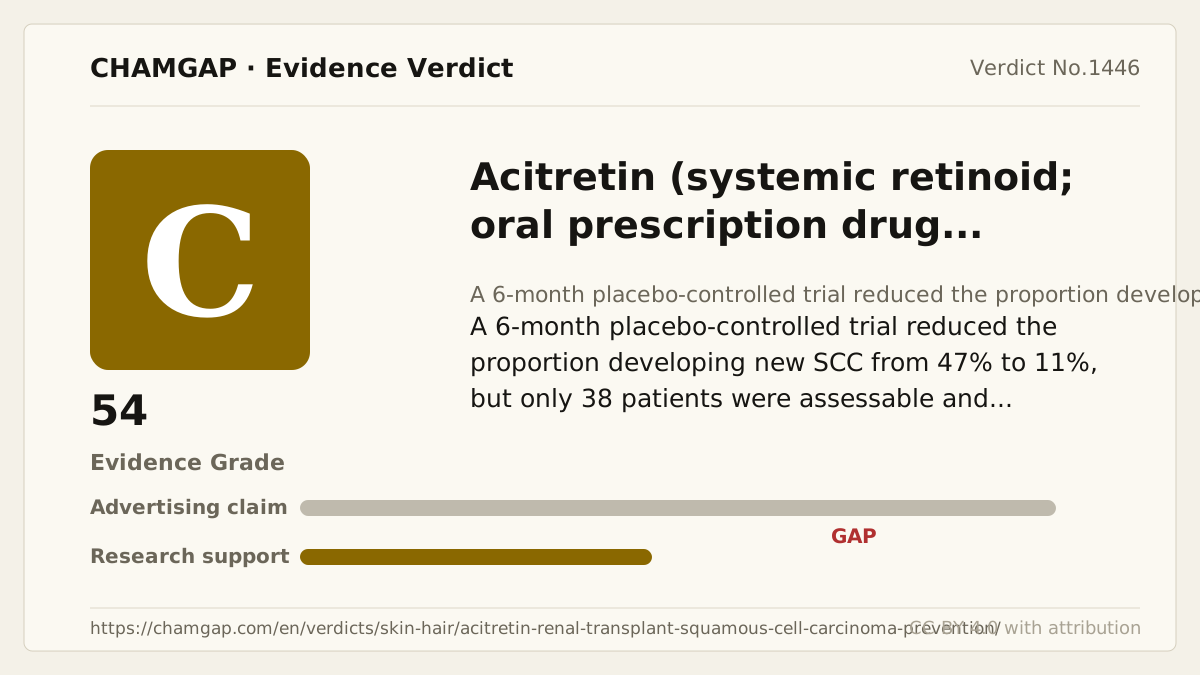
[Chamgap] Acitretin (systemic retinoid; oral prescription drug, Neotigason) × Prevention of new cutaneous squamous cell carcinoma in high-risk kidney-transplant recipients with multiple skin cancers — Evidence Grade C·54. 2 cited sources checked. Source: https://chamgap.com/en/verdicts/skin-hair/acitretin-renal-transplant-squamous-cell-carcinoma-prevention/ · CC BY 4.0CC BY 4.0 — free to use with attribution; do not distort grades, numbers, or verdict meaning.
What this document does and does not do
Chamgap is an information source. It reports what research has and has not confirmed; it does not tell readers what to take or buy. That decision belongs to readers and, when needed, medical or legal professionals. This verdict reflects literature available up to the search date and may change as new research appears. Nothing here is medical advice.