
Whole full-fat yogurt,
does it really help with Improved bone-turnover markers?
research showsThe grade is D with 28 points. Although 33 people were randomized, the eight-week trial's main analysis included only 20 who met the specified blood-draw window. Every between-group bone-formation and bone-resorption marker was null, with p values from 0.06 to 0.78. Funding was industry-linked and registration occurred after recruitment had ended.
ads claimThe presence of nutrients and cultures cannot be expanded into improved bone metabolism or fracture prevention.
Useful facts when choosing a product
- Yogurt contains protein, calcium, and fermentation cultures as established composition facts.
- The registry record lists 85 mg sodium in the 141 g serving of the trial's whole-fat vanilla yogurt, about 4% of the 2,300 mg Daily Value.
- Histamine, tyramine, nitrite, and N-nitroso compounds in the test product were not confirmed.
- No East Asian classical record was identified; yogurt belongs to Eurasian pastoral and dairy traditions.
- Verdict 099 is C with 52 points for a strain isolated from kimchi, verdict 055 is D with 34 points for isolated nattokinase, and verdict 407 is C with 48 points for isolated poly-gamma-glutamic acid. These isolated interventions are not whole yogurt containing protein, calcium, sugar, and cultures together.
Chamgap Semantic Classification Code
Candidate index · review held
F.whole-full-fat-yogurt.food.bone-turnover-markers.improve.noneFoods and beverages > Whole full-fat yogurt > Food consumption > bone-turnover markers > Improvement claim > No intervention
An automated migration candidate, not an issued permanent code; exact claim scope remains under review. This machine-generated migration candidate helps retrieval but is not a permanent assignment. The original verdict ID and URL remain authoritative.
What the research actually shows
The 2024 BMC Nutrition paper by McGrail L et al. was checked against NCT05350579. Recruitment ran from February 2018 to March 2020, while first registration was April 28, 2022. Registered outcomes broadly matched the published bone markers, but the record could have been filed after results were known. Funding came from the Yogurt in Nutrition Initiative, International Osteoporosis Foundation, American Society for Nutrition, and Danone Institute International.
Why this is classified as D (28)
Every bone-turnover marker was null and confidence intervals were absent. This tiny, short trial analyzed only 20 of 33 randomized participants, had industry-linked funding, and was retrospectively registered, giving D with 28 points.
Counterpoint. A large independent prospective trial measuring bone density and fractures is needed.
Rejudgment record. Cross-check applied — Paper and registry dates confirming 33 randomized, 20 in the main analysis, all markers null, and industry-linked funding
| Endpoint | S | Surrogate marker - laboratory or imaging measures |
| Replication | R1 | Single confirmatory trial |
| Independence | I0 | Evidence comes only from manufacturer studies |
| Effect size | E0 | Null |
| Precision | CX | No pooled confidence interval could be confirmed |
Stored derived and displayed grades match; this is not a current recalculation or validity check (D).
Sub-claim grades by effect
This ingredient is marketed for several effects. A single overall grade blends strong and weak claims together, so each effect is graded separately here. The overall grade reflects the strongest disconfirming or core claim.
| Effect (sub-claim) | Grade | Basis |
|---|---|---|
| Yogurt contains protein, calcium, and fermentation cultures | ? | This is a composition fact, not a graded clinical outcome. |
| A 141 g serving of whole-fat yogurt improves bone-turnover markers | D | Every direct between-group result in the randomized trial was null. |
Cross-check — AI research and Codex final gate
Evidence Table
| Study | Design | Sample | Funding | Endpoint | Result | Weight |
|---|---|---|---|---|---|---|
| McGrail L et al., BMC Nutrition, 2024 | Randomized untreated-control trial, eight weeks | 33 randomized, 20 meeting the blood-draw window in the main analysis | Yogurt in Nutrition Initiative, International Osteoporosis Foundation, American Society for Nutrition, and Danone Institute International | Bone-formation and bone-resorption markers | All between-group p values 0.06 to 0.78; no between-group confidence intervals reported | Null results across all direct bone-turnover outcomes |
Receipt — 4 References
All 4 cited sources were verified for existence at the original page (as of 2026-08-02).
Final verification and publication gate: Codex · Evidence date: 2026-08-02 · Corrections: none
Cite this verdict
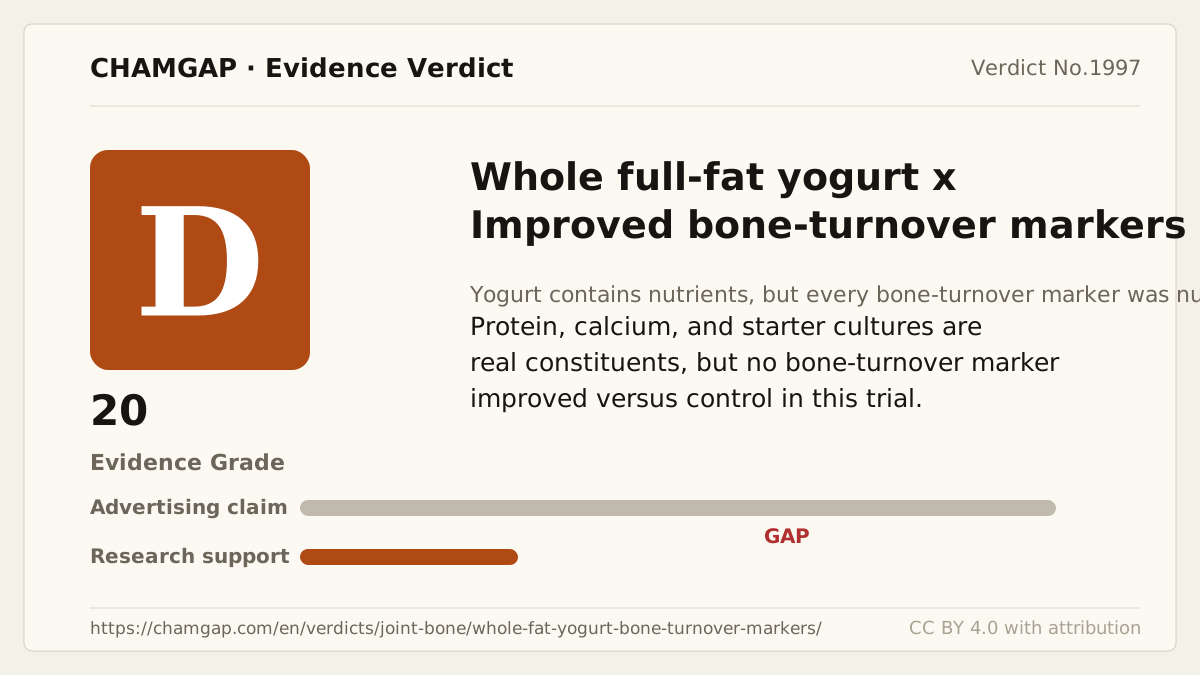
[Chamgap] Whole full-fat yogurt x bone metabolism — Evidence Grade D·28. 4 cited sources checked. Source: https://chamgap.com/en/verdicts/joint-bone/whole-fat-yogurt-bone-turnover-markers/ · CC BY 4.0CC BY 4.0 — free to use with attribution; do not distort grades, numbers, or verdict meaning.
What this document does and does not do
Chamgap is an information source. It reports what research has and has not confirmed; it does not tell readers what to take or buy. That decision belongs to readers and, when needed, medical or legal professionals. This verdict reflects literature available up to the search date and may change as new research appears. Nothing here is medical advice.