
Zoledronic acid,
does it really help with Prevention of vertebral, hip, and nonvertebral fractures in patients with osteoporosis?
research showsZoledronic acid is rated A because large randomized trials and an independent trial consistently reduced actual fractures. In 7,765 participants in HORIZON-PFT, vertebral fractures fell by 70%, hip fractures by 41%, and nonvertebral fractures by 25% over three years. In 2,127 patients treated after hip-fracture repair in HORIZON-RFT, new clinical fractures fell from 13.9% to 8.6%. Both HORIZON trials belonged to the Novartis-supported program and were not counted as independent replication of each other. An independently funded New Zealand osteopenia trial strengthened external replication by reducing fragility fractures with HR 0.63. The direct fracture evidence supports A, with sponsor concentration lowering the score to 88 points. Acute-phase reactions, hypocalcemia, renal impairment, and rare osteonecrosis of the jaw and atypical femoral fractures are separate safety issues.
ads claimOnce-yearly convenience and average relative-risk reductions can be turned into a promise that one infusion ends fracture risk for everyone. Absolute benefit varies with baseline fracture risk, renal function, calcium and vitamin D status, prior therapy, and treatment duration.
Useful facts when choosing a product
- The pivotal osteoporosis regimen used zoledronic acid 5 mg infused intravenously over at least 15 minutes; the exact interval and duration depend on indication, risk, and product labeling.
- Renal function and serum calcium should be checked before infusion, hypocalcemia corrected, and adequate calcium, vitamin D, and hydration ensured.
- Fever, myalgia, and arthralgia are common acute-phase reactions after the first infusion and usually resolve within several days.
- Use may be restricted in severe renal impairment, and rare osteonecrosis of the jaw and atypical femoral fractures warrant review of dental status, thigh or groin pain, and prolonged treatment need.
Chamgap Semantic Classification Code
Candidate index · review held
M.zoledronic-acid.intravenous.vertebral-hip-and-nonvertebral-fractures-with-osteoporosis.prevent.placeboMedicinal interventions > Zoledronic acid > Intravenous > vertebral, hip, and nonvertebral fractures with osteoporosis > Occurrence-prevention claim > Placebo
An automated migration candidate, not an issued permanent code; exact claim scope remains under review. This machine-generated migration candidate helps retrieval but is not a permanent assignment. The original verdict ID and URL remain authoritative.
What the research actually shows
Black and colleagues randomized 7,765 postmenopausal women with osteoporosis to zoledronic acid 5 mg yearly or placebo in HORIZON-PFT. At three years, vertebral fractures occurred in 10.9% versus 3.3%, hip fractures in 2.5% versus 1.4%, and nonvertebral fractures fell by 25%. Lyles and colleagues randomized 2,127 patients within 90 days after low-trauma hip-fracture repair in HORIZON-RFT. Over a median 1.9 years, new clinical fractures occurred in 13.9% versus 8.6% and deaths in 13.3% versus 9.6%. Both HORIZON trials used calcium and vitamin D and received Novartis support, so they were not treated as independent replication of each other. Reid and colleagues' publicly funded New Zealand osteopenia trial independently reported fragility-fracture HR 0.63, strengthening external replication. Bone-density gains are supportive surrogates, not the basis of this grade.
Why this is classified as A (88)
HORIZON-PFT reduced vertebral, hip, and nonvertebral fractures, and HORIZON-RFT reduced new clinical fractures, but both were Novartis-supported and were not counted as independent replication of each other. A publicly funded New Zealand osteopenia trial independently reduced fragility fractures with HR 0.63, strengthening external replication. Direct fracture outcomes support A, with sponsor concentration lowering the score to 88 points. Bone density is supportive only; infusion reactions, hypocalcemia, renal harm, osteonecrosis of the jaw, and atypical fractures remain separate safety concerns.
Counterpoint. Absolute benefit is greatest at high fracture risk. Low-risk patients and those with severe renal impairment, uncorrected hypocalcemia, or prolonged prior bisphosphonate exposure need separate benefit-harm reassessment.
Rejudgment record. New verdict — Did not count the two Novartis-supported HORIZON trials as independent replication of each other and discounted sponsor concentration, but applied A because their direct vertebral, hip, nonvertebral, and new clinical-fracture reductions were reinforced by a publicly funded independent New Zealand osteopenia trial with fragility-fracture HR 0.63
Sub-claim grades by effect
This ingredient is marketed for several effects. A single overall grade blends strong and weak claims together, so each effect is graded separately here. The overall grade reflects the strongest disconfirming or core claim.
| Effect (sub-claim) | Grade | Basis |
|---|---|---|
| Prevention of vertebral fractures in osteoporosis | A | HORIZON-PFT found a 70% reduction in vertebral fractures over three years. |
| Prevention of hip fractures in osteoporosis | A | HORIZON-PFT showed a 41% reduction in hip fractures. |
| Prevention of nonvertebral and new clinical fractures in osteoporosis | A | The 25% reduction in nonvertebral fractures in PFT and 35% reduction in new clinical fractures in RFT are consistent. |
| Improvement in bone mineral density | B | Randomized trials consistently improved bone density, but it is a surrogate below fracture outcomes. |
Cross-check — AI research and Codex final gate
Evidence Table
| Study | Design | Sample | Funding | Endpoint | Result | Weight |
|---|---|---|---|---|---|---|
| Black DM et al. HORIZON-PFT 2007 | Multinational randomized double-blind placebo-controlled trial | 7,765 postmenopausal women with osteoporosis | Supported by Novartis; multiple authors reported relevant relationships | Three-year vertebral, hip, nonvertebral, and clinical fractures | Vertebral fractures were 10.9% versus 3.3%, hip fractures 2.5% versus 1.4%, and nonvertebral fractures fell by 25%. | Pivotal large direct fracture evidence |
| Lyles KW et al. HORIZON-RFT 2007 | Multinational randomized double-blind placebo-controlled trial | 2,127 patients after low-trauma hip-fracture repair | Supported by Novartis | New clinical fracture and all-cause mortality | New clinical fractures were 13.9% versus 8.6%, and deaths were 13.3% versus 9.6%. | Direct evidence in a distinct high-risk population within the same sponsor program |
| Reid IR et al. New Zealand osteopenia RCT 2018 | Randomized double-blind placebo-controlled trial | Older women with osteopenia | Independent New Zealand public funding | Fragility fracture | Zoledronate reduced fragility fractures with a hazard ratio of 0.63. | Independent hard-endpoint replication outside the manufacturer program |
Receipt — 3 References
All 3 cited sources were verified for existence at the original page (as of 2026-08-11).
Final verification and publication gate: Codex · Evidence date: 2026-08-11 · Corrections: none
Cite this verdict
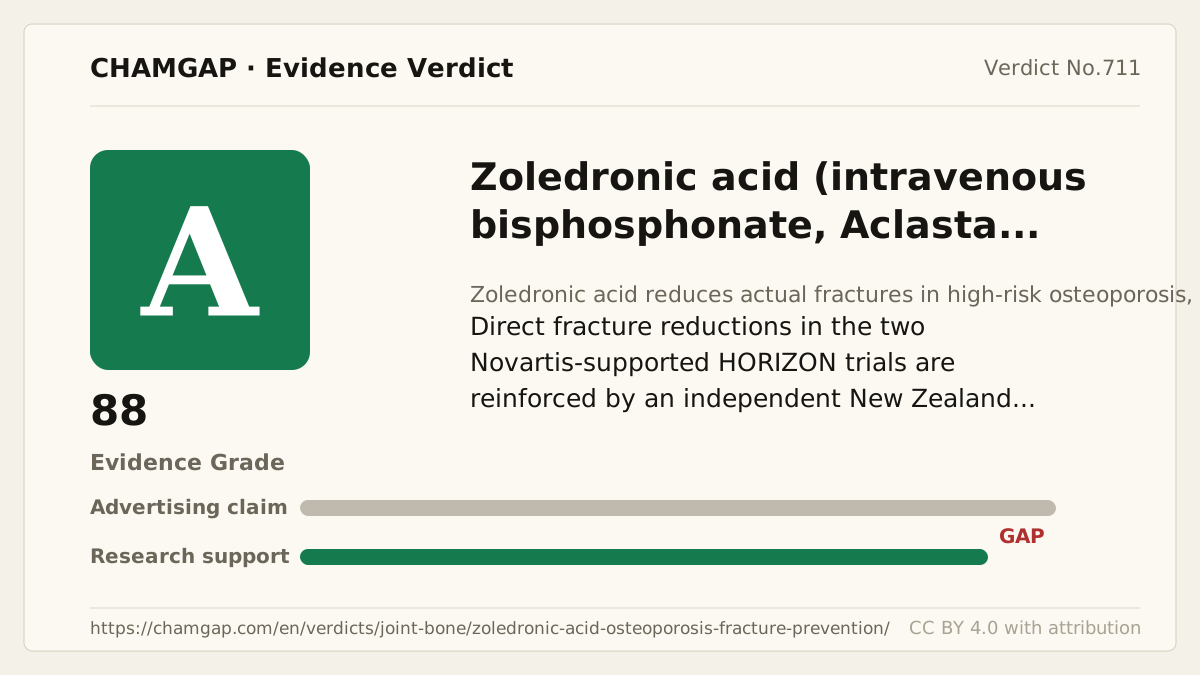
[Chamgap] Zoledronic acid x prevention of vertebral, hip, and nonvertebral fractures in osteoporosis — Evidence Grade A·88. 3 cited sources checked. Source: https://chamgap.com/en/verdicts/joint-bone/zoledronic-acid-osteoporosis-fracture-prevention/ · CC BY 4.0CC BY 4.0 — free to use with attribution; do not distort grades, numbers, or verdict meaning.
What this document does and does not do
Chamgap is an information source. It reports what research has and has not confirmed; it does not tell readers what to take or buy. That decision belongs to readers and, when needed, medical or legal professionals. This verdict reflects literature available up to the search date and may change as new research appears. Nothing here is medical advice.