
High-dose pediatric constraint-induced movement therapy,
does it really help with Improved upper-extremity function in hemiparetic cerebral palsy?
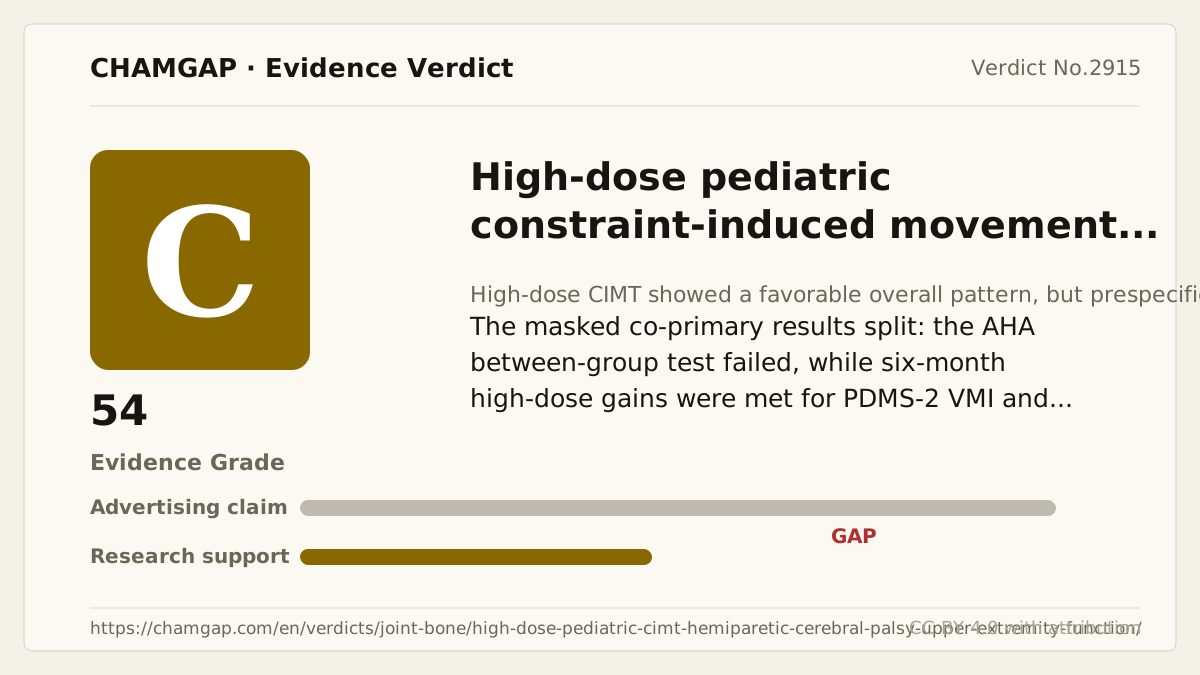
research showsGrade C, 54 points. CHAMP randomized 118 children aged 2 to 8 across usual care, 30- or 60-hour CIMT, and two constraint types, with three masked primary outcomes. The high-dose AHA contrast versus usual care failed at 23.7 points (95% CI -1.6 to 49.1). PDMS-2 VMI and QUEST DM showed significant six-month gains within high-dose groups, but their individual high-dose-versus-usual-care ANCOVAs were 6.7 (-0.8 to 14.2) and 1.4 (-0.6 to 3.5), respectively, both including zero. A separate multiple-endpoint rank test favored high dose overall.
ads claimCIMT is used in Korean pediatric rehabilitation practice. This trial primarily informs dose and constraint choices rather than proving that every child requires 60 hours.
Useful facts when choosing a product
- High dose was 60 hours and moderate dose was 30 hours.
- A central coordinator concealed the computer-generated allocation until consent.
- Four adverse events were judged unrelated to treatment.
Chamgap Semantic Classification Code
Candidate index · review held
X.pediatric-constraint-induced-movement-therapy.behavioral.upper-extremity-function-in-hemiparetic-cerebral-palsy.improve.MULTIBehaviors, exposures and policies > pediatric constraint-induced movement therapy > Behavioral delivery > upper-extremity function in hemiparetic cerebral palsy > Improvement claim > Multiple: primary unresolved
An automated migration candidate, not an issued permanent code; exact claim scope remains under review. This machine-generated migration candidate helps retrieval but is not a permanent assignment. The original verdict ID and URL remain authoritative.
What the research actually shows
The only confirmed listed defect is fewer than 200 participants: 118 children in five groups. Masked assessors measured all three primary outcomes, and four weeks of treatment was followed by assessment through six months, so an under-12-week defect does not apply; there is no evidence of at least 15% missingness. Individual ANCOVAs for AHA, PDMS-2 VMI, and QUEST DM are kept separate from the multiple-endpoint rank test. Split co-primary results support retaining coproimary_split.
Why this is classified as C (54)
This NIH-funded functional RCT had split co-primary results and one confirmed listed defect, its 118-person sample. The coproimary_split cap gives C, 54.
Counterpoint. The favorable high-dose rank composite relied on exploratory analyses selected after results review.
Rejudgment record. Source checked — Mixed functional primary outcomes with an exploratory overall high-dose pattern
| Endpoint | P | Symptom or function itself is the target - including patient reports and performance tests |
| Replication | R1 | Single confirmatory trial |
| Independence | I2 | Decisive evidence is publicly or non-profit funded |
| Effect size | E+ | Meets the clinically important threshold |
Stored derived and displayed grades match; this is not a current recalculation or validity check (C).
Sub-claim grades by effect
This ingredient is marketed for several effects. A single overall grade blends strong and weak claims together, so each effect is graded separately here. The overall grade reflects the strongest disconfirming or core claim.
| Effect (sub-claim) | Grade | Basis |
|---|---|---|
| Overall upper-extremity functional improvement | C | High-dose groups showed the greatest overall pattern. |
| Superior AHA response | D | The estimate favored high dose, but the adjusted CI included zero. |
Cross-check — AI research and Codex final gate
Evidence Table
| Study | Design | Sample | Funding | Endpoint | Result | Weight |
|---|---|---|---|---|---|---|
| Ramey et al. CHAMP | Multisite 2-by-2 factorial randomized comparative-effectiveness trial | 118 randomized | US NIH/NICHD/NCMRR grant 1R01HD068345 | Masked AHA, PDMS-2 visual motor integration, QUEST dissociated movement, and parent-reported function | AHA high dose vs usual care was 23.7 points (95% CI -1.6 to 49.1), failing. PDMS-2 VMI and QUEST DM met significant six-month gains within high-dose groups, but individual high-dose-vs-usual-care ANCOVAs were 6.7 (-0.8 to 14.2) and 1.4 (-0.6 to 3.5), both including zero. A separate multiple-endpoint rank test favored high dose. | Publicly funded pediatric functional RCT |
Receipt — 1 References
All 1 cited sources were verified for existence at the original page (as of 2026-08-26).
Final verification and publication gate: Codex · Evidence date: 2026-08-26 · Corrections: none
Cite this verdict
[Chamgap] Benefit of High-Dose Pediatric Constraint-Induced Movement Therapy for Upper-Extremity Function in Hemiparetic Cerebral Palsy — Evidence Grade C·54. 1 cited sources checked. Source: https://chamgap.com/en/verdicts/joint-bone/high-dose-pediatric-cimt-hemiparetic-cerebral-palsy-upper-extremity-function/ · CC BY 4.0CC BY 4.0 — free to use with attribution; do not distort grades, numbers, or verdict meaning.
What this document does and does not do
Chamgap is an information source. It reports what research has and has not confirmed; it does not tell readers what to take or buy. That decision belongs to readers and, when needed, medical or legal professionals. This verdict reflects literature available up to the search date and may change as new research appears. Nothing here is medical advice.