
Mediterranean diet,
does it really help with Reduced myocardial infarction, stroke, and cardiovascular death in high-risk adults?
research showsThe Mediterranean diet is rated A because it reduces the composite of myocardial infarction, stroke, and cardiovascular death in adults at high cardiovascular risk. The adjusted modified intention-to-treat primary endpoint in PREDIMED succeeded with hazard ratios of 0.69 for the olive-oil diet and 0.72 for the nut diet. CORDIOPREV independently reproduced a reduction in direct cardiovascular events among 1,002 patients with coronary disease. Allocation defects and clustering, an unblinded dietary intervention, early stopping, and adherence concerns from free olive oil and nuts limit the score to 84.
ads claimMarketing reduces the trial intervention to eating one product such as olive oil or nuts. The trials evaluated a complete dietary pattern that increased vegetables, legumes, whole grains, and fish while reducing processed meat and refined foods, supported by counseling.
Useful facts when choosing a product
- A Mediterranean diet is a dietary pattern rather than a single product; PREDIMED combined recurring nutrition counseling with free olive oil or nuts.
- People at high cardiovascular risk or with coronary disease should combine diet with prescribed medicines, exercise, and smoking cessation rather than replace treatment.
- Nut allergy, excess energy intake, and alcohol promotion are separate concerns. Starting wine is unnecessary.
Chamgap Semantic Classification Code
Candidate index · review held
D.mediterranean-dietary-pattern-emphasizing-extra-virgin-olive-oil.dietary.myocardial-infarction-stroke-and-cardiovascular-death.reduce.UNKDietary patterns and eating practices > Mediterranean dietary pattern emphasizing extra-virgin olive oil > Dietary regimen > myocardial infarction, stroke, and cardiovascular death > Reduction claim > Unknown
An automated migration candidate, not an issued permanent code; exact claim scope remains under review. This machine-generated migration candidate helps retrieval but is not a permanent assignment. The original verdict ID and URL remain authoritative.
What the research actually shows
PREDIMED assigned 7,447 high-risk adults to a Mediterranean diet with olive oil, a Mediterranean diet with nuts, or low-fat advice. However, 425 household members were assigned to the same group without randomization, one site assigned by clinic, and another site had discrepancies from its randomization table, so not all 7,447 participants underwent proper individual randomization. The original Estruch 2013 NEJM article was retracted in 2018. The reanalysis was republished as Estruch et al., N Engl J Med. 2018;378(25):e34, DOI 10.1056/NEJMoa1800389, PMID 29897866. Its adjusted modified intention-to-treat primary endpoint succeeded with HR 0.69 for olive oil and HR 0.72 for nuts. CORDIOPREV assigned and analyzed 1,002 patients with coronary disease by intention to treat; its seven-year primary composite succeeded with 87 versus 111 events and a log-rank P value of .039.
Why this is classified as A (84)
The adjusted PREDIMED reanalysis and CORDIOPREV succeeded on primary endpoints measuring direct major cardiovascular events, meeting A-level criteria. Allocation defects and clustering, an unblinded dietary intervention, early stopping, and adherence concerns from free olive oil and nuts prevent an upper-A score and give A with 84 points.
Counterpoint. Implementation should resemble a sustainable complete dietary pattern rather than isolated olive-oil or nut supplementation.
Rejudgment record. Cross-check applied — Accepted the positive adjusted intention-to-treat PREDIMED reanalysis and CORDIOPREV direct-event results, but excluded an upper-A score because of allocation defects and clustering, an unblinded dietary intervention, early stopping, and adherence concerns from free olive oil and nuts
Sub-claim grades by effect
This ingredient is marketed for several effects. A single overall grade blends strong and weak claims together, so each effect is graded separately here. The overall grade reflects the strongest disconfirming or core claim.
| Effect (sub-claim) | Grade | Basis |
|---|---|---|
| Reduced composite major cardiovascular events | A | The primary endpoints succeeded in both PREDIMED and CORDIOPREV. |
| Reduced stroke | A | Stroke was the most consistent individual event driving the PREDIMED composite. |
| Reduced myocardial infarction and cardiovascular death | B | The composite and secondary-prevention evidence support the claim, but individual PREDIMED estimates were less precise. |
Cross-check — AI research and Codex final gate
Evidence Table
| Study | Design | Sample | Funding | Endpoint | Result | Weight |
|---|---|---|---|---|---|---|
| Estruch R et al. 2018 PREDIMED | Reanalyzed multicenter randomized dietary-intervention trial | 7,447 assigned; 7,447 in the actual modified intention-to-treat primary analysis | Public funding including Instituto de Salud Carlos III; olive-oil and nut industries donated study foods | Primary composite of myocardial infarction, stroke, or cardiovascular death | Primary endpoint succeeded: HR 0.69 (95% CI 0.53 to 0.91) for olive oil and 0.72 (0.54 to 0.95) for nuts. | Large direct clinical-event evidence, downgraded for allocation deviations |
| Delgado-Lista J et al. 2022 CORDIOPREV | Outcome-assessor-masked randomized secondary-prevention trial | 1,002 assigned; 1,002 in the actual intention-to-treat primary analysis | Spanish national and Andalusian regional public research funding | Primary composite of major cardiovascular events | Primary endpoint succeeded: 87 versus 111 events, log-rank P=.039. | Independent direct replication |
Receipt — 2 References
All 2 cited sources were verified for existence at the original page (as of 2026-07-24).
Final verification and publication gate: Codex · Evidence date: 2026-07-24 · Corrections: none
Cite this verdict
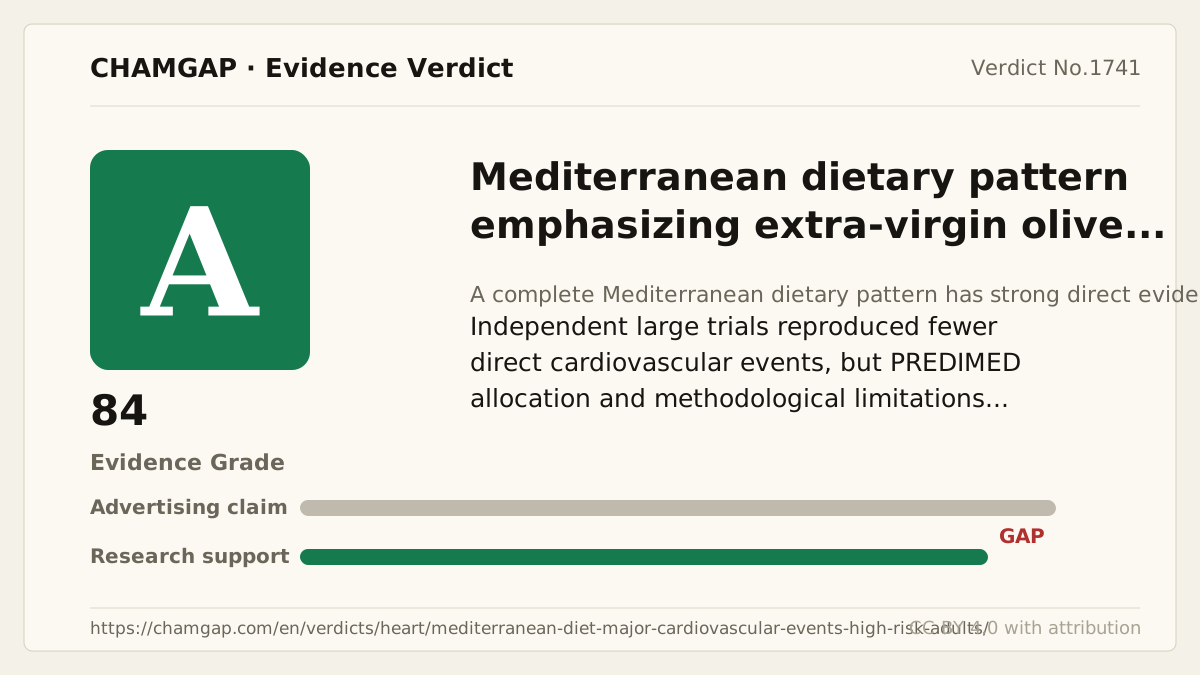
[Chamgap] Mediterranean diet x fewer major cardiovascular events — Evidence Grade A·84. 2 cited sources checked. Source: https://chamgap.com/en/verdicts/heart/mediterranean-diet-major-cardiovascular-events-high-risk-adults/ · CC BY 4.0CC BY 4.0 — free to use with attribution; do not distort grades, numbers, or verdict meaning.
What this document does and does not do
Chamgap is an information source. It reports what research has and has not confirmed; it does not tell readers what to take or buy. That decision belongs to readers and, when needed, medical or legal professionals. This verdict reflects literature available up to the search date and may change as new research appears. Nothing here is medical advice.