
Spironolactone,
does it really help with Reduced all-cause mortality and hospitalization for worsening heart failure in severe symptomatic heart failure with reduced ejection fraction?
research showsSpironolactone is rated A because it reduces all-cause mortality and hospitalization for worsening heart failure in severe symptomatic heart failure with reduced ejection fraction. RALES randomized 1,663 patients with left ventricular ejection fraction of 35% or less and predominantly NYHA class III or IV symptoms to standard therapy plus spironolactone or placebo. At a mean 24 months, all-cause mortality fell by 30%, RR 0.70 (95% CI 0.60 to 0.82), and hospitalization for worsening heart failure fell by 35%, RR 0.65 (95% CI 0.54 to 0.77), prompting early termination for efficacy. This is direct death and hospitalization evidence from randomized addition of the specific molecule to standard therapy, and a 2024 unfunded individual-participant-data meta-analysis also confirmed lower cardiovascular death, heart-failure hospitalization, and all-cause death with MRAs in HFrEF. Hyperkalemia, worsening kidney function, and gynecomastia require monitoring separate from the efficacy judgment.
ads claimMarketing may reduce spironolactone to a water pill for the heart or, conversely, a survival drug for everyone. The mortality evidence comes from adding it to standard therapy in severe symptomatic HFrEF under RALES conditions; edema, hypertension, HFpEF, and acne are separate indications and verdicts.
Useful facts when choosing a product
- RALES generally started spironolactone at 25 mg once daily and adjusted to 25 mg every other day or 50 mg according to clinical status and potassium. Actual prescribing must be individualized to blood pressure, kidney function, potassium, and concomitant drugs.
- Serum potassium and creatinine should be checked before treatment, soon after initiation or dose escalation, and regularly thereafter. Kidney impairment, baseline hyperkalemia, and concomitant potassium-raising drugs increase risk.
- In RALES, gynecomastia or breast pain occurred in 10% of men receiving spironolactone versus 1% receiving placebo, and other endocrine effects involving sexual function or menstruation can occur.
- Unsupervised combination with potassium supplements or other potassium-sparing agents should be avoided. Marked weakness, arrhythmic symptoms, dehydration, or acute illness warrants prompt assessment for hyperkalemia and kidney dysfunction.
Chamgap Semantic Classification Code
Candidate index · review held
M.spironolactone.UNK.all-cause-mortality-and-hospitalization-for-worsening-heart-failure-in-severe-symptomatic-heart-failure-with-reduced-ejection-fraction.reduce.MULTIMedicinal interventions > Spironolactone > Unknown > all-cause mortality and hospitalization for worsening heart failure in severe symptomatic heart failure with reduced ejection fraction > Reduction claim > Multiple: primary unresolved
An automated migration candidate, not an issued permanent code; exact claim scope remains under review. This machine-generated migration candidate helps retrieval but is not a permanent assignment. The original verdict ID and URL remain authoritative.
What the research actually shows
Pitt and the Randomized Aldactone Evaluation Study Investigators enrolled 1,663 patients with left ventricular ejection fraction of 35% or less, a recent or current history of NYHA class IV symptoms, and predominantly class III or IV symptoms at enrollment. Participants received spironolactone 25 mg daily or placebo. After a mean 24 months, 386 placebo recipients and 284 spironolactone recipients had died, a 30% reduction, and hospitalization for heart failure fell by 35%; lower progressive-heart-failure death and sudden cardiac death contributed to the mortality effect. The unfunded 2024 individual-participant-data meta-analysis by Jhund and colleagues pooled 13,846 participants from RALES, EMPHASIS-HF, TOPCAT, and FINEARTS-HF and found HR 0.66 for cardiovascular death or heart-failure hospitalization and HR 0.73 for all-cause death in HFrEF trials. Those pooled estimates include other MRAs and therefore support rather than replace the molecule-specific RALES result. Juurlink's population data showed increased hyperkalemia hospitalization and death after RALES entered practice, emphasizing careful selection and monitoring.
Why this is classified as A (94)
The 1,663-participant double-blind RALES trial showed large direct hard-endpoint benefits, RR 0.70 for all-cause mortality and RR 0.65 for heart-failure hospitalization. Searle funding and differences from contemporary therapy reduce the score, but clear ingredient-specific placebo-controlled add-on efficacy and consistent support from an unfunded 2024 HFrEF MRA individual-data meta-analysis give A with 94 points.
Counterpoint. Spironolactone is a core survival therapy for appropriate severe HFrEF, but safe use depends on potassium and kidney monitoring. Extending it without monitoring to patients near the RALES exclusions for hyperkalemia or severe kidney impairment can produce outcomes unlike those in the trial.
Rejudgment record. Cross-check applied — Applied rule ⑤ to the direct hard-endpoint, molecule-attributable RALES evidence in which randomized addition of spironolactone to standard therapy produced RR 0.70 for all-cause death and RR 0.65 for heart-failure hospitalization, with consistency from the unfunded 2024 HFrEF MRA individual-participant-data meta-analysis as support
Sub-claim grades by effect
This ingredient is marketed for several effects. A single overall grade blends strong and weak claims together, so each effect is graded separately here. The overall grade reflects the strongest disconfirming or core claim.
| Effect (sub-claim) | Grade | Basis |
|---|---|---|
| Reduction in all-cause mortality in severe symptomatic HFrEF | A | RALES found an all-cause mortality RR of 0.70 (95% CI 0.60 to 0.82). |
| Reduction in hospitalization for worsening heart failure | A | RALES directly reduced hospitalization, RR 0.65 (95% CI 0.54 to 0.77). |
| Reduction in progressive-heart-failure death and sudden cardiac death | B | Both modes of death contributed to the mortality benefit, but this analysis was subordinate to the primary all-cause mortality endpoint. |
Cross-check — AI research and Codex final gate
Evidence Table
| Study | Design | Sample | Funding | Endpoint | Result | Weight |
|---|---|---|---|---|---|---|
| Pitt B et al.; Randomized Aldactone Evaluation Study Investigators. 1999 | Multicenter double-blind randomized placebo-controlled add-on trial | 1,663 patients with severe HFrEF; 822 spironolactone and 841 placebo | Funded by Searle | All-cause mortality and hospitalization for worsening heart failure | All-cause mortality RR 0.70 (95% CI 0.60 to 0.82) and heart-failure hospitalization RR 0.65 (95% CI 0.54 to 0.77) over mean follow-up of 24 months. | Pivotal ingredient-specific mortality and hospitalization trial |
| Jhund PS et al. 2024 | Individual-participant-data meta-analysis of four randomized trials | 13,846 participants across RALES, EMPHASIS-HF, TOPCAT, and FINEARTS-HF | No external funding for the meta-analysis | Cardiovascular death or heart-failure hospitalization, all-cause death, and hyperkalemia | In HFrEF trials, HR was 0.66 for cardiovascular death or heart-failure hospitalization and 0.73 for all-cause death; MRAs approximately doubled hyperkalemia risk. | Independent synthesis supporting consistency and safety |
| Juurlink DN et al. 2004 | Population-based time-series safety study before and after RALES | Data from more than 1.3 million Ontario residents aged 66 years or older | Canadian public and academic support | Trends in spironolactone prescribing and hyperkalemia hospitalization and death | Hyperkalemia-related hospitalization and in-hospital death increased as prescribing rose after RALES. | Real-world safety warning kept separate from efficacy |
Receipt — 3 References
All 3 cited sources were verified for existence at the original page (as of 2026-07-23).
Final verification and publication gate: Codex · Evidence date: 2026-07-23 · Corrections: none
Cite this verdict
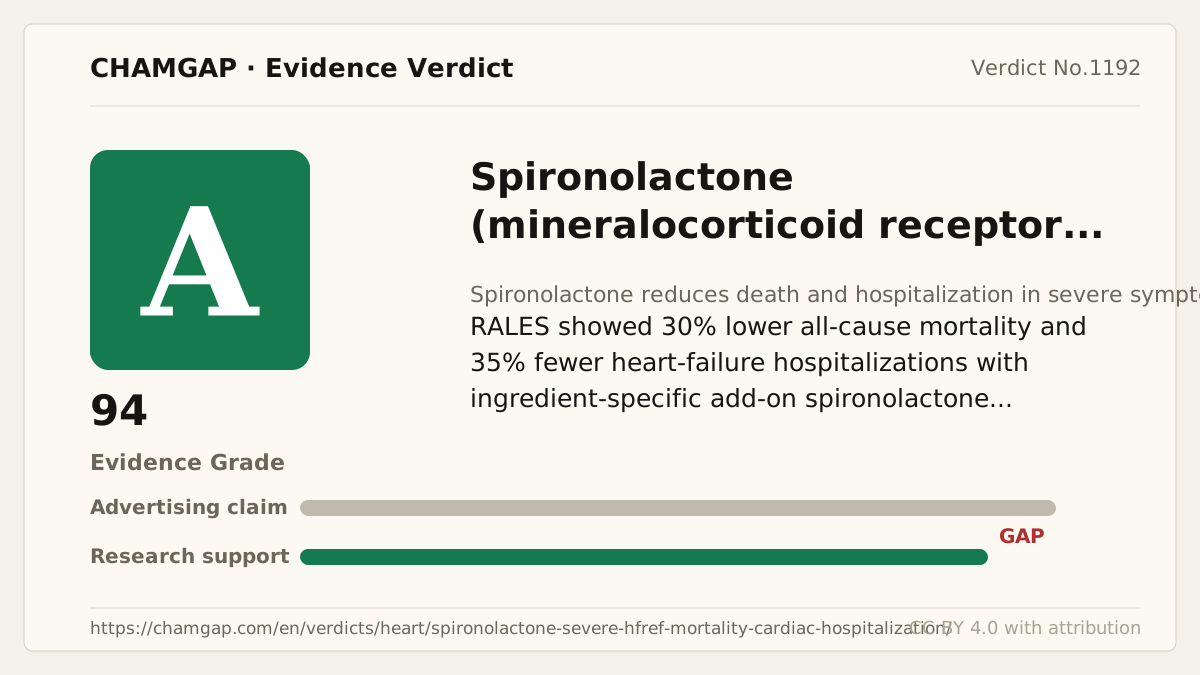
[Chamgap] Spironolactone x reduced death and hospitalization in severe symptomatic HFrEF — Evidence Grade A·94. 3 cited sources checked. Source: https://chamgap.com/en/verdicts/heart/spironolactone-severe-hfref-mortality-cardiac-hospitalization/ · CC BY 4.0CC BY 4.0 — free to use with attribution; do not distort grades, numbers, or verdict meaning.
What this document does and does not do
Chamgap is an information source. It reports what research has and has not confirmed; it does not tell readers what to take or buy. That decision belongs to readers and, when needed, medical or legal professionals. This verdict reflects literature available up to the search date and may change as new research appears. Nothing here is medical advice.