
Empiric DOAC therapy,
does it really help with Reduction in recurrent stroke or systemic embolism after embolic stroke of undetermined source?
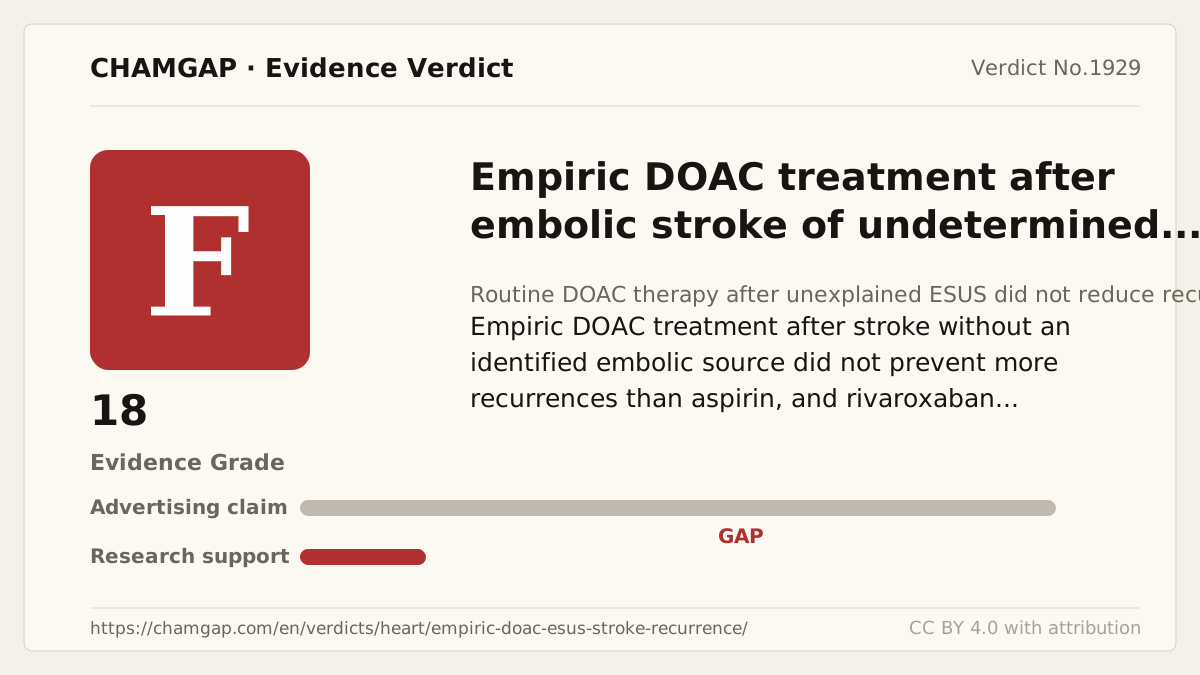
research showsThe grade is F. In 7,213 NAVIGATE ESUS participants, recurrent stroke or systemic embolism was 5.1% versus 4.8% per year, HR 1.07 (95% CI 0.87 to 1.33), P=0.52, showing no benefit. The prespecified primary safety outcome, major bleeding, increased to 1.8% versus 0.7% per year, HR 2.72 (1.68 to 4.39), P<0.001, and the trial stopped early for absent efficacy and harm. No benefit plus clear harm gives F with 12 points.
ads claimThe answer differs when atrial fibrillation is established. For nonvalvular atrial fibrillation, verdict 659 is B with 79 points for apixaban, verdict 773 is B with 77 points for edoxaban, and verdict 792 is B with 78 points for dabigatran. This verdict says empiric DOAC use after stroke without an identified embolic source adds bleeding without established benefit; it does not say DOACs are ineffective generally.
Useful facts when choosing a product
- Both trials were double-blind and used aspirin as active comparator.
- The trials used different DOACs and manufacturer programs, but both were manufacturer funded.
- NAVIGATE ESUS stopped early for futility and increased bleeding.
Chamgap Semantic Classification Code
Candidate index · review held
UNK.empiric-doac-treatment-after-embolic-stroke-of-undetermined-source.UNK.recurrent-stroke-or-systemic-embolism-after-embolic-stroke-of-undetermined-source.reduce.UNKUnknown > Empiric DOAC treatment after embolic stroke of undetermined source > Unknown > recurrent stroke or systemic embolism after embolic stroke of undetermined source > Reduction claim > Unknown
An automated migration candidate, not an issued permanent code; exact claim scope remains under review. This machine-generated migration candidate helps retrieval but is not a permanent assignment. The original verdict ID and URL remain authoritative.
What the research actually shows
NAVIGATE ESUS randomized and analyzed by intention to treat 7,213 participants, 3,609 to rivaroxaban and 3,604 to aspirin. The primary efficacy endpoint was 5.1% versus 4.8% per year, HR 1.07 (95% CI 0.87 to 1.33), P=0.52. Major bleeding was 1.8% versus 0.7% per year, HR 2.72 (1.68 to 4.39), P<0.001; life-threatening or fatal bleeding was 1.0% versus 0.4%, HR 2.34 (1.28 to 4.29), P=0.004; and symptomatic intracranial hemorrhage was 0.6% versus 0.1%, HR 4.02 (1.51 to 10.7), P=0.003. Absent efficacy and bleeding led to early termination. RE-SPECT ESUS randomized and analyzed 5,390 participants; recurrent stroke occurred in 177 (6.6%) versus 207 (7.7%), HR 0.85 (0.69 to 1.03), P=0.10. Bayer and Janssen funded the first trial and Boehringer Ingelheim the second.
Why this is classified as F (12)
Two large ESUS trials missed their efficacy endpoints, and NAVIGATE ESUS showed clear harm on its prespecified primary safety endpoint and stopped early, giving F with 12 points.
Counterpoint. F does not negate DOAC efficacy in atrial fibrillation; it evaluates only routine empiric treatment of ESUS.
Rejudgment record. Cross-check applied — Failed efficacy endpoints in two large trials plus significantly increased bleeding on the prespecified NAVIGATE ESUS primary safety outcome and early termination
| Endpoint | H | Hard endpoint - actual events such as death |
| Replication | RX | Repeatedly refuted in the same indication |
| Independence | I0 | Evidence comes only from manufacturer studies |
| Effect size | E- | Harm increased in the trials |
| Precision | C0 | The confidence interval leaves room for benefit |
Stored derived and displayed grades match; this is not a current recalculation or validity check (F).
Sub-claim grades by effect
This ingredient is marketed for several effects. A single overall grade blends strong and weak claims together, so each effect is graded separately here. The overall grade reflects the strongest disconfirming or core claim.
| Effect (sub-claim) | Grade | Basis |
|---|---|---|
| Rivaroxaban prevention of recurrent stroke or systemic embolism | F | Efficacy HR was 1.07 with no benefit, while the prespecified major-bleeding safety outcome increased significantly. |
| Dabigatran prevention of recurrent stroke | D | HR was 0.85, but the 95% confidence interval included 1. |
| Superiority of empiric anticoagulation over aspirin | F | Efficacy endpoints failed in two large trials, with clear bleeding harm in the rivaroxaban trial. |
Cross-check — AI research and Codex final gate
Evidence Table
| Study | Design | Sample | Funding | Endpoint | Result | Weight |
|---|---|---|---|---|---|---|
| Hart et al. 2018 NAVIGATE ESUS | Double-blind randomized trial of rivaroxaban versus aspirin | 7,213 randomized and analyzed by intention to treat, 3,609/3,604 | Bayer and Janssen Research and Development | Recurrent stroke or systemic embolism efficacy endpoint and major-bleeding safety endpoint | Efficacy 5.1% versus 4.8% per year, HR 1.07 (95% CI 0.87 to 1.33), P=0.52; major bleeding 1.8% versus 0.7%, HR 2.72 (1.68 to 4.39); life-threatening or fatal bleeding 1.0% versus 0.4%, HR 2.34 (1.28 to 4.29); symptomatic intracranial hemorrhage 0.6% versus 0.1%, HR 4.02 (1.51 to 10.7) | Stopped early for absent efficacy and clear bleeding harm |
| Diener et al. 2019 RE-SPECT ESUS | Double-blind randomized trial of dabigatran versus aspirin | 5,390 randomized and analyzed by intention to treat | Boehringer Ingelheim | Primary recurrent stroke endpoint | 177 (6.6%) versus 207 (7.7%), HR 0.85 (95% CI 0.69 to 1.03), P=0.10. | Repeated null result with another DOAC, retaining meaningful benefit |
Receipt — 2 References
All 2 cited sources were verified for existence at the original page (as of 2026-08-01).
Final verification and publication gate: Codex · Evidence date: 2026-08-01 · Corrections: none
Cite this verdict
[Chamgap] Empiric DOAC therapy x prevention of recurrent embolic stroke of undetermined source — Evidence Grade F·12. 2 cited sources checked. Source: https://chamgap.com/en/verdicts/heart/empiric-doac-esus-stroke-recurrence/ · CC BY 4.0CC BY 4.0 — free to use with attribution; do not distort grades, numbers, or verdict meaning.
What this document does and does not do
Chamgap is an information source. It reports what research has and has not confirmed; it does not tell readers what to take or buy. That decision belongs to readers and, when needed, medical or legal professionals. This verdict reflects literature available up to the search date and may change as new research appears. Nothing here is medical advice.