
See title and evidence table for the studied intervention.,
does it really help with The stated clinical outcome in the title.?
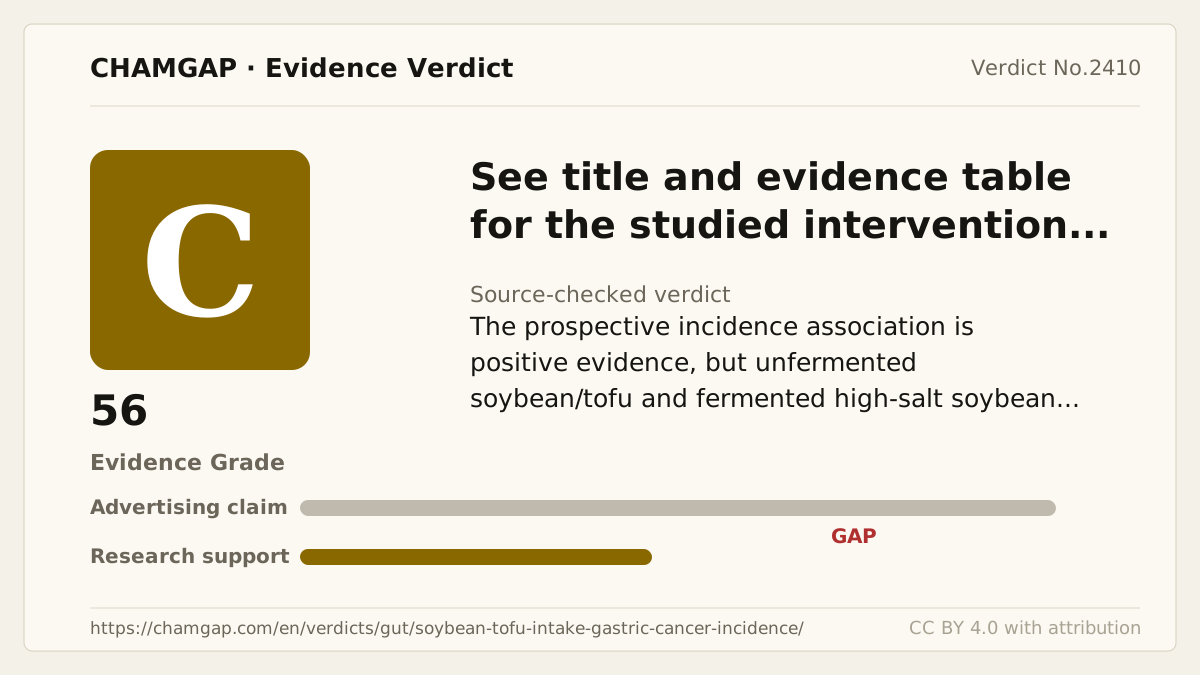
research showsThe grade is C with 56 points. In KMCC, soybean/tofu intake one to four times weekly versus almost never was associated with gastric-cancer incidence, RR 0.57 (95% CI 0.34 to 0.98).
ads claimMarketing should stay within the studied population, intervention, comparator, endpoint, and duration.
Useful facts when choosing a product
- The six adjustment variables were age, sex, smoking, BMI, alcohol, and residence area.
- H. pylori, salt, and pickled foods were not adjusted.
Chamgap Semantic Classification Code
Candidate index · review held
F.nonfermented-soybean-or-tofu.food.gastric-cancer-incidence.reduce.UNKFoods and beverages > Nonfermented soybean or tofu > Food consumption > Gastric-cancer incidence > Reduction claim > Unknown
An automated migration candidate, not an issued permanent code; exact claim scope remains under review. This machine-generated migration candidate helps retrieval but is not a permanent assignment. The original verdict ID and URL remain authoritative.
What the research actually shows
The Korean Multi-Center Cancer Cohort documented 166 incident gastric cancers over mean follow-up of 8.5 years. Baseline gastric cancer was excluded, but no analysis excluding early follow-up cases was reported as either main or sensitivity analysis. The Japanese Takayama Study used gastric-cancer death, not incidence; excluding deaths in the first four years was a male sensitivity analysis, not the main analysis.
Why this is classified as C (56)
The registered incidence association and opposing fermented-soy direction together give C with 56 points.
Counterpoint. Important limitations and alternative evidence are reported in the Korean text.
Rejudgment record. Cross-check applied — Complete covariate audit, opposing fermented-soy direction, and distinction between KMCC incidence and Takayama mortality sensitivity analysis
| Endpoint | H | Hard endpoint - actual events such as death |
| Replication | R1 | Single confirmatory trial |
| Independence | I2 | Decisive evidence is publicly or non-profit funded |
| Effect size | E+ | Meets the clinically important threshold |
Stored derived and displayed grades match; this is not a current recalculation or validity check (C).
Sub-claim grades by effect
This ingredient is marketed for several effects. A single overall grade blends strong and weak claims together, so each effect is graded separately here. The overall grade reflects the strongest disconfirming or core claim.
| Effect (sub-claim) | Grade | Basis |
|---|---|---|
| Primary claim | C | The grade is C with 58 points; the adjusted RR was 0.57 (95% CI 0.34 to 0.98). |
Cross-check — AI research and Codex final gate
Evidence Table
| Study | Design | Sample | Funding | Endpoint | Result | Weight |
|---|---|---|---|---|---|---|
| Ko KP et al. 2013 KMCC | Community-based prospective cohort | 9,724 participants; 166 incident gastric cancers | Korean Ministry of Science and Technology; National R&D Program for Cancer Control; Korea Research Foundation | Incident gastric cancer | One to four times weekly RR 0.57 (95% CI 0.34-0.98); reference 22 cases/8,670 person-years | Pivotal evidence |
Receipt — 2 References
All 2 cited sources were verified for existence at the original page (as of 2026-08-07).
Final verification and publication gate: Codex · Evidence date: 2026-08-07 · Corrections: none
Cite this verdict
[Chamgap] Verdict 2410: soybean tofu intake gastric cancer incidence — Evidence Grade C·56. 2 cited sources checked. Source: https://chamgap.com/en/verdicts/gut/soybean-tofu-intake-gastric-cancer-incidence/ · CC BY 4.0CC BY 4.0 — free to use with attribution; do not distort grades, numbers, or verdict meaning.
What this document does and does not do
Chamgap is an information source. It reports what research has and has not confirmed; it does not tell readers what to take or buy. That decision belongs to readers and, when needed, medical or legal professionals. This verdict reflects literature available up to the search date and may change as new research appears. Nothing here is medical advice.