
Preoperative oral antibiotics,
does it really help with Reduced 30-day surgical-site infection versus intravenous prophylaxis alone?
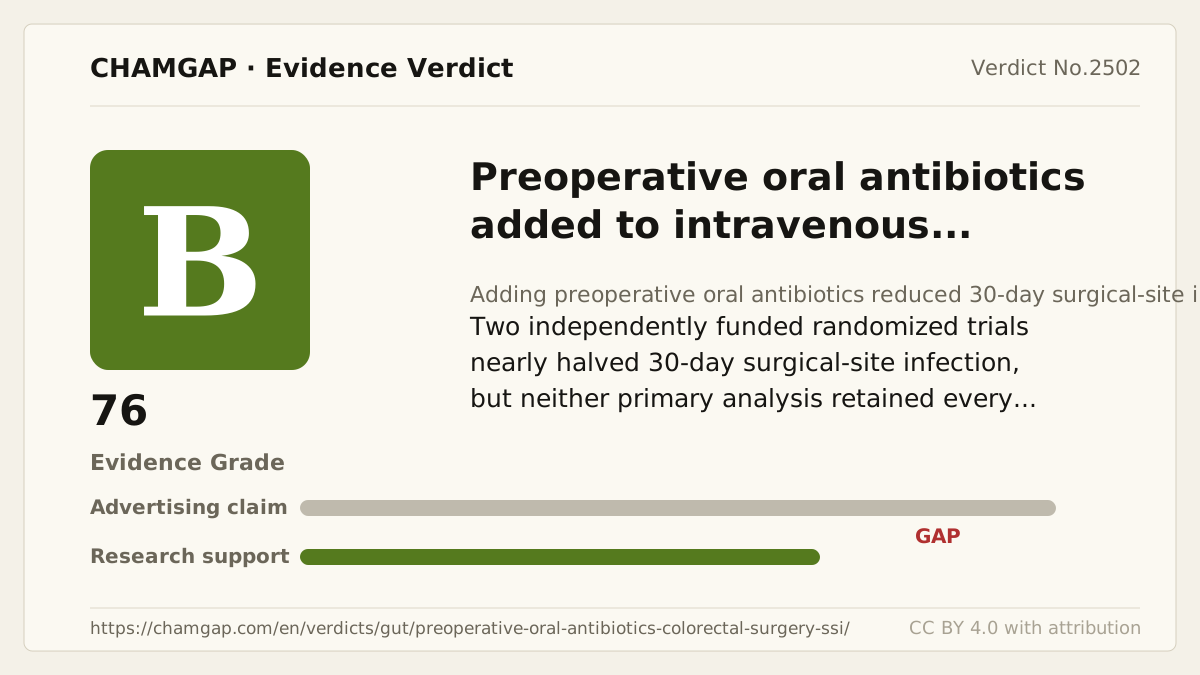
research showsThe grade is B. Infection was 4.9% versus 11.2% in the Spanish ORALEV trial and 13.0% versus 21.6% in the French COMBINE trial. Randomized trials with separate nonprofit and public funding replicated reduction of the same 30-day clinical event. Both analyses excluded some randomized participants, giving B with 76 points.
ads claimAdding preoperative oral antibiotics to intravenous prophylaxis reduced infection. Regimen, bowel preparation, operative site, and local resistance must guide prescribing; this is not evidence for self-medication.
Useful facts when choosing a product
- ORALEV used ciprofloxacin plus metronidazole without mechanical bowel preparation.
- COMBINE used ornidazole 1 g about 12 hours before surgery against placebo.
- Both were specialist perioperative protocols, not self-treatment.
Chamgap Semantic Classification Code
Candidate index · review held
UNK.preoperative-oral-antibiotics-added-to-intravenous-prophylaxis.MULTI.surgical-site-infection.reduce.MULTIUnknown > Preoperative oral antibiotics added to intravenous prophylaxis > Multiple: primary unresolved > surgical-site infection > Reduction claim > Multiple: primary unresolved
An automated migration candidate, not an issued permanent code; exact claim scope remains under review. This machine-generated migration candidate helps retrieval but is not a permanent assignment. The original verdict ID and URL remain authoritative.
What the research actually shows
ORALEV randomized 565 people but analyzed 267 and 269 who received assigned treatment. COMBINE randomized 960 and used a complete-case modified intention-to-treat analysis of 463 per arm after withdrawals. Both prespecified 30-day surgical-site infection as primary. Authors and Spanish nonprofit versus French public funding were separate, while post-randomization exclusion remained an avoidable analytical limitation in both.
Why this is classified as B (76)
Two independently funded randomized trials replicated lower 30-day infection, but both used modified analyses after post-randomization exclusions, giving B with 76 points.
Counterpoint. Resistance, C. difficile infection, allergy, and local drug choice remain separate prescribing considerations.
Rejudgment record. New verdict — Same 30-day surgical-site infection reduction in two independently funded randomized trials with modified analyses
| Endpoint | H | Hard endpoint - actual events such as death |
| Replication | R2 | Independently replicated across trials |
| Independence | I2 | Decisive evidence is publicly or non-profit funded |
| Effect size | E+ | Meets the clinically important threshold |
Stored derived and displayed grades match; this is not a current recalculation or validity check (B).
Sub-claim grades by effect
This ingredient is marketed for several effects. A single overall grade blends strong and weak claims together, so each effect is graded separately here. The overall grade reflects the strongest disconfirming or core claim.
| Effect (sub-claim) | Grade | Basis |
|---|---|---|
| Reduced overall 30-day surgical-site infection | B | Two independent trials found reductions in the same direction. |
| Reduced infection without mechanical bowel preparation | B | ORALEV found 4.9% versus 11.2%. |
| All oral antibiotic regimens are equivalent | ? | These were not head-to-head regimen comparisons. |
Cross-check — AI research and Codex final gate
Evidence Table
| Study | Design | Sample | Funding | Endpoint | Result | Weight |
|---|---|---|---|---|---|---|
| Espin Basany et al. ORALEV 2020 | Multicenter single-blind pragmatic randomized trial | 565 randomized; 267 versus 269 analyzed | Partly funded by Fundación Asociación Española de Coloproctología | Primary: surgical-site infection within 30 days | 13/267 (4.9%) versus 30/269 (11.2%), OR 0.41 (95% CI 0.20 to 0.80) | Independent nonprofit-funded replication trial |
| Futier et al. COMBINE 2022 | Multicenter double-blind placebo-controlled randomized trial | 960 randomized; 463 versus 463, 926 in the modified analysis | French Ministry of Health PHRC-14-0060 and Clermont-Ferrand University Hospital | Primary: surgical-site infection within 30 days | 60/463 (13.0%) versus 100/463 (21.6%), absolute difference -8.6 points (95% CI -13.5 to -3.8), RR 0.60 (0.45 to 0.80) | Independent publicly funded replication trial |
Receipt — 3 References
All 3 cited sources were verified for existence at the original page (as of 2026-08-14).
Final verification and publication gate: Codex · Evidence date: 2026-08-14 · Corrections: none
Cite this verdict
[Chamgap] Preoperative oral antibiotics x surgical-site infection after colorectal surgery — Evidence Grade B·76. 3 cited sources checked. Source: https://chamgap.com/en/verdicts/gut/preoperative-oral-antibiotics-colorectal-surgery-ssi/ · CC BY 4.0CC BY 4.0 — free to use with attribution; do not distort grades, numbers, or verdict meaning.
What this document does and does not do
Chamgap is an information source. It reports what research has and has not confirmed; it does not tell readers what to take or buy. That decision belongs to readers and, when needed, medical or legal professionals. This verdict reflects literature available up to the search date and may change as new research appears. Nothing here is medical advice.