
Persimmon plus crab,
does it really help with Combination-specific poisoning, abdominal pain, or diarrhea?
research showsThe verdict is pending. Evidence on the combination is not entirely absent: a 1936 exploratory animal experiment included persimmon and crab and observed no conspicuous poisoning. Whether this pair was among the seven combinations fed to people could not be confirmed, and no human comparative evidence was identified, so no score was assigned.
ads claimAn exploratory animal experiment found no conspicuous poisoning from the tested combinations, but human comparative evidence for persimmon plus crab was not identified. Clinical persimmon bezoars are real, yet they arise from repeated excessive persimmon intake and must not be presented as crab-combination toxicity.
Useful facts when choosing a product
- Cheng's exploratory experiment included persimmon and crab among 14 household-cooked pairs fed on two consecutive days to albino rats, monkeys, and dogs; no conspicuous poisoning was observed. Whether this pair was among seven combinations fed to people could not be confirmed.
- Persimmon bezoar is a real clinical condition associated with repeated excessive intake of unripe or astringent fruit.
- A 2025 Habuka case found a 5 by 5 cm obstructing bezoar containing more than 98% tannin in a 93-year-old man eating two persimmons daily. This was not a crab-combination exposure.
- Soluble tannin in deastringed persimmon was measured at 0.031 to 0.262 g per 100 g fresh fruit, varying by cultivar and treatment.
Chamgap Semantic Classification Code
Candidate index · review held
F.about-one-persimmon-eaten-with-one-serving-of-properly-cooked-crab.oral.combination-specific-poisoning-abdominal-pain-or-diarrhea.assess.UNKFoods and beverages > About one persimmon eaten with one serving of properly cooked crab > Oral > Combination-specific poisoning, abdominal pain, or diarrhea > Association or change assessment > Unknown
An automated migration candidate, not an issued permanent code; exact claim scope remains under review. This machine-generated migration candidate helps retrieval but is not a permanent assignment. The original verdict ID and URL remain authoritative.
What the research actually shows
Cheng selected 14 of 184 traditional combinations, including persimmon and crab, prepared them as ordinary household dishes, and fed them to albino rats, monkeys, and dogs on two consecutive days. Seven common pairs were also eaten by the investigator and one colleague. Facial expression, behavior, temperature, and excreta were observed for 24 hours, with no conspicuous poisoning. Whether persimmon and crab was among the seven human-fed pairs could not be confirmed. The work was exploratory, without randomization, blinding, controls, standardized toxicology testing, or an adequate sample. The original 1936 scan could not be opened; the bibliography and experiment details were verified through a 2017 academic biography.
Why this is classified as ?
Exploratory animal evidence found no conspicuous poisoning, but no human comparison specific to persimmon plus crab was confirmed, so the verdict remains pending without a score.
Counterpoint. Shellfish-allergy symptoms, severe vomiting or diarrhea, breathing difficulty, or major abdominal pain require prompt care regardless of a food-combination story.
Rejudgment record. Cross-check applied — A 1936 exploratory animal experiment included persimmon and crab, but no combination-specific human comparison was confirmed
| Endpoint | P | Symptom or function itself is the target - including patient reports and performance tests |
Stored derived and displayed grades match; this is not a current recalculation or validity check (?).
Sub-claim grades by effect
This ingredient is marketed for several effects. A single overall grade blends strong and weak claims together, so each effect is graded separately here. The overall grade reflects the strongest disconfirming or core claim.
| Effect (sub-claim) | Grade | Basis |
|---|---|---|
| Persimmon plus crab increases poisoning, abdominal pain, or diarrhea | ? | Exploratory animal evidence exists, but no human comparison was confirmed. |
| Repeated excessive persimmon intake can cause bezoars | B | Clinical cases include component analysis, but this is not the graded combination claim. |
Cross-check — AI research and Codex final gate
Evidence Table
| Study | Design | Sample | Funding | Endpoint | Result | Weight |
|---|---|---|---|---|---|---|
| Cheng 1936 | Uncontrolled exploratory animal study with limited self-experimentation | Fourteen pairs in animals; seven pairs in two investigators | Not confirmed | Facial expression, behavior, temperature, excreta, and conspicuous poisoning over 24 hours | No conspicuous poisoning in animal tests of 14 pairs including persimmon and crab; human exposure to this pair not confirmed | Exploratory combination evidence |
| Besada et al. 2009 | Persimmon composition and deastringency experiment | No human participants | Original funding not confirmed | Soluble tannin concentration | 0.031 to 0.262 g per 100 g fresh fruit depending on treatment and cultivar | Direct persimmon-tannin composition evidence |
| Habuka et al. 2025 case report | Case report and component analysis of obstructing persimmon bezoar | One 93-year-old man | Original funding not confirmed | Intestinal obstruction and removed-bezoar composition | 5 by 5 cm bezoar containing more than 98% tannin; two persimmons daily | Evidence distinguishing persimmon-only harm |
Receipt — 5 References
Of 5 cited sources, 1 had limited original-page access (blocked or summary-only) and were verified via index/summary, marked partial; the rest were verified at the original page. As of 2026-08-04.
Final verification and publication gate: Codex · Evidence date: 2026-08-04 · Corrections: none
Cite this verdict
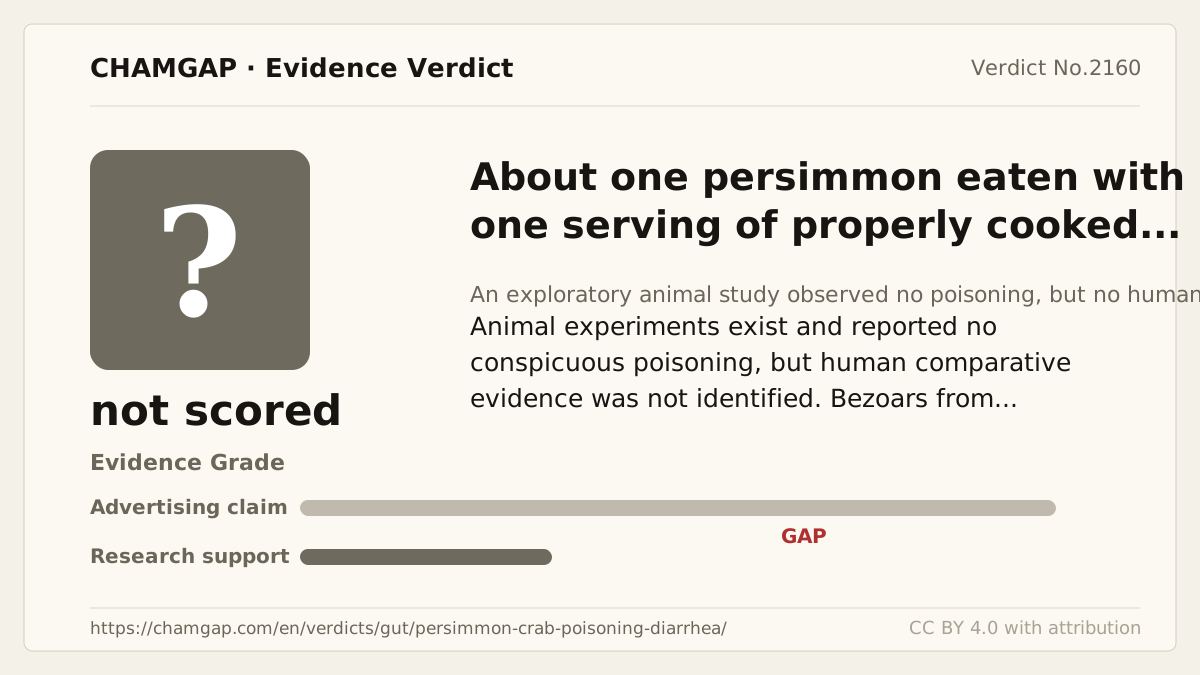
[Chamgap] Persimmon plus crab x poisoning, abdominal pain, or diarrhea — Evidence Grade ?. 5 cited sources checked. Source: https://chamgap.com/en/verdicts/gut/persimmon-crab-poisoning-diarrhea/ · CC BY 4.0CC BY 4.0 — free to use with attribution; do not distort grades, numbers, or verdict meaning.
What this document does and does not do
Chamgap is an information source. It reports what research has and has not confirmed; it does not tell readers what to take or buy. That decision belongs to readers and, when needed, medical or legal professionals. This verdict reflects literature available up to the search date and may change as new research appears. Nothing here is medical advice.