
Ondansetron,
does it really help with Reduced vomiting during oral rehydration and reduced intravenous-fluid use in pediatric acute gastroenteritis?
research showsThe grade is B. Freedman randomized 215 children, 108 versus 107, while result-table denominators were 107 versus 107; additional vomiting was 15/107 (14%) versus 37/107 (35%), and intravenous fluids were 15/107 (14%) versus 33/107 (31%). Roslund and pooled evidence replicated the effects, giving B with 72 points.
ads claimOndansetron does not replace fluid; it reduces vomiting so oral rehydration can proceed. Severe dehydration, altered consciousness, bilious vomiting, or severe abdominal pain requires urgent assessment.
Useful facts when choosing a product
- Ondansetron is a prescription antiemetic that blocks serotonin 5-HT3 receptors.
- Verdict 1882 is B with 72 points and concerns postoperative prevention; this verdict treats pediatric infectious gastroenteritis.
- Pivotal evidence combined weight-based single oral dosing with standardized oral rehydration in emergency care.
Chamgap Semantic Classification Code
Candidate index · review held
M.oral-ondansetron.MULTI.vomiting-during-oral-rehydration-and-reduced-intravenous-fluid-use-in-pediatric-acute-gastroenteritis.reduce.placeboMedicinal interventions > oral ondansetron > Multiple: primary unresolved > vomiting during oral rehydration and reduced intravenous-fluid use in pediatric acute gastroenteritis > Reduction claim > Placebo
An automated migration candidate, not an issued permanent code; exact claim scope remains under review. This machine-generated migration candidate helps retrieval but is not a permanent assignment. The original verdict ID and URL remain authoritative.
What the research actually shows
Freedman randomized 215, but the result table reported 107 participants per group, 214 total. It was an academic trial with GSK support, while the company did not participate in analysis or reporting. Roslund randomized 106 and GSK supplied study medication. Replication exists, but it was not wholly independent of GSK.
Why this is classified as B (72)
Multiple placebo-controlled trials and meta-analysis replicated large reductions in vomiting and intravenous-fluid need, giving B with 72 points.
Counterpoint. Less vomiting does not replace evaluation of cause and dehydration severity, and this is not a verdict for repeated dosing in every child.
Rejudgment record. Cross-check applied — Multiple placebo-controlled randomized trials and meta-analysis consistently reduced vomiting and intravenous-fluid use
| Endpoint | P | Symptom or function itself is the target - including patient reports and performance tests |
| Replication | R2 | Independently replicated across trials |
| Independence | I1 | Mixed funding sources |
| Effect size | E+ | Meets the clinically important threshold |
Stored derived and displayed grades match; this is not a current recalculation or validity check (B).
Sub-claim grades by effect
This ingredient is marketed for several effects. A single overall grade blends strong and weak claims together, so each effect is graded separately here. The overall grade reflects the strongest disconfirming or core claim.
| Effect (sub-claim) | Grade | Basis |
|---|---|---|
| Reduced vomiting during oral rehydration | B | The pivotal primary outcome was 14% versus 35%. |
| Reduced need for intravenous fluids | B | An independent trial and pooled RR of 0.41 replicated the reduction. |
Cross-check — AI research and Codex final gate
Evidence Table
| Study | Design | Sample | Funding | Endpoint | Result | Weight |
|---|---|---|---|---|---|---|
| Freedman SB et al. 2006 | Double-blind randomized placebo-controlled trial | 215 randomized, 108 versus 107; result-table denominators 107 versus 107 | Academic trial with partial support from GlaxoSmithKline | Primary endpoint: vomiting during oral rehydration | Additional vomiting 15/107 (14%) versus 37/107 (35%), RR 0.40 (95% CI 0.26 to 0.61); intravenous fluids 15/107 (14%) versus 33/107 (31%). | Pivotal placebo-controlled randomized trial |
| Roslund G et al. 2008 | Randomized placebo-controlled trial | 106 randomized and analyzed, 51 versus 55 | Academic study; GSK supplied study medication | Need for intravenous hydration after failed initial oral rehydration | 11/51 (21.6%) versus 30/55 (54.5%), absolute difference 32.9 points (95% CI 14.54 to 48.37), P<0.001. | Replication trial by a separate investigator group |
| Carter B et al. 2012 updated systematic review | Systematic review and meta-analysis of randomized trials | Ten trials with 1,479 participants; pooled oral ondansetron placebo comparisons | Independent systematic review | Vomiting cessation, intravenous rehydration, and immediate admission | Vomiting cessation RR 1.44 (95% CI 1.29 to 1.61); intravenous rehydration RR 0.41 (0.29 to 0.59), I-squared 0%. | Synthesis confirming consistency |
Receipt — 3 References
All 3 cited sources were verified for existence at the original page (as of 2026-08-01).
Final verification and publication gate: Codex · Evidence date: 2026-08-01 · Corrections: none
Cite this verdict
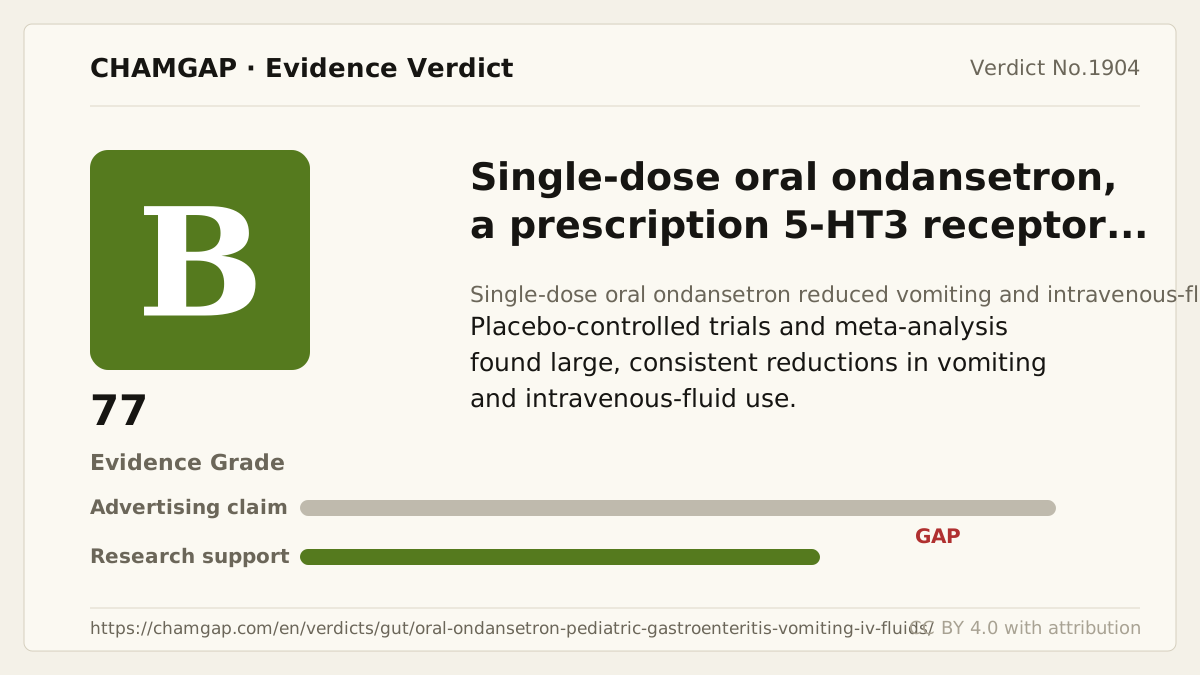
[Chamgap] Ondansetron x less vomiting and intravenous fluid use in pediatric gastroenteritis — Evidence Grade B·72. 3 cited sources checked. Source: https://chamgap.com/en/verdicts/gut/oral-ondansetron-pediatric-gastroenteritis-vomiting-iv-fluids/ · CC BY 4.0CC BY 4.0 — free to use with attribution; do not distort grades, numbers, or verdict meaning.
What this document does and does not do
Chamgap is an information source. It reports what research has and has not confirmed; it does not tell readers what to take or buy. That decision belongs to readers and, when needed, medical or legal professionals. This verdict reflects literature available up to the search date and may change as new research appears. Nothing here is medical advice.