
Ondansetron,
does it really help with Prevention of nausea and vomiting during the first 24 hours after surgery?
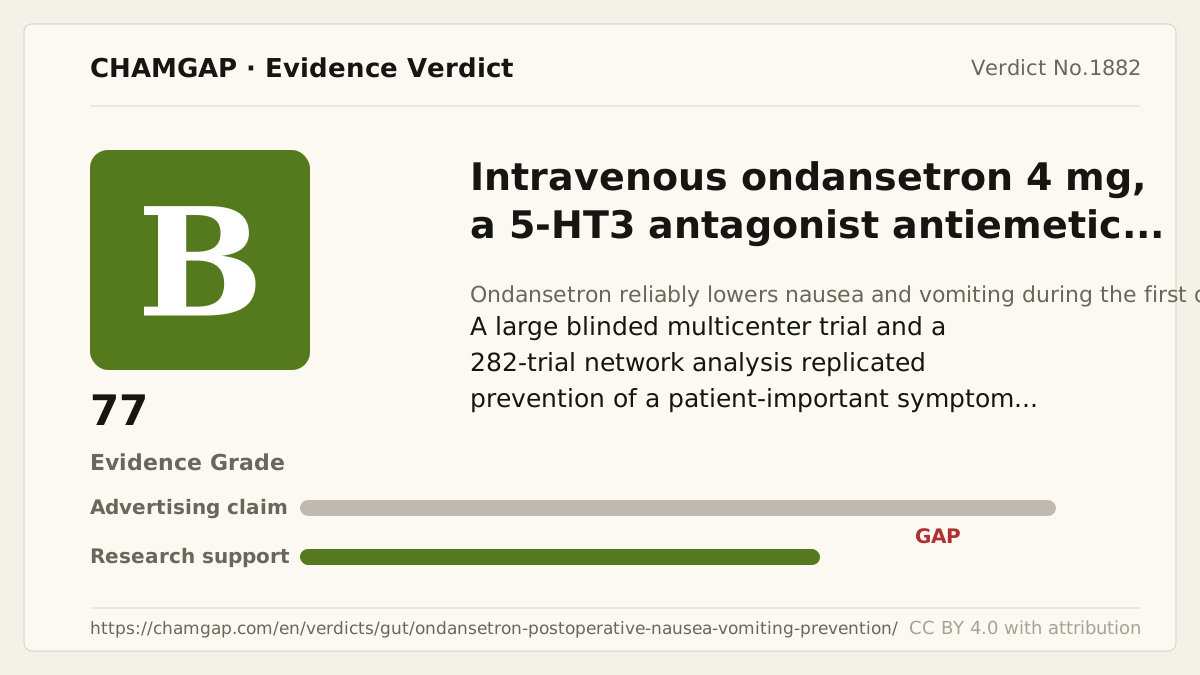
research showsOndansetron earns B with 72 points because it repeatedly reduces postoperative nausea and vomiting. IMPACT randomized 5,199 patients and analyzed 5,161 for the 24-hour primary outcome, finding 28.5% versus 38.5% and a 26% relative-risk reduction, P<0.001.
ads claimOne dose does not completely prevent symptoms in everyone. Absolute benefit depends on baseline risk and the accompanying prevention strategy.
Useful facts when choosing a product
- IMPACT randomized 5,199 patients and analyzed 5,161 for ondansetron.
- Ondansetron 4 mg intravenously was given during the final 20 minutes of surgery.
- The primary outcome was any nausea, retching, or vomiting within 24 hours.
Chamgap Semantic Classification Code
Candidate index · review held
M.ondansetron.intravenous.nausea-and-vomiting-during-the-first-after-surgery.prevent.factorialMedicinal interventions > ondansetron > Intravenous > nausea and vomiting during the first after surgery > Occurrence-prevention claim > Defined factorial contrast
An automated migration candidate, not an issued permanent code; exact claim scope remains under review. This machine-generated migration candidate helps retrieval but is not a permanent assignment. The original verdict ID and URL remain authoritative.
What the research actually shows
IMPACT factorially randomized 5,199 high-risk surgical patients, and 5,161 entered the actual ondansetron primary analysis. Postoperative nausea or vomiting occurred in 735 of 2,576 versus 996 of 2,585, a 26.0% relative reduction (95% CI 19.9% to 31.5%), P<0.001. Weibel 2020 synthesized 282 randomized trials and 50,812 participants and estimated RR 0.55 for postoperative vomiting.
Why this is classified as B (72)
A successful large blinded trial and extensive randomized replication support B with 72 points.
Counterpoint. QT prolongation risk and interacting medicines require individual review.
Rejudgment record. Cross-check applied — Successful patient-centered primary outcome in a large blinded factorial trial with replication across 282 randomized trials
| Endpoint | P | Symptom or function itself is the target - including patient reports and performance tests |
| Replication | R2 | Independently replicated across trials |
| Independence | I1 | Mixed funding sources |
| Effect size | E+ | Meets the clinically important threshold |
Stored derived and displayed grades match; this is not a current recalculation or validity check (B).
Sub-claim grades by effect
This ingredient is marketed for several effects. A single overall grade blends strong and weak claims together, so each effect is graded separately here. The overall grade reflects the strongest disconfirming or core claim.
| Effect (sub-claim) | Grade | Basis |
|---|---|---|
| Prevention of postoperative nausea or vomiting within 24 hours | B | The IMPACT primary outcome succeeded. |
| Prevention of postoperative vomiting | B | The network RR was 0.55. |
| Added effect within multimodal prophylaxis for high-risk patients | B | The factorial trial found largely independent intervention effects. |
Cross-check — AI research and Codex final gate
Evidence Table
| Study | Design | Sample | Funding | Endpoint | Result | Weight |
|---|---|---|---|---|---|---|
| Apfel CC et al. 2004 (IMPACT) | Twenty-eight-center factorial randomized trial with blinded outcome assessment | 5,199 randomized; 5,161 in the ondansetron primary analysis | Joint support from universities, NIH, foundations, public funding, AstraZeneca, and GSK | Primary outcome of nausea or vomiting within 24 hours | 28.5% versus 38.5%, 26.0% relative reduction, P<0.001; successful | Large direct confirmatory trial |
| Weibel S et al. 2020 | Cochrane network meta-analysis | 282 trials and 50,812 participants | Public and nonprofit Cochrane support; mixed funding among included trials | Postoperative vomiting and serious adverse events | Ondansetron vomiting RR 0.55 (95% CI 0.51 to 0.60) | Extensive replication |
Receipt — 2 References
All 2 cited sources were verified for existence at the original page (as of 2026-07-24).
Final verification and publication gate: Codex · Evidence date: 2026-07-24 · Corrections: none
Cite this verdict
[Chamgap] Ondansetron x prevention of postoperative nausea and vomiting — Evidence Grade B·72. 2 cited sources checked. Source: https://chamgap.com/en/verdicts/gut/ondansetron-postoperative-nausea-vomiting-prevention/ · CC BY 4.0CC BY 4.0 — free to use with attribution; do not distort grades, numbers, or verdict meaning.
What this document does and does not do
Chamgap is an information source. It reports what research has and has not confirmed; it does not tell readers what to take or buy. That decision belongs to readers and, when needed, medical or legal professionals. This verdict reflects literature available up to the search date and may change as new research appears. Nothing here is medical advice.