
Perioperative intravenous lidocaine,
does it really help with Gut-function recovery after minimally invasive colonic surgery?
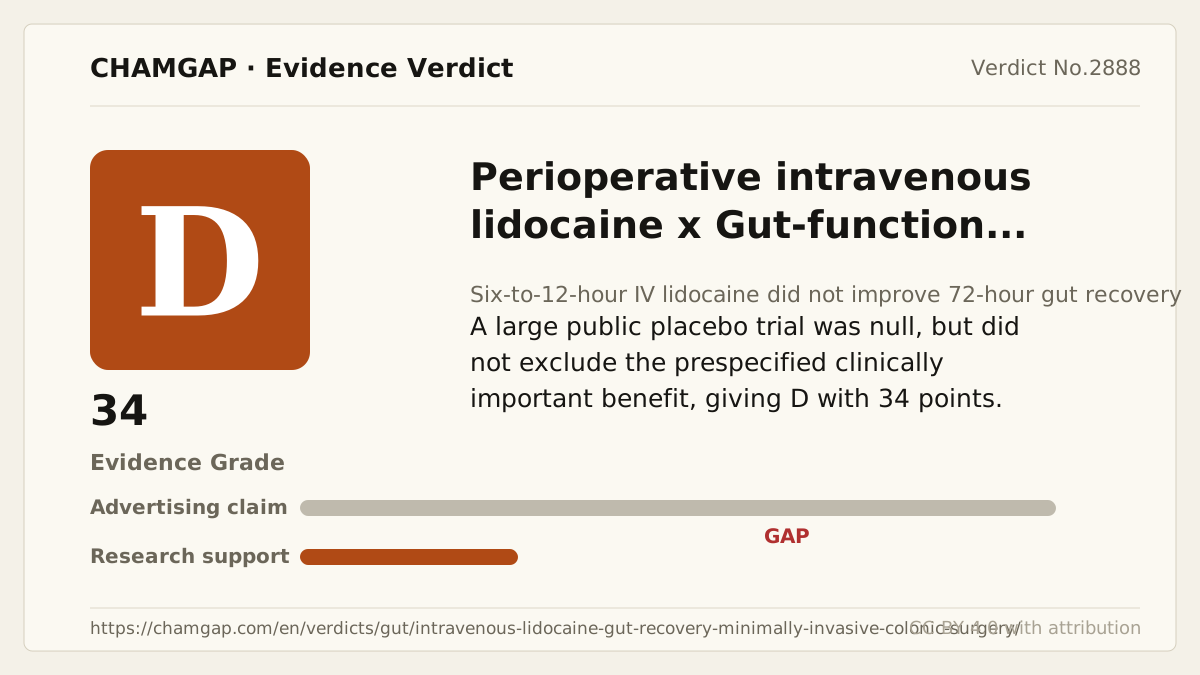
research showsGrade D. ALLEGRO randomized 590 and analyzed 557. GI-3 recovery at 72 hours was 160/279 (57.3%) versus 164/278 (59.0%), adjusted difference -1.9 points (95% CI -8.0 to 4.2), RR 0.97 (0.88-1.07).
ads claimIV lidocaine is used in Korean anesthesia practice, but that does not establish this 6-12-hour regimen's gut-recovery benefit.
Useful facts when choosing a product
- Double-blind saline-placebo trial at 27 UK hospitals.
- None of 11 secondary outcomes differed significantly.
Chamgap Semantic Classification Code
Candidate index · review held
M.perioperative-intravenous-lidocaine.intravenous.gut-function-recovery-after-minimally-invasive-colonic-surgery.assess.placeboMedicinal interventions > Perioperative intravenous lidocaine > Intravenous > Gut-function recovery after minimally invasive colonic surgery > Association or change assessment > Placebo
An automated migration candidate, not an issued permanent code; exact claim scope remains under review. This machine-generated migration candidate helps retrieval but is not a permanent assignment. The original verdict ID and URL remain authoritative.
What the research actually shows
Four gates: ① Defect: none; the candidate reviewed was exclusion of 33 people after randomization. ② The analysis did not select only treated participants who finished follow-up. ③ Exclusion reasons were canceled surgery, conversion to open surgery, a different operation, planned stoma, emergency surgery, or an anesthetist decision. The analysis retained 25 participants who did not receive assigned treatment, and primary-endpoint missingness among 557 analyzed participants was zero. ④ Postoperative 72-hour gut function cannot be defined for people who did not undergo the target operation, so the exclusions were unavoidable and are not counted, giving B0. Funding was public NIHR HTA award 15/130/95.
Why this is classified as D (34)
A large publicly funded null RCT with residual benefit in the CI gives D with 34 points. The 33 exclusions were people without the target operation; 25 who did not receive assigned treatment were retained and primary-endpoint missingness was zero, so axis 6 has no defect.
Counterpoint. Longer infusion or other operations are separate questions.
Rejudgment record. Source verified — Large public placebo-controlled null trial with a definable primary-endpoint population
| Endpoint | P | Symptom or function itself is the target - including patient reports and performance tests |
| Replication | R1 | Single confirmatory trial |
| Independence | I2 | Decisive evidence is publicly or non-profit funded |
| Effect size | E0 | Null |
| Precision | C0 | The confidence interval leaves room for benefit |
Stored derived and displayed grades match; this is not a current recalculation or validity check (D).
Sub-claim grades by effect
This ingredient is marketed for several effects. A single overall grade blends strong and weak claims together, so each effect is graded separately here. The overall grade reflects the strongest disconfirming or core claim.
| Effect (sub-claim) | Grade | Basis |
|---|---|---|
| GI-3 recovery at 72 hours | D | Rates were 57.3% versus 59.0%. |
Cross-check — AI research and Codex final gate
Evidence Table
| Study | Design | Sample | Funding | Endpoint | Result | Weight |
|---|---|---|---|---|---|---|
| Paterson HM et al. 2024 ALLEGRO | 27-hospital double-blind saline-placebo randomized trial | 590 randomized (295/295), 557 in primary analysis (279/278) | Public NIHR HTA award 15/130/95 | GI-3 recovery at 72 hours requiring diet tolerance and passage of flatus or stool | 160/279 (57.3%) versus 164/278 (59.0%), adjusted difference -1.9 points (95% CI -8.0 to 4.2), RR 0.97 (0.88-1.07) | Large publicly funded null trial |
Receipt — 1 References
All 1 cited sources were verified for existence at the original page (as of 2026-08-26).
Final verification and publication gate: Codex · Evidence date: 2026-08-26 · Corrections: none
Cite this verdict
[Chamgap] No Benefit of Intravenous Lidocaine for Gut Function Recovery after Minimally Invasive Colonic Surgery — Evidence Grade D·34. 1 cited sources checked. Source: https://chamgap.com/en/verdicts/gut/intravenous-lidocaine-gut-recovery-minimally-invasive-colonic-surgery/ · CC BY 4.0CC BY 4.0 — free to use with attribution; do not distort grades, numbers, or verdict meaning.
What this document does and does not do
Chamgap is an information source. It reports what research has and has not confirmed; it does not tell readers what to take or buy. That decision belongs to readers and, when needed, medical or legal professionals. This verdict reflects literature available up to the search date and may change as new research appears. Nothing here is medical advice.