
Infliximab,
does it really help with Reduction in colectomy risk through 54 weeks in moderate-to-severe ulcerative colitis?
research showsInfliximab is rated B for reducing colectomy risk through 54 weeks in moderate-to-severe ulcerative colitis. In the prespecified pooled ACT 1 and ACT 2 analysis of 728 participants, cumulative colectomy incidence was 10% with infliximab and 17% with placebo, an absolute reduction of 7 percentage points (P=0.02). Colectomy is a hard clinical endpoint, and clinical response, remission, mucosal healing, and hospitalization moved in the same direction. However, colectomy was not the main primary endpoint of the original ACT trials, the analysis pooled trials and linked data sources, complete follow-up was 87%, and the effect was moderate. These limitations support B with 74 points rather than A.
ads claimA biologic that prevents surgery does not mean that every patient avoids surgery or is cured long term. About 10% still underwent colectomy within 54 weeks, and loss of response, antidrug antibodies, and infection risk require specialist monitoring of disease activity and treatment.
Useful facts when choosing a product
- Infliximab is an intravenously infused anti-TNF-alpha monoclonal antibody. For moderate-to-severe active ulcerative colitis, a common regimen is induction at weeks 0, 2, and 6 followed by maintenance every 8 weeks.
- Remsima is an infliximab biosimilar. This verdict addresses the infliximab molecule in ulcerative colitis and is separate from verdicts for Crohn disease, rheumatoid arthritis, and other indications.
- Latent tuberculosis and hepatitis B should be screened before treatment, and serious infection must be monitored during therapy. Infliximab should not be given during an active serious infection.
- Infusion reactions, opportunistic infection, and reactivation of tuberculosis or hepatitis B can occur. Demyelinating disease, worsening heart failure, and blood disorders are uncommon but important, and live vaccines should be avoided.
Chamgap Semantic Classification Code
Candidate index · review held
M.infliximab.UNK.colectomy-risk-through-in-moderate-to-severe-ulcerative-colitis.reduce.placeboMedicinal interventions > Infliximab > Unknown > colectomy risk through in moderate-to-severe ulcerative colitis > Reduction claim > Placebo
An automated migration candidate, not an issued permanent code; exact claim scope remains under review. This machine-generated migration candidate helps retrieval but is not a permanent assignment. The original verdict ID and URL remain authoritative.
What the research actually shows
ACT 1 and ACT 2 each double-masked 364 patients with moderate-to-severe active ulcerative colitis to infliximab 5 mg/kg, 10 mg/kg, or placebo. Week-8 clinical response with 5 mg/kg was 69.4% versus 37.2% in ACT 1 and 64.5% versus 29.3% in ACT 2; remission and mucosal healing were also generally superior. Sandborn and colleagues then pooled colectomy, hospitalization, and surgery data through 54 weeks for all 728 participants. Complete colectomy follow-up was available for 630 participants (87%). Cumulative colectomy was 10% versus 17%, and ulcerative-colitis-related hospitalization was 20 versus 40 events per 100 patient-years. This verdict concerns surgery risk in ulcerative colitis, not infliximab use in Crohn disease or rheumatologic indications.
Why this is classified as B (74)
Infliximab reproduced clinical response in placebo-controlled ACT 1 and ACT 2 and reduced 54-week colectomy from 17% to 10% in the pooled analysis of 728 participants. A molecule-specific hard endpoint and consistent supporting outcomes are strong, but colectomy was not the original primary endpoint, complete follow-up was 87%, and the absolute effect was 7 percentage points. This supports B with 74 points.
Counterpoint. For active disease unresponsive to corticosteroids or immunomodulators, reducing surgery risk is clinically important. Hospitalized acute severe ulcerative colitis rescue therapy is not identical to the outpatient moderate-to-severe ACT population, so application requires gastroenterology judgment.
Rejudgment record. New verdict — Applied B because molecule-specific placebo-controlled ACT 1 and ACT 2 trials replicated clinical efficacy and the prespecified pooled 728-patient analysis reduced the hard 54-week colectomy endpoint from 17% to 10%, but colectomy was a pooled secondary rather than original primary endpoint, complete follow-up was 87%, and the absolute effect was moderate
Sub-claim grades by effect
This ingredient is marketed for several effects. A single overall grade blends strong and weak claims together, so each effect is graded separately here. The overall grade reflects the strongest disconfirming or core claim.
| Effect (sub-claim) | Grade | Basis |
|---|---|---|
| Reduced colectomy risk through 54 weeks | B | Pooled randomized data showed 10% versus 17%, a 7-point absolute reduction, but colectomy was not the original primary endpoint. |
| Achievement of clinical remission | B | Clinical remission was generally higher than placebo in ACT 1 and ACT 2, with superiority maintained for some doses and time points. |
| Achievement of mucosal healing | B | Mucosal healing favored infliximab at weeks 8 and 30 in both trials and at week 54 in ACT 1. |
| Reduced ulcerative-colitis-related hospitalization | B | The 54-week pooled analysis found 20 versus 40 hospitalizations per 100 patient-years. |
Cross-check — AI research and Codex final gate
Evidence Table
| Study | Design | Sample | Funding | Endpoint | Result | Weight |
|---|---|---|---|---|---|---|
| Rutgeerts P et al. ACT 1 and ACT 2. 2005 | Two multicenter randomized double-blind placebo-controlled trials | 364 participants in ACT 1 and 364 in ACT 2; 728 total | Sponsored by Centocor | Week-8 clinical response primary endpoint; remission, mucosal healing, and maintained response | Week-8 clinical response with 5 mg/kg was 69.4% versus 37.2% in ACT 1 and 64.5% versus 29.3% in ACT 2. | Core replicated randomized efficacy evidence |
| Sandborn WJ et al. ACT 1 and ACT 2 colectomy analysis. 2009 | Prespecified pooled follow-up analysis of two randomized trials | 728 participants; complete colectomy follow-up in 630 (87%) | Centocor ACT development program | Colectomy, hospitalization, and surgery or procedures through 54 weeks after first infusion | Colectomy was 10% versus 17% (P=0.02; 7-point absolute reduction); ulcerative-colitis hospitalization was 20 versus 40 per 100 patient-years (P=0.003). | Key hard surgery endpoint |
Receipt — 2 References
All 2 cited sources were verified for existence at the original page (as of 2026-07-24).
Final verification and publication gate: Codex · Evidence date: 2026-07-24 · Corrections: none
Cite this verdict
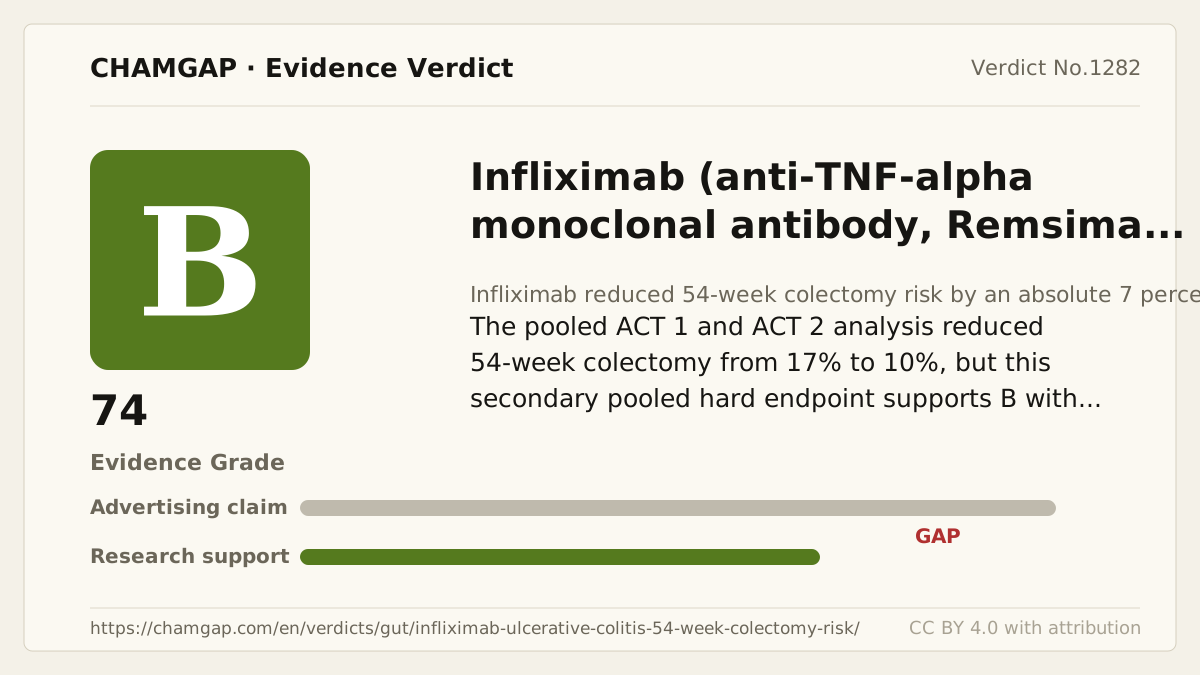
[Chamgap] Infliximab x reduced 54-week colectomy risk in moderate-to-severe ulcerative colitis — Evidence Grade B·74. 2 cited sources checked. Source: https://chamgap.com/en/verdicts/gut/infliximab-ulcerative-colitis-54-week-colectomy-risk/ · CC BY 4.0CC BY 4.0 — free to use with attribution; do not distort grades, numbers, or verdict meaning.
What this document does and does not do
Chamgap is an information source. It reports what research has and has not confirmed; it does not tell readers what to take or buy. That decision belongs to readers and, when needed, medical or legal professionals. This verdict reflects literature available up to the search date and may change as new research appears. Nothing here is medical advice.