
GreenCera-F,
does it really help with Protection of the gastric mucosa and improvement of stomach health?
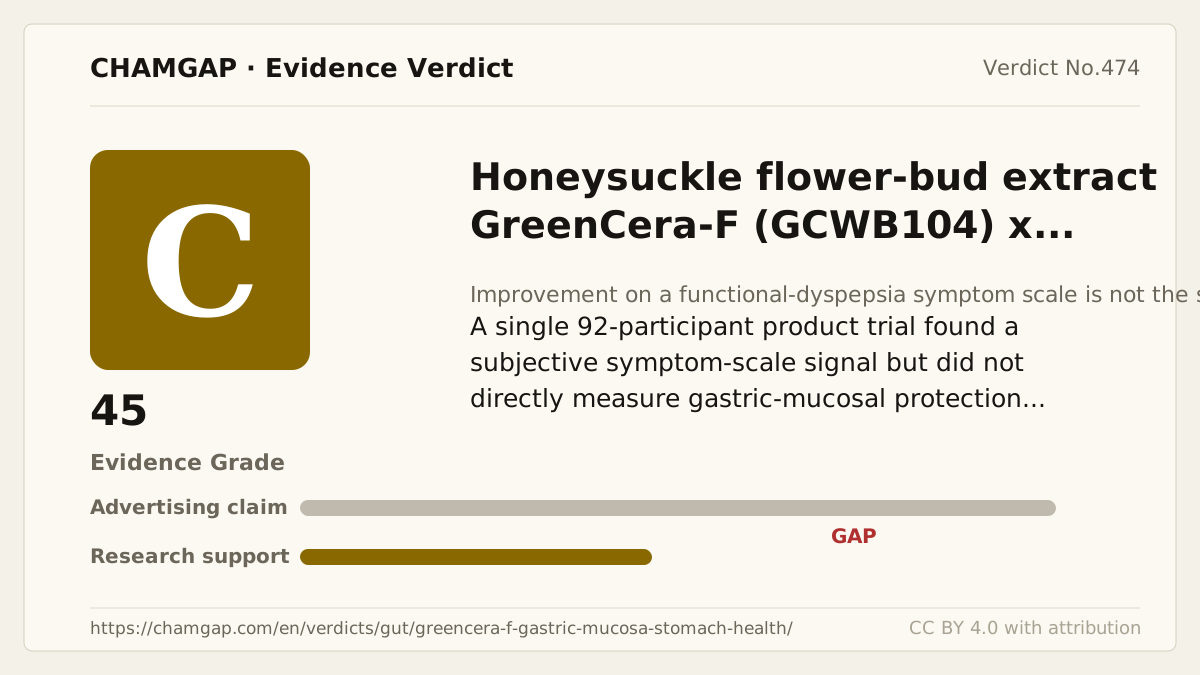
research showsGreenCera-F has a single-product signal from a 92-participant, eight-week double-blind trial in which the total Gastrointestinal Symptom Rating Scale score improved slightly more than with placebo in functional dyspepsia. The outcome was a subjective symptom scale with a borderline P value, and quality of life did not differ between groups. More importantly, participants with active erosions or ulcers were excluded, and the trial did not directly measure gastric histology, endoscopic injury, or ulcer outcomes. This creates a gap between the labeled mucosal-protection function and the human outcome actually measured, supporting C.
ads claimMarketing presents animal histology and mucus-secretion mechanisms as repair of damaged human gastric mucosa. The human trial mainly measured a 15-item self-reported symptom scale and an antioxidant marker. A permitted functional label does not itself establish direct histologic protection.
Useful facts when choosing a product
- GreenCera-F is individually recognized in Korea as ingredient 2019-14 and is distributed in health functional foods. The recognized daily intake is 250 mg/day.
- The human trial used GCWB104 300 mg containing 125 mg of honeysuckle extract twice daily, for 250 mg/day of extract over eight weeks.
- Marketed finished products may include cabbage, enzymes, probiotics, or other ingredients in addition to GreenCera-F. Effects of a finished mixture cannot be equated with the single-ingredient trial.
- The Korean regulator advises caution for infants, children, pregnant or lactating people, and those with allergic tendencies. One participant discontinued for rash, and long-term safety evidence is limited.
Chamgap Semantic Classification Code
Candidate index · review held
S.honeysuckle-flower-bud-extract-greencera-f.UNK.protection-of-the-gastric-mucosa-and-improvement-of-stomach-health.improve.placeboSupplements and nutraceuticals > Honeysuckle flower-bud extract GreenCera-F > Unknown > Protection of the gastric mucosa and improvement of stomach health > Improvement claim > Placebo
An automated migration candidate, not an issued permanent code; exact claim scope remains under review. This machine-generated migration candidate helps retrieval but is not a permanent assignment. The original verdict ID and URL remain authoritative.
What the research actually shows
Choi 2020 randomized 92 Rome III functional-dyspepsia patients at one center to GCWB104 300 mg, containing 125 mg of honeysuckle extract, twice daily or placebo for eight weeks. The intention-to-treat groups included 46 and 45 participants, while the per-protocol groups included 38 and 35. The total symptom score was borderline positive, but the quality-of-life index did not differ between groups. Blood 8-hydroxy-2-deoxyguanosine fell, but this is an antioxidant marker. No public human trial was identified with gastric biopsy, healing of erosion or ulcer, or bleeding as a direct mucosal outcome.
Why this is classified as C (45)
The positive eight-week primary symptom endpoint in one 92-participant trial favors C over D. The effect was borderline and depends on a subjective scale, one product, and one center, with no direct gastric-mucosal outcome. This supports C with 45 points.
Counterpoint. A limited short-term patient-reported symptom benefit in functional dyspepsia remains possible. The signal does not extend to treatment of gastritis or ulcer or histologic repair of the gastric mucosa.
Rejudgment record. New verdict — Accepted the positive symptom-scale result in a 92-participant single-product trial but capped the grade at C for a borderline subjective endpoint, null quality of life, and no histologic or endoscopic gastric-mucosal outcome
Sub-claim grades by effect
This ingredient is marketed for several effects. A single overall grade blends strong and weak claims together, so each effect is graded separately here. The overall grade reflects the strongest disconfirming or core claim.
| Effect (sub-claim) | Grade | Basis |
|---|---|---|
| Improvement of functional-dyspepsia and gastrointestinal symptom scores over eight weeks | C | The total symptom score was borderline positive in one 92-participant product trial. |
| Protection from histologic or endoscopic gastric-mucosal injury in humans | ? | No public human trial directly measured this as an efficacy endpoint. |
Cross-check — AI research and Codex final gate
Evidence Table
| Study | Design | Sample | Funding | Endpoint | Result | Weight |
|---|---|---|---|---|---|---|
| Choi Y et al. 2020 | Single-center eight-week randomized double-blind placebo-controlled trial | 73 | Funding source not stated in the paper; no conflict of interest reported | Primary total symptom score; quality of life, antioxidant markers, and safety | The total symptom-score change exceeded placebo (P=0.045), but quality of life did not differ and gastric-mucosal injury was not measured. | Key |
| MFDS recognition 2019-14 | Registration as an individually recognized functional ingredient | Applicant: GC Green Cross WellBeing | Functional labeling for gastric-mucosal protection and stomach health | Functional labeling was recognized at 250 mg/day, but regulatory recognition is not itself a direct histologic clinical outcome. | Regulatory context |
Receipt — 2 References
All 2 cited sources were verified for existence at the original page (as of 2026-07-18).
Final verification and publication gate: Codex · Evidence date: 2026-07-18 · Corrections: none
Cite this verdict
[Chamgap] GreenCera-F x protection of the gastric mucosa and improvement of stomach health — Evidence Grade C·45. 2 cited sources checked. Source: https://chamgap.com/en/verdicts/gut/greencera-f-gastric-mucosa-stomach-health/ · CC BY 4.0CC BY 4.0 — free to use with attribution; do not distort grades, numbers, or verdict meaning.
What this document does and does not do
Chamgap is an information source. It reports what research has and has not confirmed; it does not tell readers what to take or buy. That decision belongs to readers and, when needed, medical or legal professionals. This verdict reflects literature available up to the search date and may change as new research appears. Nothing here is medical advice.