
Fig paste, 300 g daily,
does it really help with Improved colonic transit and bowel symptoms in functional constipation?
research showsThe verdict is C with 50 points. In an 80-person randomized trial completed by 74, fig paste shortened eight-week colonic transit more than a sugar-and-starch placebo and improved some symptoms. A standardized difference calculated from the primary-outcome change scores was about 0.47, just below the conventional medium effect of 0.5.
ads claimFiber descriptions become claims that figs treat constipation. This study used 300 g of paste daily, not a few fresh figs, and the placebo did not match fiber.
Useful facts when choosing a product
- Figs contain dietary fiber, and fiber can affect stool bulk, water, and transit.
- The placebo contained water, sugar, and modified starch and did not match the paste's fiber. Fig-specific components and added fiber therefore remain confounded.
- Verdict 532 is C with 55 points for green kiwifruit powder in the same indication, but it is a different food and form.
Chamgap Semantic Classification Code
Candidate index · review held
F.fig-paste.food.colonic-transit-and-bowel-symptoms-in-functional-constipation.improve.placeboFoods and beverages > Fig paste > Food consumption > colonic transit and bowel symptoms in functional constipation > Improvement claim > Placebo
An automated migration candidate, not an issued permanent code; exact claim scope remains under review. This machine-generated migration candidate helps retrieval but is not a permanent assignment. The original verdict ID and URL remain authoritative.
What the research actually shows
Baek and colleagues compared 300 g daily of fig paste with a water, sugar, and modified-starch placebo for eight weeks. NCT02138851 registered colonic transit as primary, matching the positive paper. The trial began in June 2013 and was registered in May 2014, making the retrospective-registration interval longer. Korea Food Research Institute investigators participated, while no direct grower or food-company funding was identified in public information.
Why this is classified as C (50)
The registered surrogate primary outcome was positive, but this was one small eight-week trial and the standardized effect of about 0.47 missed the conventional medium threshold. The result is C with 50 points.
Counterpoint. Double blinding, placebo control, and very low attrition are strengths for a whole-food study.
Rejudgment record. Cross-check applied — Recalculated the standardized change-score difference and cross-checked the registered primary outcome, timing, placebo composition, and funding disclosure
| Endpoint | S | Surrogate marker - laboratory or imaging measures |
| Replication | R1 | Single confirmatory trial |
| Independence | I2 | Decisive evidence is publicly or non-profit funded |
| Effect size | E~ | Statistically positive but below the threshold |
Stored derived and displayed grades match; this is not a current recalculation or validity check (C).
Sub-claim grades by effect
This ingredient is marketed for several effects. A single overall grade blends strong and weak claims together, so each effect is graded separately here. The overall grade reflects the strongest disconfirming or core claim.
| Effect (sub-claim) | Grade | Basis |
|---|---|---|
| Figs contain fiber and fiber affects colonic transit | C | This is an established composition and physiology fact; the grade applies to the fig-paste claim. |
| Three hundred grams of fig paste improves functional constipation | C | Primary transit was positive, but magnitude was modest and added fiber was not isolated. |
Cross-check — AI research and Codex final gate
Evidence Table
| Study | Design | Sample | Funding | Endpoint | Result | Weight |
|---|---|---|---|---|---|---|
| Baek HI et al., Asia Pacific Journal of Clinical Nutrition, 2016 | Randomized double-blind sugar-and-starch placebo-controlled parallel trial, eight weeks | 80 randomized, 74 completed, 36 versus 38; primary mixed-model table labeled 40 per group | Korea Food Research Institute investigators participated; no direct grower or food-company funding identified | Primary colonic transit time | Change −24.5±22.4 versus −15.0±17.7 hours, P=0.030; simple standardized difference about 0.47 | Positive registered primary outcome, but small and short with unmatched fiber |
Receipt — 3 References
All 3 cited sources were verified for existence at the original page (as of 2026-08-02).
Final verification and publication gate: Codex · Evidence date: 2026-08-02 · Corrections: none
Cite this verdict
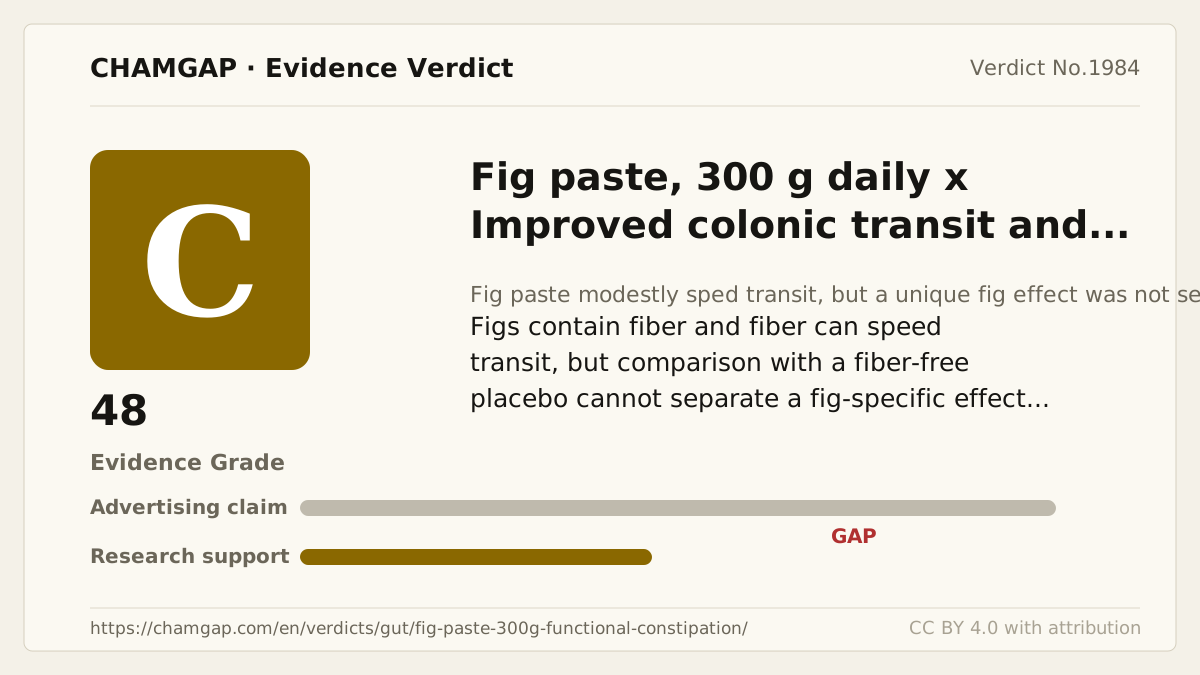
[Chamgap] Fig paste, 300 g daily x functional constipation — Evidence Grade C·50. 3 cited sources checked. Source: https://chamgap.com/en/verdicts/gut/fig-paste-300g-functional-constipation/ · CC BY 4.0CC BY 4.0 — free to use with attribution; do not distort grades, numbers, or verdict meaning.
What this document does and does not do
Chamgap is an information source. It reports what research has and has not confirmed; it does not tell readers what to take or buy. That decision belongs to readers and, when needed, medical or legal professionals. This verdict reflects literature available up to the search date and may change as new research appears. Nothing here is medical advice.