
Withholding first-week parenteral nutrition,
does it really help with Reduced newly acquired infection and PICU dependency?
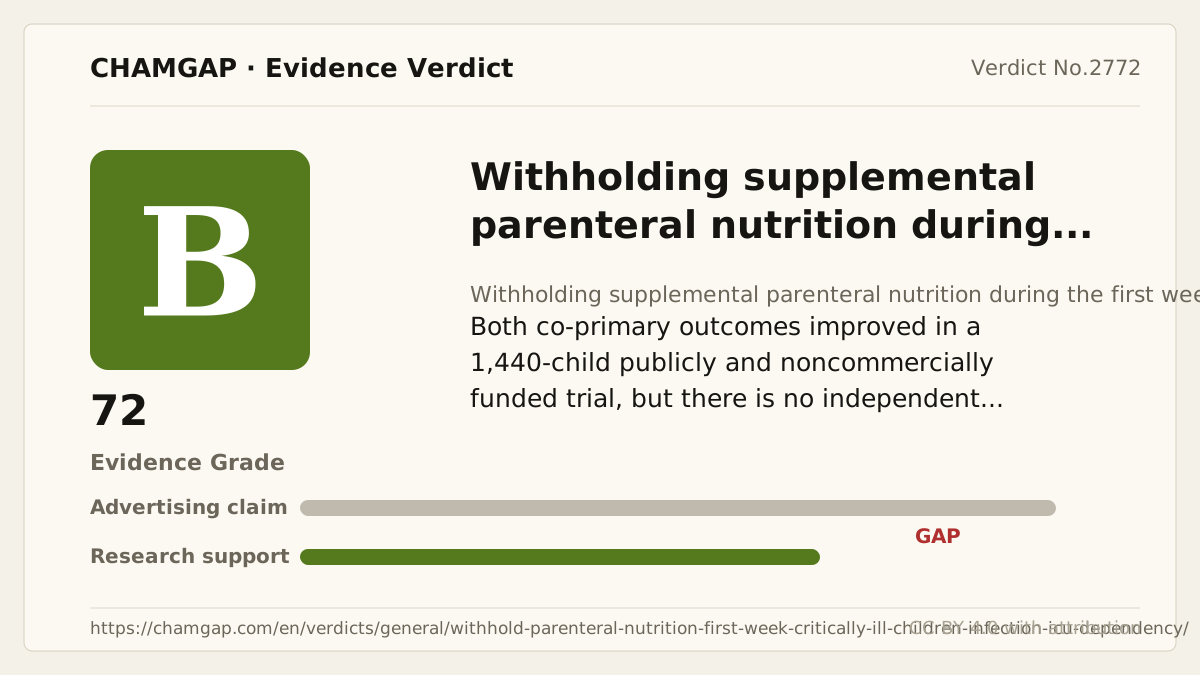
research showsThe grade is B. PEPaNIC analyzed all 1,440 critically ill children by intention to treat. New PICU infection occurred in 77/717 (10.7%) with late PN versus 133/723 (18.4%) with early PN, an absolute difference of -7.8 points (95% CI -11.4 to -4.2), adjusted OR 0.48 (0.35-0.66). Mean PICU stay was 6.5 versus 9.2 days, 2.7 days shorter. This remains one confirmatory open-label trial in which discharge decisions could be influenced, giving B with 72 points.
ads claimCalling this ‘starving children for a week’ is false. Both groups attempted early enteral nutrition and received intravenous micronutrients; the difference was whether intravenous macronutrients immediately completed an enteral shortfall.
Useful facts when choosing a product
- The late-PN group still received fluids and intravenous micronutrients and attempted early enteral feeding.
- The intervention was a timing strategy, not a single manufacturer's nutrition product.
- All planned 1,440 participants were randomized and analyzed without early stopping.
Chamgap Semantic Classification Code
Candidate index · review held
M.withholding-supplemental-parenteral-nutrition-during-the-first-picu-week.MULTI.newly-acquired-infection-and-picu-dependency.reduce.UNKMedicinal interventions > Withholding supplemental parenteral nutrition during the first PICU week > Multiple: primary unresolved > newly acquired infection and PICU dependency > Reduction claim > Unknown
An automated migration candidate, not an issued permanent code; exact claim scope remains under review. This machine-generated migration candidate helps retrieval but is not a permanent assignment. The original verdict ID and URL remain authoritative.
What the research actually shows
Three PICUs in Belgium, the Netherlands, and Canada centrally assigned 717 children to late PN and 723 to early PN and analyzed all 1,440 by intention to treat. Infectious disease specialists unaware of allocation adjudicated infections, but clinicians and families knew the strategy, and timing of live PICU discharge includes clinical decisions; one avoidable masking limitation was therefore counted. Planned and actual enrollment were both 1,440, so there was no early stopping. Funding came from the Flemish Agency for Innovation through Science and Technology, FWO Flanders, UZ Leuven Clinical Research Fund, the Flemish Government Methusalem program, EU ERC FP7, Fonds NutsOhra, Erasmus MC and Erasmus Trustfonds, and an anonymous family donation. Verbruggen disclosed Nutricia lecture fees, but company supply of trial PN or assessment tools was not reported.
Why this is classified as B (72)
Both infection and PICU dependency improved in a large noncommercial trial, but one confirmatory trial and an open-label discharge decision give B with 72 points.
Counterpoint. Blinded infection adjudication and a large absolute infection difference make the finding stronger than the open-label limitation alone suggests.
Rejudgment record. Cross-check applied — Cross-checked PEPaNIC's co-primary endpoints, all-1,440 intention-to-treat analysis, blinded infection adjudication, open-label discharge decision, funding, and disclosures
| Endpoint | H | Hard endpoint - actual events such as death |
| Replication | R1 | Single confirmatory trial |
| Independence | I2 | Decisive evidence is publicly or non-profit funded |
| Effect size | E+ | Meets the clinically important threshold |
Stored derived and displayed grades match; this is not a current recalculation or validity check (B).
Sub-claim grades by effect
This ingredient is marketed for several effects. A single overall grade blends strong and weak claims together, so each effect is graded separately here. The overall grade reflects the strongest disconfirming or core claim.
| Effect (sub-claim) | Grade | Basis |
|---|---|---|
| Reduced new PICU infection | B | The absolute reduction was 7.8 percentage points. |
| Shorter PICU dependency | B | Mean stay was 2.7 days shorter and the live-discharge HR was 1.23. |
Cross-check — AI research and Codex final gate
Evidence Table
| Study | Design | Sample | Funding | Endpoint | Result | Weight |
|---|---|---|---|---|---|---|
| Fivez T et al. 2016 PEPaNIC | Multicenter open-label parallel-group superiority randomized trial with blinded infection adjudication | 1,440 randomized and analyzed by intention to treat for both co-primary outcomes, 717 late versus 723 early | Flemish public funds, EU ERC, universities, nonprofit foundations, and an anonymous family donation; no reported company supply of trial products | New PICU infection and time to live PICU discharge | Infection 10.7% versus 18.4%, absolute difference -7.8 points (95% CI -11.4 to -4.2), adjusted OR 0.48; mean PICU stay 6.5 versus 9.2 days, adjusted HR 1.23 | Single large noncommercially funded trial with both co-primary endpoints met |
Receipt — 2 References
All 2 cited sources were verified for existence at the original page (as of 2026-08-18).
Final verification and publication gate: Codex · Evidence date: 2026-08-18 · Corrections: none
Cite this verdict
[Chamgap] Withholding first-week parenteral nutrition x infection and PICU dependency in critically ill children — Evidence Grade B·72. 2 cited sources checked. Source: https://chamgap.com/en/verdicts/general/withhold-parenteral-nutrition-first-week-critically-ill-children-infection-icu-dependency/ · CC BY 4.0CC BY 4.0 — free to use with attribution; do not distort grades, numbers, or verdict meaning.
What this document does and does not do
Chamgap is an information source. It reports what research has and has not confirmed; it does not tell readers what to take or buy. That decision belongs to readers and, when needed, medical or legal professionals. This verdict reflects literature available up to the search date and may change as new research appears. Nothing here is medical advice.