
Amoxicillin-clavulanate 875/125 mg twice daily,
does it really help with Clinical cure of acute odontogenic infection?
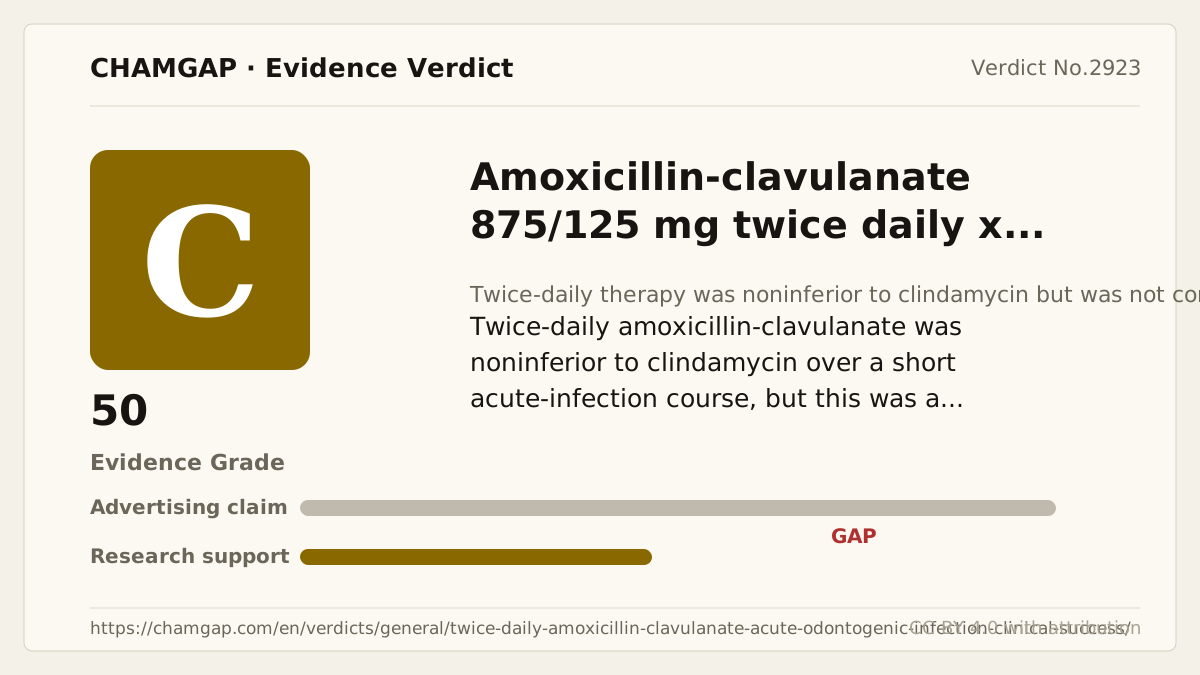
research showsThe grade is C. The paper randomized 472 participants, not fewer than 200, and compared against clindamycin 150 mg four times daily, not the same drug three times daily. End-of-treatment clinical success was 88.2% versus 89.7%, meeting the prespecified 10% noninferiority margin.
ads claimAmoxicillin-clavulanate is routinely prescribed in Korean dentistry and dosing frequency is a real adherence choice, but this paper was not a direct BID-versus-TID comparison.
Useful facts when choosing a product
- Observer-blind phase 4 randomized trial with 472 participants.
- Comparator was clindamycin 150 mg four times daily.
- GSK funded the study and editorial support.
Chamgap Semantic Classification Code
Candidate index · review held
M.amoxicillin-plus-clavulanate.UNK.odontogenic-infection-clinical-cure.treat.activeMedicinal interventions > Amoxicillin plus clavulanate > Unknown > Clinical cure in odontogenic infection > Treatment or remission claim > Active comparator
An automated migration candidate, not an issued permanent code; exact claim scope remains under review. This machine-generated migration candidate helps retrieval but is not a permanent assignment. The original verdict ID and URL remain authoritative.
What the research actually shows
Four gates: ① noninferiority design; ② the listed noninferiority item; ③ the protocol margin was 10% and the 95% CI upper bound was 7.7%; ④ a superiority design was feasible, so one defect was counted. The fewer-than-200 item does not apply because 472 were randomized. Five to seven days fits acute infection and was not counted as avoidably short. Placebo-only treatment after drainage would be ethically problematic, so active-control-only was not counted. Funding states: "Study was funded by GlaxoSmithKline Pharmaceuticals Ltd. and editorial assistance was provided by DiagnoSearch Life Sciences Pvt. Ltd." Four GSK employee authors disclosed stock or shares.
Why this is classified as C (50)
The patient-centered clinical-success endpoint met a prespecified margin, but one manufacturer-funded noninferiority trial gives C with 50 points.
Counterpoint. Convenience does not substitute for direct evidence comparing dosing frequencies of the same drug.
Rejudgment record. Cross-check applied — A 472-participant manufacturer-funded noninferiority trial found clinical success comparable with clindamycin
| Endpoint | P | Symptom or function itself is the target - including patient reports and performance tests |
| Replication | R1 | Single confirmatory trial |
| Independence | I0 | Evidence comes only from manufacturer studies |
| Effect size | E+ | Meets the clinically important threshold |
Stored derived and displayed grades match; this is not a current recalculation or validity check (C).
Sub-claim grades by effect
This ingredient is marketed for several effects. A single overall grade blends strong and weak claims together, so each effect is graded separately here. The overall grade reflects the strongest disconfirming or core claim.
| Effect (sub-claim) | Grade | Basis |
|---|---|---|
| Clinical success in acute odontogenic infection | C | Rates were 88.2% versus 89.7%, meeting noninferiority. |
Cross-check — AI research and Codex final gate
Evidence Table
| Study | Design | Sample | Funding | Endpoint | Result | Weight |
|---|---|---|---|---|---|---|
| Tancawan AL et al. 2015 AUG117044 | Randomized observer-blind phase 4 noninferiority trial | 472 randomized (235/237) | Funded by GlaxoSmithKline Pharmaceuticals Ltd.; editorial assistance by DiagnoSearch | End-of-treatment clinical success composite of pain, swelling, fever, and need for additional antimicrobial therapy | 88.2% vs 89.7%; upper 95% CI limit 7.7%, within the 10% margin | Pivotal manufacturer-funded noninferiority evidence |
Receipt — 1 References
All 1 cited sources were verified for existence at the original page (as of 2026-08-26).
Final verification and publication gate: Codex · Evidence date: 2026-08-26 · Corrections: none
Cite this verdict
[Chamgap] Benefit of Twice-Daily Amoxicillin-Clavulanate × Clinical Cure of Acute Odontogenic Infection — Evidence Grade C·50. 1 cited sources checked. Source: https://chamgap.com/en/verdicts/general/twice-daily-amoxicillin-clavulanate-acute-odontogenic-infection-clinical-success/ · CC BY 4.0CC BY 4.0 — free to use with attribution; do not distort grades, numbers, or verdict meaning.
What this document does and does not do
Chamgap is an information source. It reports what research has and has not confirmed; it does not tell readers what to take or buy. That decision belongs to readers and, when needed, medical or legal professionals. This verdict reflects literature available up to the search date and may change as new research appears. Nothing here is medical advice.