
Oral zinc,
does it really help with Reduced loudness and distress from subjective tinnitus in adults?
research showsThe three trials could not be pooled because of heterogeneity. THQ improvement had RR 2.53 (95% CI 0.50 to 12.70), tinnitus loudness had MD -9.71 dB (-25.53 to 6.11), a 0-to-100 scale had 0.50 (-5.08 to 6.08), and severity had -1.41 (-2.97 to 0.15), leaving room for large benefit. Because clinically meaningful benefit is not excluded, the grade is D with 35 points, not F.
ads claimMarketing turns zinc's essential role in cochlear physiology and neurotransmission into a tinnitus-relief claim. Being an essential nutrient and correcting deficiency are not the same as demonstrating clinical treatment efficacy for subjective tinnitus in adults with adequate zinc status.
Useful facts when choosing a product
- Tinnitus trials used different zinc salts and doses, and the labeled weight of a zinc compound is not the same as its elemental zinc content.
- Sudden unilateral tinnitus or tinnitus accompanied by hearing loss, vertigo, neurologic symptoms, or a pulse-synchronous sound calls for diagnostic assessment rather than a supplement trial.
- Oral zinc can cause nausea, abdominal pain, diarrhea, and a metallic taste, with more discomfort often occurring on an empty stomach.
- Long-term high-dose zinc impairs copper absorption and can cause copper deficiency, anemia, neutropenia, and neurologic symptoms, and it can also reduce absorption of certain antibiotics.
Chamgap Semantic Classification Code
Candidate index · review held
S.zinc.oral.loudness-and-distress-from-subjective-tinnitus.reduce.placeboSupplements and nutraceuticals > Zinc > Oral > loudness and distress from subjective tinnitus > Reduction claim > Placebo
An automated migration candidate, not an issued permanent code; exact claim scope remains under review. This machine-generated migration candidate helps retrieval but is not a permanent assignment. The original verdict ID and URL remain authoritative.
What the research actually shows
The Cochrane review included three placebo-controlled trials by Arda, Coelho, and Paaske with 209 participants. Differences in eligibility, duration, and instruments prevented pooling, and neither validated disability, tinnitus loudness, nor subjective severity outcomes established a significant benefit; certainty was very low. The American Academy of Otolaryngology-Head and Neck Surgery guideline states that clinicians should not recommend ginkgo, melatonin, zinc, or other dietary supplements for persistent bothersome tinnitus. Correction of confirmed zinc deficiency is separate from supplementation for tinnitus in adults without deficiency.
Why this is classified as D (35)
The three trials could not be pooled because of heterogeneity. THQ improvement had RR 2.53 (95% CI 0.50 to 12.70), tinnitus loudness had MD -9.71 dB (-25.53 to 6.11), a 0-to-100 scale had 0.50 (-5.08 to 6.08), and severity had -1.41 (-2.97 to 0.15), leaving room for large benefit. Because clinically meaningful benefit is not excluded, the grade is D with 35 points, not F.
Counterpoint. Confirmed zinc deficiency can warrant correction on its own merits, but correction does not guarantee tinnitus relief. Hearing assessment, treatment of identifiable causes, education, and cognitive behavioral approaches when needed take priority for general tinnitus. Grade-independent note: AAO-HNS guidance recommends against zinc for tinnitus. This recommendation is not used to determine the efficacy grade.
Rejudgment record. Cross-check revision — The three trials could not be pooled because of heterogeneity. THQ improvement had RR 2.53 (95% CI 0.50 to 12.70), tinnitus loudness had MD -9.71 dB (-25.53 to 6.11), a 0-to-100 scale had 0.50 (-5.08 to 6.08), and severity had -1.41 (-2.97 to 0.15), leaving room for large benefit. Because clinically meaningful benefit is not excluded, the grade is D with 35 points, not F.
Sub-claim grades by effect
This ingredient is marketed for several effects. A single overall grade blends strong and weak claims together, so each effect is graded separately here. The overall grade reflects the strongest disconfirming or core claim.
| Effect (sub-claim) | Grade | Basis |
|---|---|---|
| Reduction of subjective tinnitus loudness | D | Cochrane-included trials found no significant difference, and the guideline does not recommend zinc for tinnitus treatment. |
| Reduction of tinnitus distress and disability | D | The validated disability outcome did not establish an effect, and the guideline does not recommend zinc for tinnitus treatment. |
| Improvement of overall subjective tinnitus severity | D | Small trials found no significant improvement versus placebo, and the guideline does not recommend zinc for tinnitus treatment. |
Cross-check — AI research and Codex final gate
Evidence Table
| Study | Design | Sample | Funding | Endpoint | Result | Weight |
|---|---|---|---|---|---|---|
| Person OC et al. 2016 | Cochrane systematic review of randomized placebo-controlled trials | Three trials and 209 participants | Cochrane review; authors declared no conflicts of interest | Validated tinnitus disability, tinnitus loudness, and subjective severity | No major comparison showed significant benefit, and certainty was very low. | Key null synthesis |
| Paaske PB et al. 1991 | Eight-week randomized double-blind placebo-controlled trial | Forty-eight adults with subjective tinnitus | Inadequately reported | Subjective tinnitus severity on a 0-to-10 scale | Serum zinc increased, but no favorable effect on tinnitus was demonstrated. | Direct small null trial |
| Arda HN et al. 2003 | Eight-week randomized prospective placebo-controlled trial | Fifty enrolled and 41 reported in the analysis | Funding was not reported in the PubMed abstract | Subjective score and clinically favorable tinnitus-loudness change | Scores decreased within the zinc group, but clinically favorable progress did not differ significantly from placebo. | Small conflicting signal |
| Tunkel DE et al. 2014 AAO-HNS tinnitus guideline | Clinical practice guideline for persistent bothersome tinnitus in adults | Guideline synthesis of tinnitus randomized trials and systematic reviews | American Academy of Otolaryngology-Head and Neck Surgery Foundation | Recommendation on dietary supplements for tinnitus treatment | Stated that clinicians should not recommend ginkgo, melatonin, zinc, or other dietary supplements for persistent bothersome tinnitus. | Boundary evidence recommending against use and establishing parity with ginkgo |
Receipt — 5 References
All 5 cited sources were verified for existence at the original page (as of 2026-07-21).
Final verification and publication gate: Codex · Evidence date: 2026-07-21 · Corrections: none
Cite this verdict
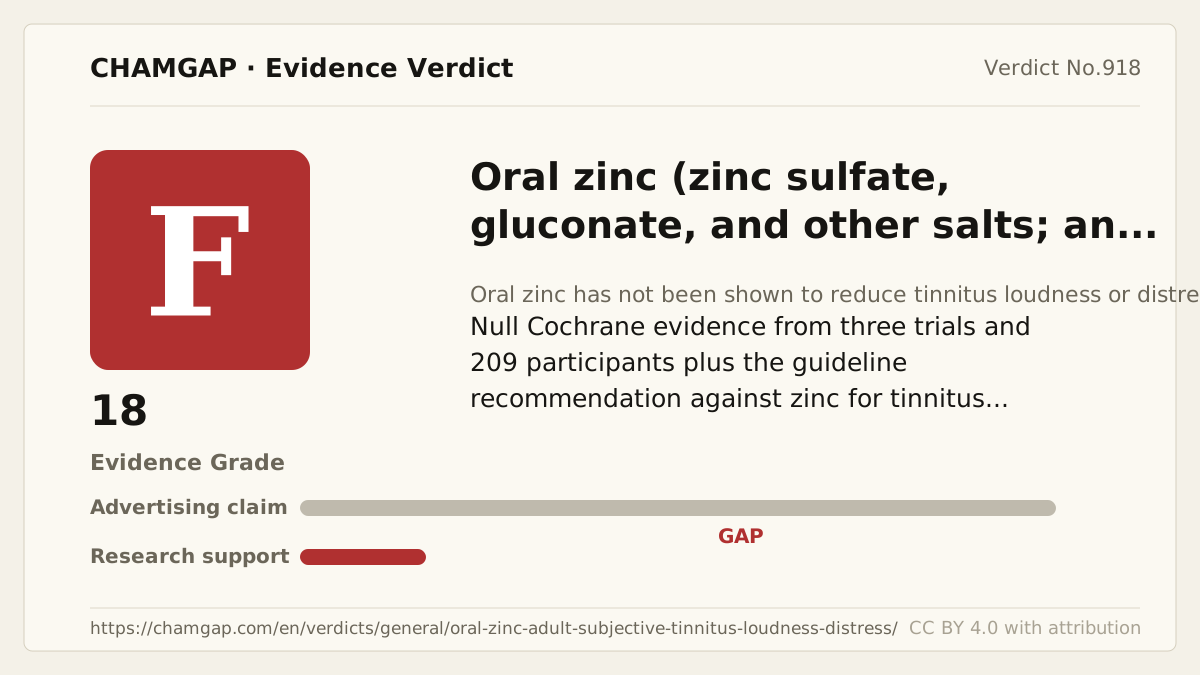
[Chamgap] Oral zinc x relief of subjective tinnitus in adults — Evidence Grade D·35. 5 cited sources checked. Source: https://chamgap.com/en/verdicts/general/oral-zinc-adult-subjective-tinnitus-loudness-distress/ · CC BY 4.0CC BY 4.0 — free to use with attribution; do not distort grades, numbers, or verdict meaning.
What this document does and does not do
Chamgap is an information source. It reports what research has and has not confirmed; it does not tell readers what to take or buy. That decision belongs to readers and, when needed, medical or legal professionals. This verdict reflects literature available up to the search date and may change as new research appears. Nothing here is medical advice.