
Intensive preoperative smoking cessation,
does it really help with Reduced postoperative complications?
research showsThe grade is B. Two randomized trials beginning intensive support four to eight weeks before surgery found complication rates of 18% versus 52% and 21% versus 41%, pooling to RR 0.42 (95% CI 0.27-0.65). The sole avoidable flaw was Møller's postrandomization exclusion of 12 participants, giving B1 and B with 70 points.
ads claimThe result cannot be reframed as proof that stopping only the day before surgery or using a patch alone halves complications. The tested package combined counseling, repeated contacts, smoking-status monitoring, and nicotine replacement.
Useful facts when choosing a product
- Møller began six to eight weeks preoperatively and continued ten days after surgery; Lindström treated for four weeks before and after surgery.
- Møller received Danish public and foundation grants, while Pharmacia Upjohn supplied nicotine products. Lindström funding could not be verified in the accessible record.
- No duplicate verdict or reuse of the two primary PMID/DOI pairs was found.
Chamgap Semantic Classification Code
Candidate index · review held
P.repeated-cessation-counseling-plus-nicotine-replacement-begun-before-surgery.procedural.postoperative-complications.reduce.UNKProcedures, devices and tests > Repeated cessation counseling plus nicotine replacement begun before surgery > Procedural > postoperative complications > Reduction claim > Unknown
An automated migration candidate, not an issued permanent code; exact claim scope remains under review. This machine-generated migration candidate helps retrieval but is not a permanent assignment. The original verdict ID and URL remain authoritative.
What the research actually shows
Both trials assessed complications around 30 days as a central outcome. Møller used opaque sealed envelopes and masked outcome assessment but excluded 12 randomized participants whose procedures were cancelled or postponed. Lindström used stratified block randomization, opaque envelopes, intention-to-treat analysis, masked outcome assessment, and complete 30-day follow-up. Inability to blind participants to a behavioral program was not counted as a separate avoidable flaw, leaving only Møller's exclusion. Hanne Tønnesen coauthored both trials, so they were not counted as independent replication.
Why this is classified as B (70)
Actual complication events and a large effect were confirmed. Author overlap prevents independent replication, but the sole avoidable flaw was Møller's postrandomization exclusion of 12 participants, giving B1. Verdict 641 asks about NRT and abstinence for at least six months; this verdict asks about intensive preoperative counseling plus NRT and surgical complications, a different endpoint, giving B with 70 points.
Counterpoint. Randomized assignment carries more weight than the nonrandomized post hoc comparison of quitters and continuing smokers. The minimum effective duration and applicability across operations remain uncertain.
Rejudgment record. Cross-check applied — We cross-checked randomization, analyzed samples, events, and pooled risk ratio, counted one avoidable flaw as B1, and distinguished this surgical-complication endpoint from verdict 641's long-term abstinence endpoint.
| Endpoint | H | Hard endpoint - actual events such as death |
| Replication | R1 | Single confirmatory trial |
| Independence | I1 | Mixed funding sources |
| Effect size | E+ | Meets the clinically important threshold |
Stored derived and displayed grades match; this is not a current recalculation or validity check (B).
Sub-claim grades by effect
This ingredient is marketed for several effects. A single overall grade blends strong and weak claims together, so each effect is graded separately here. The overall grade reflects the strongest disconfirming or core claim.
| Effect (sub-claim) | Grade | Basis |
|---|---|---|
| Intensive cessation support begun four to eight weeks before surgery reduces postoperative complications. | B | Two small trials favored the intervention, with one avoidable flaw. |
Cross-check — AI research and Codex final gate
Evidence Table
| Study | Design | Sample | Funding | Endpoint | Result | Weight |
|---|---|---|---|---|---|---|
| Møller et al., Lancet 2002 | Three-hospital randomized controlled trial | 120 randomized, 60 per arm; 108 whose surgery proceeded were analyzed, 56 versus 52 | Danish Research Councils, Ministry of Health, and Director Danielsen Foundation; nicotine products supplied by Pharmacia Upjohn | Postoperative complications requiring treatment within four weeks | 10/56 (18%) versus 27/52 (52%), RR 0.34 (95% CI 0.17-0.58), P=.0003 | Pivotal hard-event trial with a large absolute difference |
| Lindström et al., Annals of Surgery 2008 | Four-hospital randomized controlled trial | 117 randomized with no loss to 30-day follow-up | Primary-paper funding was not verified in the accessible record | Any postoperative complication requiring additional treatment within 30 days | 21% versus 41%, P=.03; NNT 5 (95% CI 3-40) | Directionally repeated trial with overlapping authorship |
Receipt — 3 References
Of 3 cited sources, 1 had limited original-page access (blocked or summary-only) and were verified via index/summary, marked partial; the rest were verified at the original page. As of 2026-08-14.
Final verification and publication gate: Codex · Evidence date: 2026-08-14 · Corrections: none
Cite this verdict
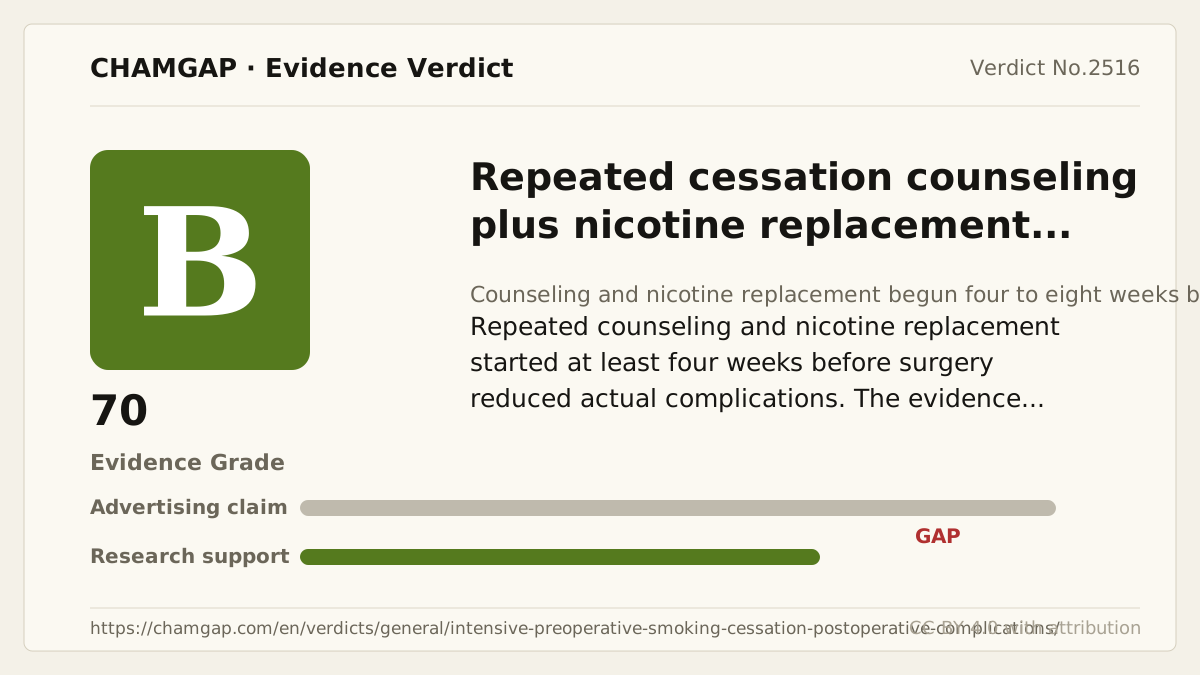
[Chamgap] Intensive preoperative smoking cessation x fewer postoperative complications — Evidence Grade B·70. 3 cited sources checked. Source: https://chamgap.com/en/verdicts/general/intensive-preoperative-smoking-cessation-postoperative-complications/ · CC BY 4.0CC BY 4.0 — free to use with attribution; do not distort grades, numbers, or verdict meaning.
What this document does and does not do
Chamgap is an information source. It reports what research has and has not confirmed; it does not tell readers what to take or buy. That decision belongs to readers and, when needed, medical or legal professionals. This verdict reflects literature available up to the search date and may change as new research appears. Nothing here is medical advice.