
Dimenhydrinate,
does it really help with Prevention of motion sickness?
research showsThe grade is B with 68 points. In a 140-person double-blind study at sea, motion sickness occurred in 22.22% with dimenhydrinate, 16.66% with transdermal scopolamine, and 43.47% with placebo. Exact arm denominators and confidence intervals were not available in the abstract.
ads claimKorean oral motion-sickness products may contain dimenhydrinate, while motion-sickness patches commonly contain scopolamine. Ingredient and timing should be checked, and drivers should not be reassured that sedation is harmless.
Useful facts when choosing a product
- Direct evidence includes both real sea voyages and laboratory rotating-chair provocation.
- The Noy trial had dimenhydrinate, scopolamine patch, and placebo arms.
- The Muth trial used dimenhydrinate 100 mg one hour before provocation.
- Oral dimenhydrinate and scopolamine patches are different medicines.
Chamgap Semantic Classification Code
Candidate index · review held
UNK.dimenhydrinate.UNK.motion-sickness.prevent.placeboUnknown > Dimenhydrinate > Unknown > motion sickness > Occurrence-prevention claim > Placebo
An automated migration candidate, not an issued permanent code; exact claim scope remains under review. This machine-generated migration candidate helps retrieval but is not a permanent assignment. The original verdict ID and URL remain authoritative.
What the research actually shows
Noy 1984 randomized 140 people at sea to transdermal scopolamine, oral dimenhydrinate, or placebo; motion-sickness incidence was 16.66%, 22.22%, and 43.47%, respectively. Price 1981 randomized 76 people during a seven- to eight-hour yacht voyage to dimenhydrinate, scopolamine, or placebo, dosing 1.5 hours before departure and again 2.5 hours after motion began. Vomiting or requesting rescue medication defined sickness, with a 0-to-6 symptom rank also recorded. The report lists dimenhydrinate dose and funding as “No information provided.” Muth 2007 randomized 63 participants to dimenhydrinate 100 mg, ondansetron 24 mg, or placebo one hour before a 20 rpm rotating-chair test lasting up to 20 minutes. That was laboratory provocation, not travel. Funding was stated as “GlaxoSmithKline funded all aspects of this study.”
Why this is classified as B (68)
A placebo-controlled sea trial showed a large absolute reduction in a patient-important event, but small, incompletely reported direct trials limit the grade to B.
Counterpoint. The non-drug P6 band in verdict 2279 is D with 28 points. Dimenhydrinate has positive placebo-controlled drug trials, but it also causes sedation relevant to driving.
Rejudgment record. Cross-check applied — Drug-specific results were separated from class estimates and natural travel from experimental provocation.
| Endpoint | P | Symptom or function itself is the target - including patient reports and performance tests |
| Replication | R1 | Single confirmatory trial |
| Independence | I1 | Mixed funding sources |
| Effect size | E+ | Meets the clinically important threshold |
Stored derived and displayed grades match; this is not a current recalculation or validity check (B).
Sub-claim grades by effect
This ingredient is marketed for several effects. A single overall grade blends strong and weak claims together, so each effect is graded separately here. The overall grade reflects the strongest disconfirming or core claim.
| Effect (sub-claim) | Grade | Basis |
|---|---|---|
| Dimenhydrinate prevents motion sickness | B | Placebo-controlled incidence at sea was favorable, but direct studies were small and incompletely reported. |
Cross-check — AI research and Codex final gate
Evidence Table
| Study | Design | Sample | Funding | Endpoint | Result | Weight |
|---|---|---|---|---|---|---|
| Noy et al. 1984 | Three-arm double-blind randomized trial at sea | 140 total; arm denominators unavailable in the abstract | No funding section in the accessible abstract | Motion-sickness incidence | Dimenhydrinate 22.22%, scopolamine 16.66%, placebo 43.47%; CI not reported | Pivotal direct evidence |
| Muth et al. 2007 | Three-arm randomized 20 rpm rotating-chair trial | 63 participants, 21 per arm | GlaxoSmithKline funded all aspects of this study | Head movements tolerated and peak MSAQ | Favored dimenhydrinate for experimentally induced nausea; arm-level CIs unavailable in the review | Indirect replication |
| Karrim et al. 2022 Cochrane review | Systematic review of nine antihistamine randomized trials | 658 overall; three natural-motion placebo trials with 240 participants | Included-trial funding was mixed or unreported | Prevention of naturally induced motion sickness | Symptom-free 44.7% versus 24.7%; RR 1.81, 95% CI 1.23-2.66, I-squared 0% | Class-level supporting evidence |
Receipt — 3 References
All 3 cited sources were verified for existence at the original page (as of 2026-08-07).
Final verification and publication gate: Codex · Evidence date: 2026-08-07 · Corrections: none
Cite this verdict
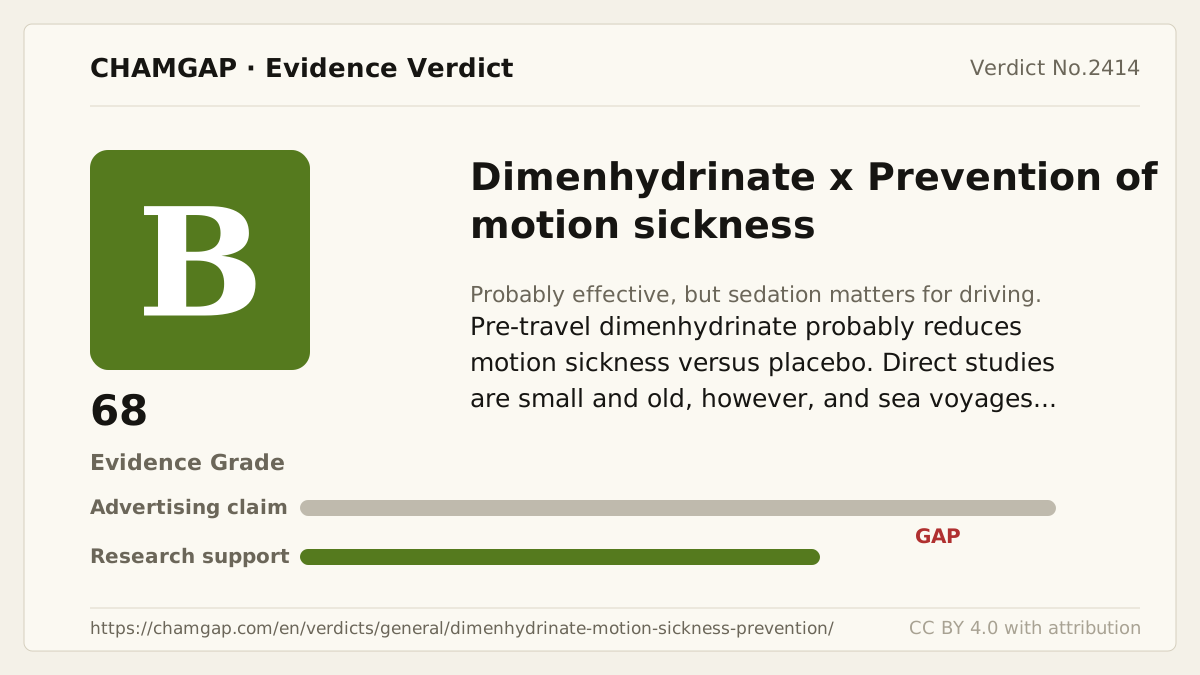
[Chamgap] Dimenhydrinate × motion sickness prevention — Evidence Grade B·68. 3 cited sources checked. Source: https://chamgap.com/en/verdicts/general/dimenhydrinate-motion-sickness-prevention/ · CC BY 4.0CC BY 4.0 — free to use with attribution; do not distort grades, numbers, or verdict meaning.
What this document does and does not do
Chamgap is an information source. It reports what research has and has not confirmed; it does not tell readers what to take or buy. That decision belongs to readers and, when needed, medical or legal professionals. This verdict reflects literature available up to the search date and may change as new research appears. Nothing here is medical advice.