
Dextromethorphan,
does it really help with Relief of nocturnal cough and sleep disturbance from colds or upper respiratory infection in children?
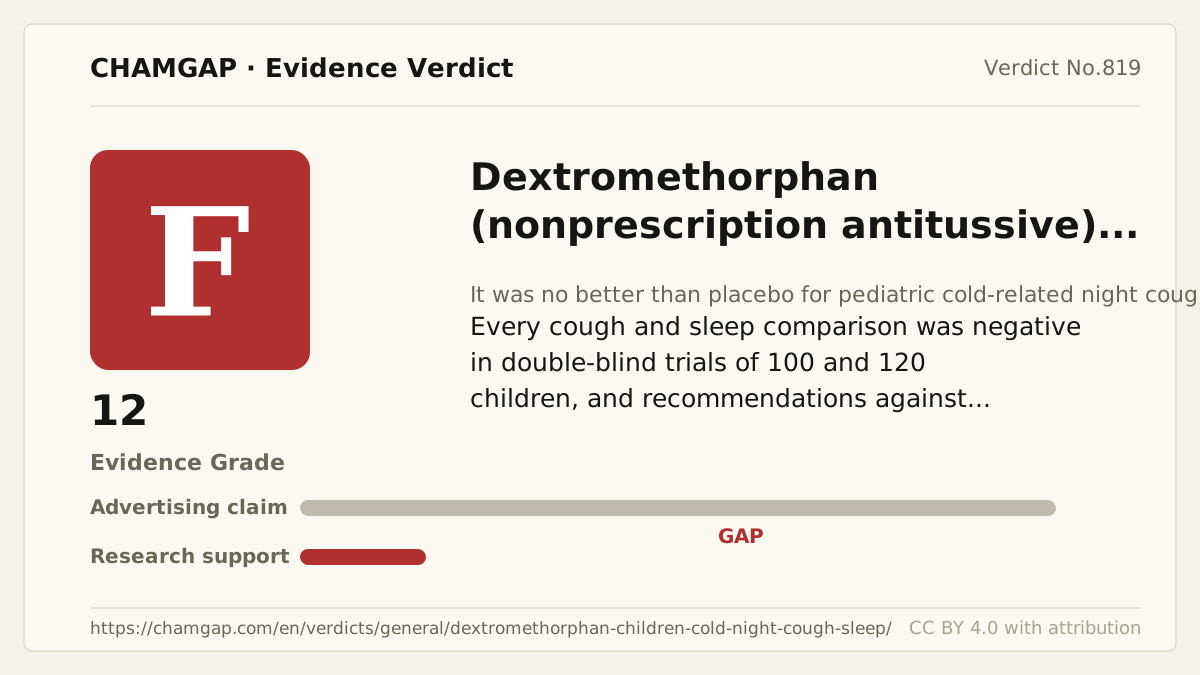
research showsThe grade is F for nocturnal cough and sleep in children with colds. In a 100-child double-blind placebo-controlled trial, every comparison for cough frequency, severity, bothersomeness, and child and parent sleep was negative versus placebo. In a 120-child double-blind trial, every cough and sleep comparison was also no better than placebo after three days. A Cochrane review found pediatric antitussives no better than placebo. Repeated direct failure and recommendations against use in young children retain F with 12 points. Risks of sedation, excitation, overdose, misuse, and serotonergic interactions are separate safety evidence.
ads claimMarketing says the medicine stops night cough and restores sleep, but placebo groups naturally improved and the drug added no benefit. Sedation, when it occurs, is not proof of cough treatment or restorative sleep.
Useful facts when choosing a product
- Dextromethorphan appears in many combination cough and cold products, so duplicate ingredients and age-specific labeling must be checked.
- Nonprescription cough and cold products are discouraged in young children or prohibited below specified ages; age cutoffs differ by country and product and should not be improvised.
- Drowsiness, dizziness, excitation, and nausea can occur, while overdose can cause altered consciousness, breathing problems, dissociation, and death.
- Monoamine oxidase inhibitors and other serotonergic medicines can raise serotonin-syndrome risk, and high-dose misuse occurs in adolescents and adults.
Chamgap Semantic Classification Code
Candidate index · review held
M.dextromethorphan.UNK.nocturnal-cough-and-sleep-disturbance-from-colds-or-upper-respiratory-infection.relieve.placeboMedicinal interventions > Dextromethorphan > Unknown > nocturnal cough and sleep disturbance from colds or upper respiratory infection > Symptom-relief claim > Placebo
An automated migration candidate, not an issued permanent code; exact claim scope remains under review. This machine-generated migration candidate helps retrieval but is not a permanent assignment. The original verdict ID and URL remain authoritative.
What the research actually shows
Paul and colleagues randomized 100 children with upper respiratory infection to dextromethorphan, diphenhydramine, or placebo. Every group improved the next day, but neither medicine beat placebo. Bhattacharya and colleagues randomized 120 children aged one to twelve to dextromethorphan, promethazine, or placebo for three days; natural improvement occurred without drug superiority. Cochrane reviewed ten pediatric trials and found antitussives and most other categories no better than placebo, while emphasizing potential harm. Natural recovery is easily mistaken for drug efficacy in this condition.
Why this is classified as F (12)
Double-blind placebo-controlled trials in 100 and 120 children found every direct cough and sleep comparison negative, and Cochrane found no pediatric antitussive superiority. Recommendations against use in young children retain F with 12 points; harms remain separate safety evidence.
Counterpoint. Cold cough usually resolves naturally. Breathing difficulty, cyanosis, dehydration, persistent high fever, wheeze, chest pain, or prolonged cough requires clinical evaluation; age-appropriate non-drug options can be discussed.
Rejudgment record. New verdict — Applied F because multiple placebo-controlled trials repeatedly failed on direct nocturnal cough and sleep outcomes in children, consistent with Cochrane synthesis and recommendations against nonprescription cough-medicine use in young children
Sub-claim grades by effect
This ingredient is marketed for several effects. A single overall grade blends strong and weak claims together, so each effect is graded separately here. The overall grade reflects the strongest disconfirming or core claim.
| Effect (sub-claim) | Grade | Basis |
|---|---|---|
| Relief of nocturnal cough from pediatric colds or upper respiratory infection | F | Multiple placebo-controlled trials repeatedly found no benefit. |
| Relief of sleep disturbance in children and parents | F | Direct sleep assessments also found no advantage over placebo. |
| Extension to adult cough or cough from other causes | ? | This pediatric-cold verdict cannot establish efficacy in other populations. |
Cross-check — AI research and Codex final gate
Evidence Table
| Study | Design | Sample | Funding | Endpoint | Result | Weight |
|---|---|---|---|---|---|---|
| Paul IM et al. 2004 | Randomized double-blind placebo-controlled trial | 100 children with upper respiratory infection | Academic study with no detailed commercial funding reported | Cough frequency, severity, bothersomeness, and child and parent sleep | Dextromethorphan was not superior to placebo on any outcome. | Key directly negative randomized trial |
| Bhattacharya M et al. 2013 | Randomized double-blind placebo-controlled trial | 120 children aged one to twelve with upper respiratory infection | Public-hospital academic research with no commercial sponsorship reported | Nocturnal cough, post-tussive vomiting, and child and parent sleep | Symptoms improved naturally over three days, but dextromethorphan was no better than placebo. | Repeated directly negative randomized trial |
| Smith SM et al., Cochrane 2014 | Systematic review | 29 trials and 4,835 participants; 10 pediatric trials and 1,036 children | Noncommercial academic evidence synthesis | Acute cough and adverse events | Pediatric antitussives were no better than placebo, and adverse effects occurred with preparations including dextromethorphan. | Synthesized refuting evidence |
Receipt — 3 References
All 3 cited sources were verified for existence at the original page (as of 2026-07-20).
Final verification and publication gate: Codex · Evidence date: 2026-07-20 · Corrections: none
Cite this verdict
[Chamgap] Dextromethorphan x relief of nocturnal cough and sleep disturbance from colds or upper respiratory infection in children — Evidence Grade F·12. 3 cited sources checked. Source: https://chamgap.com/en/verdicts/general/dextromethorphan-children-cold-night-cough-sleep/ · CC BY 4.0CC BY 4.0 — free to use with attribution; do not distort grades, numbers, or verdict meaning.
What this document does and does not do
Chamgap is an information source. It reports what research has and has not confirmed; it does not tell readers what to take or buy. That decision belongs to readers and, when needed, medical or legal professionals. This verdict reflects literature available up to the search date and may change as new research appears. Nothing here is medical advice.