
Delayed sodium thiosulfate,
does it really help with Prevention of cisplatin-induced hearing loss in children?
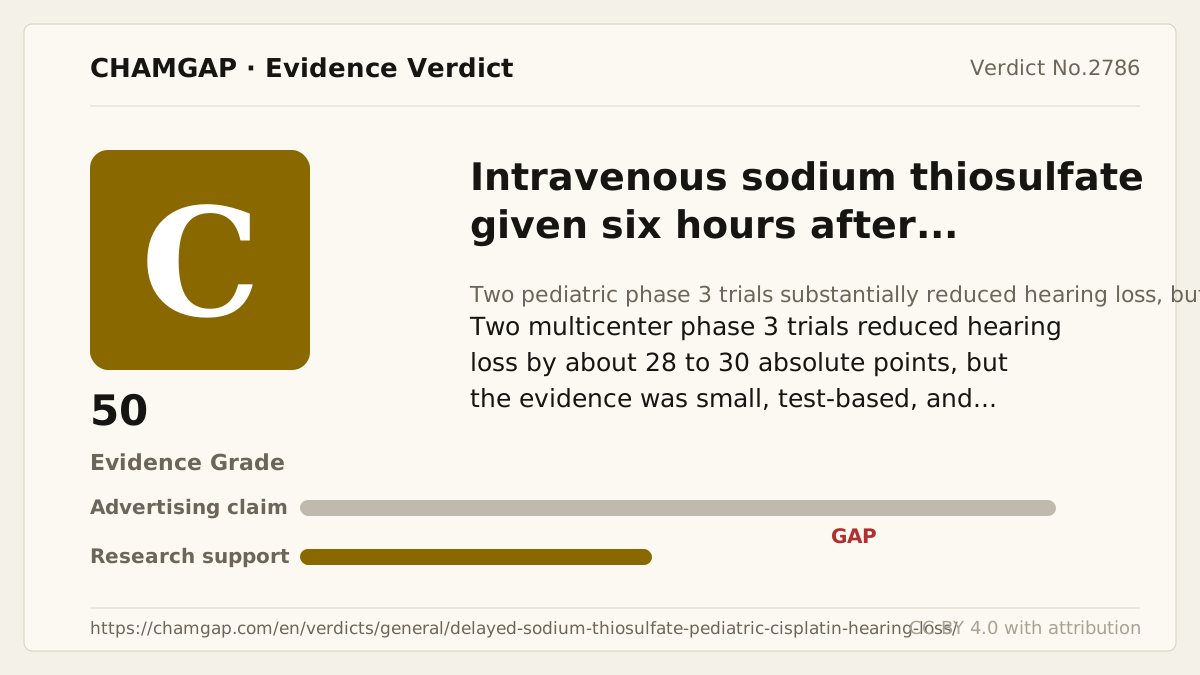
research showsThe grade is C. In SIOPEL-6 for standard-risk hepatoblastoma, hearing loss occurred in 18/55 (33%) with sodium thiosulfate versus 29/46 (63%) with cisplatin alone, RR 0.52, 95% CI 0.33 to 0.81. The 30-point absolute reduction corresponds to about one case prevented per 3.3 treated children. ACCL0431 replicated the direction, 14/49 (28.6%) versus 31/55 (56.4%). The endpoints were audiometry-based, both trials enrolled fewer than 200 participants, and the company supplied study drug, giving C with 50 points.
ads claimMarketing should not translate the risk ratio into a vague claim that hearing is protected by nearly one half. The standard-risk hepatoblastoma trial reduced hearing loss from 63% to 33%, an absolute 30-point difference, under a specific six-hour delayed schedule.
Useful facts when choosing a product
- SIOPEL-6 administered sodium thiosulfate 20 g/m² intravenously over 15 minutes, six hours after cisplatin ended.
- The Fennec-supplied item was the intervention drug, not an assessment tool.
- ACCL0431 replicated hearing protection across pediatric cancers but raised a survival concern in disseminated disease.
Chamgap Semantic Classification Code
Candidate index · review held
M.sodium-thiosulfate-given-after-completion-of-cisplatin.intravenous.cisplatin-induced-hearing-loss.prevent.UNKMedicinal interventions > sodium thiosulfate given after completion of cisplatin > Intravenous > cisplatin-induced hearing loss > Occurrence-prevention claim > Unknown
An automated migration candidate, not an issued permanent code; exact claim scope remains under review. This machine-generated migration candidate helps retrieval but is not a permanent assignment. The original verdict ID and URL remain authoritative.
What the research actually shows
SIOPEL-6 randomized 113 children at 52 centers in 12 countries; after four ineligible participants were removed, 109 entered the intention-to-treat population and 101 were evaluable for hearing. Its protocol assumed a reduction from 60% to 35%, requiring 102 evaluable and 115 enrolled participants; the observed absolute reduction was 30 points. ACCL0431 randomized 125, 61 versus 64, and used a modified intention-to-treat hearing analysis in 104, 49 versus 55. Both trials were open label, with centrally reviewed audiometry masked to allocation. Neither stopped early. SIOPEL-6 used Cancer Research UK and other public or charitable funding; ACCL0431 used US National Cancer Institute funding. Fennec Pharmaceuticals supplied the active study drug without charge in both trials. SIOPEL-6 also disclosed OHSU and US Department of Veterans Affairs financial interests in Fennec and an inventor relationship.
Why this is classified as C (50)
Both trials pointed the same way but **share a core investigator**, so they are not counted as independent replication; the primary endpoint is an audiometric surrogate and funding is mixed, giving C with 50 points.
Counterpoint. C does not mean the effect was small. It reflects the evidence structure and restricted safe application despite a large hearing-loss reduction in localized pediatric cancer.
Rejudgment record. Cross-check applied — Cross-checks hearing denominators and results, public funding, Fennec study-drug supply, and disease-extent survival findings in SIOPEL-6 and ACCL0431
| Endpoint | S | Surrogate marker - laboratory or imaging measures |
| Replication | R1 | Single confirmatory trial |
| Independence | I1 | Mixed funding sources |
| Effect size | E+ | Meets the clinically important threshold |
Stored derived and displayed grades match; this is not a current recalculation or validity check (C).
Sub-claim grades by effect
This ingredient is marketed for several effects. A single overall grade blends strong and weak claims together, so each effect is graded separately here. The overall grade reflects the strongest disconfirming or core claim.
| Effect (sub-claim) | Grade | Basis |
|---|---|---|
| Reduced cisplatin hearing loss in localized pediatric cancer | C | Two phase 3 trials replicated an absolute reduction of about 28 to 30 points. |
| Use in disseminated cancer without compromising survival | D | A post hoc ACCL0431 subgroup had significantly worse overall survival. |
Cross-check — AI research and Codex final gate
Evidence Table
| Study | Design | Sample | Funding | Endpoint | Result | Weight |
|---|---|---|---|---|---|---|
| Brock PR et al. 2018 SIOPEL-6 | International open-label randomized phase 3 trial with central hearing review | 113 randomized, 109 in intention-to-treat, and 101 in the primary hearing analysis, 55 versus 46 | Public and charitable funding including Cancer Research UK; Fennec supplied study drug without charge | Cisplatin hearing loss of Brock grade 1 or higher | 18/55 (33%) versus 29/46 (63%), RR 0.52, 95% CI 0.33 to 0.81, absolute difference -30 points | Pivotal phase 3 evidence in standard-risk hepatoblastoma |
| Freyer DR et al. 2017 ACCL0431 | Multicenter open-label randomized phase 3 trial with allocation-masked central hearing review | 125 randomized, 61 versus 64; modified intention-to-treat hearing analysis in 104, 49 versus 55 | US National Cancer Institute public funding; Fennec supplied study drug without charge | ASHA-defined hearing loss four weeks after final cisplatin | 14/49 (28.6%) versus 31/55 (56.4%), adjusted OR 0.31, 95% CI 0.13 to 0.73 | Replication by a separate team, with a disseminated-disease survival concern |
Receipt — 2 References
All 2 cited sources were verified for existence at the original page (as of 2026-08-18).
Final verification and publication gate: Codex · Evidence date: 2026-08-18 · Corrections: none
Cite this verdict
[Chamgap] Delayed sodium thiosulfate x pediatric cisplatin-induced hearing loss — Evidence Grade C·50. 2 cited sources checked. Source: https://chamgap.com/en/verdicts/general/delayed-sodium-thiosulfate-pediatric-cisplatin-hearing-loss/ · CC BY 4.0CC BY 4.0 — free to use with attribution; do not distort grades, numbers, or verdict meaning.
What this document does and does not do
Chamgap is an information source. It reports what research has and has not confirmed; it does not tell readers what to take or buy. That decision belongs to readers and, when needed, medical or legal professionals. This verdict reflects literature available up to the search date and may change as new research appears. Nothing here is medical advice.