
Bupropion sustained release,
does it really help with Improved six-month continuous smoking abstinence when combined with counseling?
research showsBupropion sustained release is rated B because it increases continuous smoking abstinence at 24 weeks when used with cessation counseling. EAGLES randomized 8,144 participants to bupropion SR, varenicline, nicotine patch, or placebo and provided brief counseling to everyone. Carbon-monoxide-confirmed continuous abstinence during weeks 9 to 24 was about 16.2% with bupropion, 9.4% with placebo, and a similar 15.7% with nicotine patch. A 2023 Cochrane review also found high-certainty evidence across 50 trials and 18,577 participants for abstinence at six months or longer, RR 1.60 (95% CI 1.49 to 1.72). Efficacy is clear but moderate, superiority over nicotine patch is absent, and harms including seizure risk prevent an A rating.
ads claimClaims that the medicine removes the need for willpower or is stronger than a nicotine patch erase the contribution of counseling, a planned quit date, follow-up, and the possibility of relapse. The drug improves the chance of success, but most users do not achieve long-term abstinence, and it is not superior to varenicline or combination nicotine replacement.
Useful facts when choosing a product
- Bupropion SR for smoking cessation is commonly started about one week before the quit date, with an initial lower dose followed by 150 mg twice daily; the prescription and product label determine the exact schedule and duration.
- The evidence best matches use with a planned quit date, behavioral counseling, strategies for triggers, and follow-up support rather than medication alone.
- Insomnia, dry mouth, headache, nausea, anxiety, and increased blood pressure can occur. Taking a dose late in the day can worsen insomnia.
- Seizure disorders, anorexia or bulimia, abrupt withdrawal from alcohol or benzodiazepines, and monoamine oxidase inhibitor use are contraindications or major restrictions. The former United States boxed warning specific to cessation-drug neuropsychiatric events was removed after EAGLES, but mood or behavioral change and suicidal thinking still require prompt assessment.
Chamgap Semantic Classification Code
Candidate index · review held
M.bupropion-sustained-release.UNK.continuous-smoking-abstinence-when-combined-with-counseling.improve.MULTIMedicinal interventions > Bupropion sustained release > Unknown > continuous smoking abstinence when combined with counseling > Improvement claim > Multiple: primary unresolved
An automated migration candidate, not an issued permanent code; exact claim scope remains under review. This machine-generated migration candidate helps retrieval but is not a permanent assignment. The original verdict ID and URL remain authoritative.
What the research actually shows
Anthenelli and colleagues randomized 8,144 smokers, stratified by psychiatric history, 1:1:1:1 to varenicline, bupropion SR 150 mg twice daily, nicotine patch, or placebo in EAGLES, with 12 weeks of treatment and 12 weeks of follow-up. Everyone received repeated brief counseling. Overall carbon-monoxide-confirmed continuous abstinence during weeks 9 to 24 was 21.8% with varenicline, 16.2% with bupropion, 15.7% with patch, and 9.4% with placebo. Bupropion and patch were each effective versus placebo and similar to each other. The 2023 Cochrane review by Hajizadeh and colleagues reported high-certainty evidence from 50 trials and 18,577 participants, RR 1.60 (95% CI 1.49 to 1.72), I² 16%, for bupropion versus placebo or no pharmacotherapy. Jorenby 1999 also found 12-month abstinence rates of 30.3% with bupropion versus 15.6% with placebo in 893 participants receiving intensive counseling, though interpretation of its nicotine-patch comparison is limited by the unblinded patch condition.
Why this is classified as B (74)
EAGLES provides an 8,144-person direct comparison, and the Cochrane synthesis of 50 trials and 18,577 participants found RR 1.60 with low heterogeneity, strongly supporting abstinence at six months or longer. Absolute benefit is moderate at roughly 19% versus 12%, nicotine patch is not inferior, and varenicline or combination NRT may be more effective. Seizure and discontinuation risks are recorded separately from efficacy, giving B with 74 points.
Counterpoint. Bupropion can be a good option depending on depression history, concern about weight gain, preferences, and previous treatment response. People with seizure risk or contraindications should compare nicotine replacement, varenicline, or other evidence-based options with a clinician.
Rejudgment record. New verdict — Accepted the counseling-supported 8,144-person randomized direct comparison in EAGLES and high-certainty long-term cessation RR of 1.60 across 50 trials and 18,577 participants in the 2023 Cochrane review, while assigning B for moderate absolute benefit, no superiority over single-form nicotine patch, possible inferiority to varenicline and combination NRT, and seizure-related safety burden
Sub-claim grades by effect
This ingredient is marketed for several effects. A single overall grade blends strong and weak claims together, so each effect is graded separately here. The overall grade reflects the strongest disconfirming or core claim.
| Effect (sub-claim) | Grade | Basis |
|---|---|---|
| Improved biochemically confirmed continuous abstinence during weeks 9 to 24 | B | EAGLES, which included counseling, was positive at about 16.2% with bupropion versus 9.4% with placebo. |
| Improved long-term smoking abstinence at six months or longer | B | High-certainty evidence across 50 trials and 18,577 participants found RR 1.60, but absolute success was moderate at about 19% versus 12%. |
| Higher continuous abstinence than nicotine patch | D | The large direct EAGLES comparison found similar rates of 16.2% with bupropion and 15.7% with patch, and pooled evidence shows no clear superiority over single-form NRT. Seizure and neuropsychiatric concerns remain separate safety issues. |
Cross-check — AI research and Codex final gate
Evidence Table
| Study | Design | Sample | Funding | Endpoint | Result | Weight |
|---|---|---|---|---|---|---|
| Anthenelli RM et al. 2016 EAGLES | Multicenter randomized double-blind triple-dummy placebo- and active-controlled trial | 8,144 smokers with and without psychiatric disorders; 2,006 assigned bupropion | Jointly funded by Pfizer and GlaxoSmithKline with company employee authors | Carbon-monoxide-confirmed continuous abstinence during weeks 9 to 12 and 9 to 24 and neuropsychiatric adverse events | Continuous abstinence during weeks 9 to 24 was about 16.2% with bupropion, 9.4% with placebo, and 15.7% with nicotine patch, making bupropion effective versus placebo and similar to patch. | Core large direct-comparison trial |
| Hajizadeh A et al. 2023 Cochrane review | Systematic review and meta-analysis of randomized trials of antidepressants for smoking cessation | 124 studies and 48,832 participants overall; 50 bupropion versus placebo or no-pharmacotherapy trials with 18,577 participants | Academic review by the Cochrane Tobacco Addiction Group | The strictest available abstinence definition at six months or longer, biochemically validated when available | Bupropion produced RR 1.60 (95% CI 1.49 to 1.72), I² 16%, with high certainty; it was similar to single-form NRT and may be less effective than combination NRT or varenicline. | Core independent synthesis |
| Jorenby DE et al. 1999 | Randomized placebo- and nicotine-patch active-controlled trial | 893 smokers; 244 bupropion, 244 patch, 245 combination, and 160 placebo | Supported by Glaxo Wellcome with company employee authors | Twelve-month abstinence with counseling | Twelve-month abstinence was 30.3% with bupropion, 15.6% with placebo, 16.4% with patch, and 35.5% with combination treatment. | Long-term direct supportive trial with industry funding |
Receipt — 3 References
All 3 cited sources were verified for existence at the original page (as of 2026-07-24).
Final verification and publication gate: Codex · Evidence date: 2026-07-24 · Corrections: none
Cite this verdict
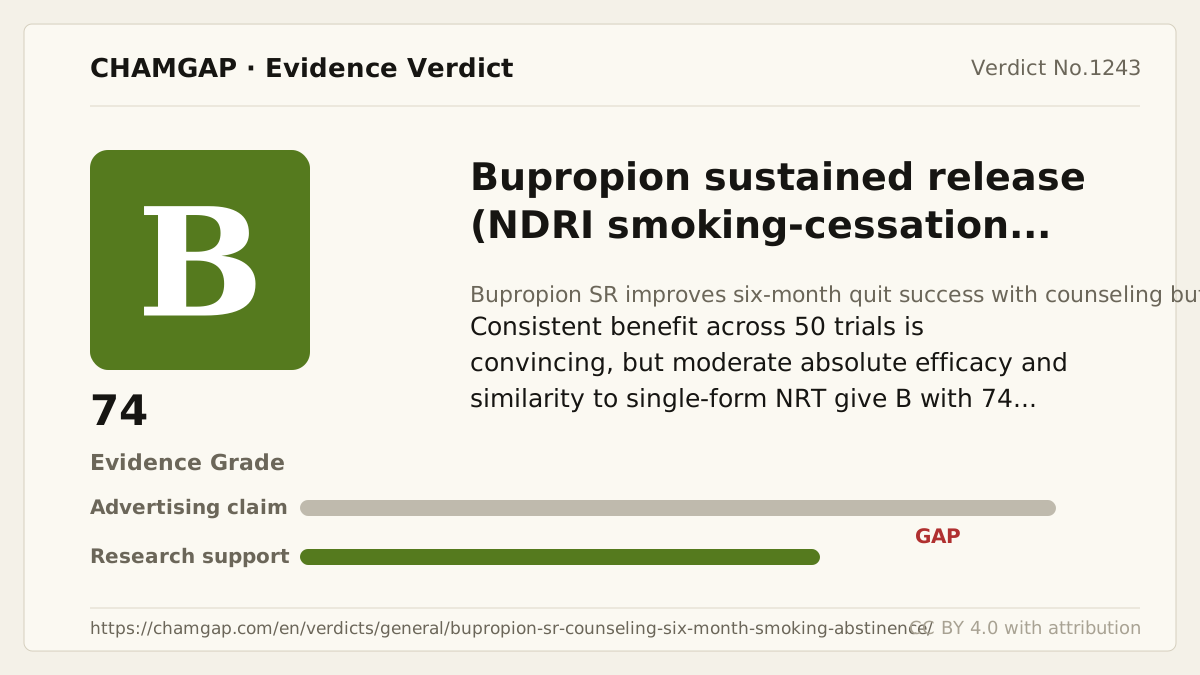
[Chamgap] Bupropion sustained release x improved six-month continuous abstinence with counseling — Evidence Grade B·74. 3 cited sources checked. Source: https://chamgap.com/en/verdicts/general/bupropion-sr-counseling-six-month-smoking-abstinence/ · CC BY 4.0CC BY 4.0 — free to use with attribution; do not distort grades, numbers, or verdict meaning.
What this document does and does not do
Chamgap is an information source. It reports what research has and has not confirmed; it does not tell readers what to take or buy. That decision belongs to readers and, when needed, medical or legal professionals. This verdict reflects literature available up to the search date and may change as new research appears. Nothing here is medical advice.