
Timolol,
does it really help with Lowered intraocular pressure in open-angle glaucoma and ocular hypertension?
research showsOphthalmic timolol is rated B because randomized trials show sustained intraocular-pressure lowering in open-angle glaucoma and ocular hypertension. A 12-month multicenter double-masked trial found that timolol formulations maintained trough pressure reductions of about 4 to 5 mmHg, and two one-year comparative trials found a roughly 5.3-mmHg reduction at month 12 in the timolol 0.5% group. Intraocular pressure is a validated surrogate linked to glaucoma progression, but it is not visual-field preservation itself, so the evidence does not reach A. Eye drops can be systemically absorbed and cause bradycardia, hypotension, or bronchospasm; these are separate safety issues.
ads claimMarketing can expand lowers eye pressure into stops glaucoma or acts only in the eye without systemic effects. Actual visual-field preservation depends on reaching target pressure, adherence, disease severity, and long-term follow-up, and systemic beta blockade can occur.
Useful facts when choosing a product
- Timolol is a prescription nonselective beta-blocker eye drop that lowers pressure by reducing aqueous-humor production; dosing frequency differs between solution and gel-forming products.
- Closing the eye and pressing the tear duct for one to two minutes after instillation can reduce drainage into the nose and systemic absorption. The product-specific prescription takes priority.
- Patients may feel no symptom change even when pressure falls, so regular pressure, optic-nerve, and visual-field examinations remain necessary.
- Bradycardia, hypotension, atrioventricular block, worsening heart failure, and bronchospasm can occur. Asthma, severe chronic obstructive pulmonary disease, sinus bradycardia, and second- or third-degree heart block are generally contraindications.
Chamgap Semantic Classification Code
Candidate index · review held
M.timolol-maleate.ophthalmic.lowered-intraocular-pressure-in-open-angle-glaucoma-and-ocular-hypertension.reduce.MULTIMedicinal interventions > Timolol maleate > Ophthalmic > Lowered intraocular pressure in open-angle glaucoma and ocular hypertension > Reduction claim > Multiple: primary unresolved
An automated migration candidate, not an issued permanent code; exact claim scope remains under review. This machine-generated migration candidate helps retrieval but is not a permanent assignment. The original verdict ID and URL remain authoritative.
What the research actually shows
Schenker and colleagues randomized 241 patients with open-angle glaucoma or ocular hypertension to timolol gel-forming solution or Timoptic XE for 12 months. Both formulations maintained roughly 4-to-5-mmHg trough-pressure reductions and were clinically equivalent. In two identical multicenter one-year trials by Higginbotham and colleagues, 241 participants received timolol 0.5% twice daily as the comparator, with mean intraocular pressure 5.3 mmHg below baseline at peak effect in month 12. A separate small five-year paired-eye trial signaled less reproducible visual-field loss in timolol-treated than placebo-treated eyes with ocular hypertension, but this verdict is restricted to the pressure-lowering claim.
Why this is classified as B (75)
Multicenter double-masked randomized trials repeatedly demonstrate maintained pressure lowering through 12 months with this established drug. Intraocular pressure is nevertheless a validated surrogate for visual-field preservation rather than a direct visual-field or blindness outcome, giving B with 75 points. Bradycardia and bronchospasm are systemic beta-blocker safety concerns separate from efficacy.
Counterpoint. If target pressure is not reached or progression continues, other eye drops, laser treatment, or surgery may be needed. Respiratory and cardiac disease and concurrent oral beta-blockers should be disclosed to the prescriber.
Rejudgment record. New verdict — Accepted objectively measured intraocular-pressure lowering maintained for 12 months in multicenter double-masked randomized trials, while assigning B because pressure is a validated surrogate for visual-field preservation rather than a direct visual-field or blindness outcome
Sub-claim grades by effect
This ingredient is marketed for several effects. A single overall grade blends strong and weak claims together, so each effect is graded separately here. The overall grade reflects the strongest disconfirming or core claim.
| Effect (sub-claim) | Grade | Basis |
|---|---|---|
| Lowering of intraocular pressure in open-angle glaucoma | B | Objective pressure lowering through 12 months is established, while visual-field preservation is a separate long-term goal mediated through pressure. |
| Lowering of intraocular pressure in ocular hypertension | B | The effect persists across randomized trials, but target pressure and progression risk vary by patient. |
Cross-check — AI research and Codex final gate
Evidence Table
| Study | Design | Sample | Funding | Endpoint | Result | Weight |
|---|---|---|---|---|---|---|
| Schenker HI, Silver LH. 2000 | Twelve-month multicenter randomized double-masked active-controlled trial | 241 patients with open-angle glaucoma or ocular hypertension | Product-development comparison involving Alcon and Merck formulations | Trough intraocular pressure approximately 24 hours after dosing | Both timolol formulations maintained pressure 4.1 to 5.3 mmHg below baseline and were equivalent. | Core 12-month durability evidence |
| Higginbotham EJ et al. 2002 | Two identically designed multicenter randomized double-masked one-year active-controlled trials | 241 timolol recipients among 1,198 total participants | Allergan product-comparison trials | Diurnal intraocular pressure at month 12 | Timolol 0.5% maintained a 5.3-mmHg, 21% reduction from baseline at peak effect in month 12. | Large long-term comparative evidence |
| Kass MA. 1989 | Five-year randomized double-masked paired-eye controlled trial | 65 people with moderate-risk ocular hypertension | Academic clinical trial | Reproducible visual-field loss and optic-disc change | Reproducible visual-field loss occurred in four timolol-treated eyes and ten placebo-treated eyes. | Supportive direct progression evidence |
Receipt — 3 References
All 3 cited sources were verified for existence at the original page (as of 2026-07-20).
Final verification and publication gate: Codex · Evidence date: 2026-07-20 · Corrections: none
Cite this verdict
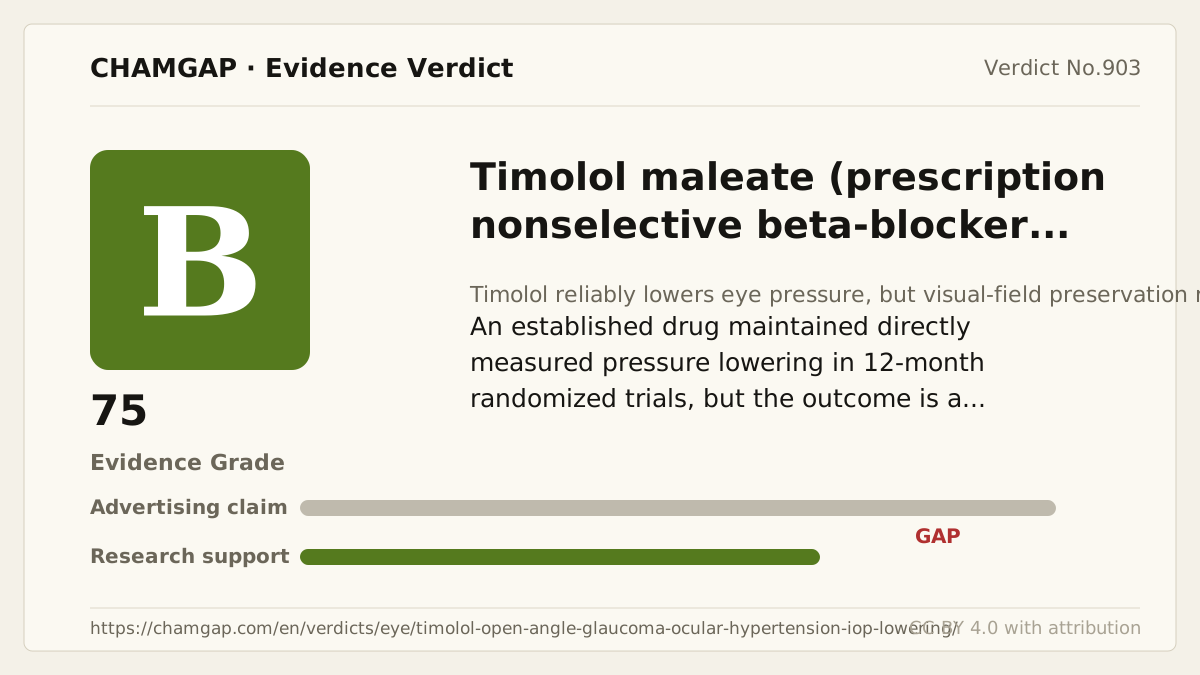
[Chamgap] Timolol x lower intraocular pressure in open-angle glaucoma and ocular hypertension — Evidence Grade B·75. 3 cited sources checked. Source: https://chamgap.com/en/verdicts/eye/timolol-open-angle-glaucoma-ocular-hypertension-iop-lowering/ · CC BY 4.0CC BY 4.0 — free to use with attribution; do not distort grades, numbers, or verdict meaning.
What this document does and does not do
Chamgap is an information source. It reports what research has and has not confirmed; it does not tell readers what to take or buy. That decision belongs to readers and, when needed, medical or legal professionals. This verdict reflects literature available up to the search date and may change as new research appears. Nothing here is medical advice.