
Panretinal photocoagulation,
does it really help with Prevention of severe visual loss and blindness in high-risk proliferative diabetic retinopathy?
research showsPanretinal photocoagulation is rated A because a large randomized trial and subsequent synthesis found that it more than halved severe visual loss in high-risk proliferative diabetic retinopathy. In the Diabetic Retinopathy Study, an intra-individual eye trial of 1,758 participants, two-year severe visual loss occurred in 6.4% of treated eyes and 15.9% of control eyes; among eyes with high-risk features, the rates were 11% and 26%. A 2014 Cochrane review of four randomized trials also found a 12-month risk ratio of 0.46 for severe visual loss. The benefit is specific to PRP and uses a direct, blindness-level hard endpoint, supporting A with 90 points. Peripheral-field loss, impaired night vision, and possible worsening of macular edema are recorded separately under safety.
ads claimProcedure descriptions sometimes present PRP as a laser that restores vision already lost or treats every retinal complication at once. Its best-established effect is reducing future blindness-level visual loss in high-risk proliferative diabetic retinopathy; visual loss from macular edema, cataract, or retinal detachment requires separate assessment.
Useful facts when choosing a product
- Panretinal photocoagulation is an ophthalmologist-prescribed procedure that places multiple laser burns in ischemic peripheral retina to reduce the stimulus for neovascularization, often over more than one session.
- The clearest evidence applies to proliferative diabetic retinopathy with high-risk features such as optic-disc neovascularization or vitreous and preretinal hemorrhage.
- PRP does not restore vision already lost and does not replace center-directed treatment for macular edema, so retinal status must be followed and the need for additional laser, injections, or surgery reassessed.
- Pain, glare, and transient blur can occur after treatment, and peripheral vision, night vision, or macular edema can worsen; effects on driving and daily function should be discussed with the treating retinal specialist.
Chamgap Semantic Classification Code
Candidate index · review held
P.panretinal-photocoagulation.procedural.severe-visual-loss-and-blindness-in-high-risk-proliferative-diabetic-retinopathy.prevent.UNKProcedures, devices and tests > Panretinal photocoagulation > Procedural > severe visual loss and blindness in high-risk proliferative diabetic retinopathy > Occurrence-prevention claim > Unknown
An automated migration candidate, not an issued permanent code; exact claim scope remains under review. This machine-generated migration candidate helps retrieval but is not a permanent assignment. The original verdict ID and URL remain authoritative.
What the research actually shows
The Diabetic Retinopathy Study enrolled 1,758 participants at 15 United States centers and randomized one eye to immediate photocoagulation while the fellow eye was observed without treatment. Severe visual loss was defined as visual acuity of 5/200 or worse; the two-year cumulative rates were 6.4% in treated eyes and 15.9% in control eyes, with a larger absolute benefit in eyes with high-risk features such as neovascularization and vitreous hemorrhage. The Early Treatment Diabetic Retinopathy Study compared early scatter photocoagulation with deferral until high-risk disease in 3,711 participants. It found too little benefit to justify immediate PRP in mild or moderate nonproliferative disease but advised against delay at the high-risk proliferative stage. A 2014 Cochrane review concluded that laser reduced severe visual loss by more than half at 12 months.
Why this is classified as A (90)
In the large intra-individual randomized Diabetic Retinopathy Study, two-year severe visual loss fell from 15.9% to 6.4%, and from 26% to 11% among high-risk eyes. The Early Treatment Diabetic Retinopathy Study supported treatment timing, while a Cochrane synthesis of four randomized trials was consistent with a risk ratio of 0.46. A procedure-specific benefit on a direct blindness-level hard endpoint supports A with 90 points.
Counterpoint. Peripheral-field and night-vision loss and worsening of macular edema are real tradeoffs that require staging and macular assessment, but the absolute blindness-prevention benefit is large in high-risk proliferative disease.
Rejudgment record. Cross-check applied — The large public intra-individual randomized Diabetic Retinopathy Study found a greater than 50% reduction in blindness-level severe visual loss, while the Early Treatment Diabetic Retinopathy Study and a four-trial synthesis consistently support timing and efficacy at the high-risk proliferative stage, meeting grade A criteria for a procedure-specific direct hard endpoint
Sub-claim grades by effect
This ingredient is marketed for several effects. A single overall grade blends strong and weak claims together, so each effect is graded separately here. The overall grade reflects the strongest disconfirming or core claim.
| Effect (sub-claim) | Grade | Basis |
|---|---|---|
| Prevention of severe visual loss in high-risk proliferative diabetic retinopathy | A | In the Diabetic Retinopathy Study, two-year severe visual loss among high-risk eyes fell from 26% to 11%. |
| Prevention of blindness-level visual loss in eyes with neovascular and vitreous-hemorrhage features | A | The procedure-specific hard-endpoint benefit was largest in eyes with high-risk features and high absolute risk. |
| Immediate early PRP before the high-risk stage in mild or moderate nonproliferative retinopathy | C | The Early Treatment Diabetic Retinopathy Study found only 2.6% versus 3.7% severe visual loss at five years, and visual-field harms did not support routine early treatment. |
Cross-check — AI research and Codex final gate
Evidence Table
| Study | Design | Sample | Funding | Endpoint | Result | Weight |
|---|---|---|---|---|---|---|
| Diabetic Retinopathy Study Research Group 1981, DRS Report 8 | Multicenter intra-individual randomized trial of immediate photocoagulation versus observation | 1,758 participants; one treated eye and one control eye | Public research supported by the United States National Eye Institute | Severe visual loss of 5/200 or worse | At two years, severe visual loss occurred in 6.4% of treated eyes and 15.9% of control eyes; among high-risk eyes, rates were 11% and 26%. | Key large trial with a direct hard endpoint |
| Early Treatment Diabetic Retinopathy Study Research Group 1991, ETDRS Report 9 | Multicenter intra-individual randomized trial of early photocoagulation versus deferral until high-risk disease | 3,711 participants | Public research supported by the United States National Eye Institute | Severe visual loss below 5/200 at consecutive visits | Five-year severe visual loss was low at 2.6% with early treatment and 3.7% with deferral, and scatter treatment was not to be delayed at the high-risk proliferative stage. | Clarifies timing and scope |
| Evans JR et al. 2014 Cochrane review | Systematic review of randomized trials of laser versus no or deferred treatment | Four randomized trials and 9,276 eyes in the severe-visual-loss analysis | Academic Cochrane Eyes and Vision review | Severe visual loss at 12 months | Laser reduced severe visual loss (RR 0.46, 95% CI 0.24 to 0.86; moderate-certainty evidence). | Independent confirmatory synthesis |
Receipt — 3 References
All 3 cited sources were verified for existence at the original page (as of 2026-07-24).
Final verification and publication gate: Codex · Evidence date: 2026-07-24 · Corrections: none
Cite this verdict
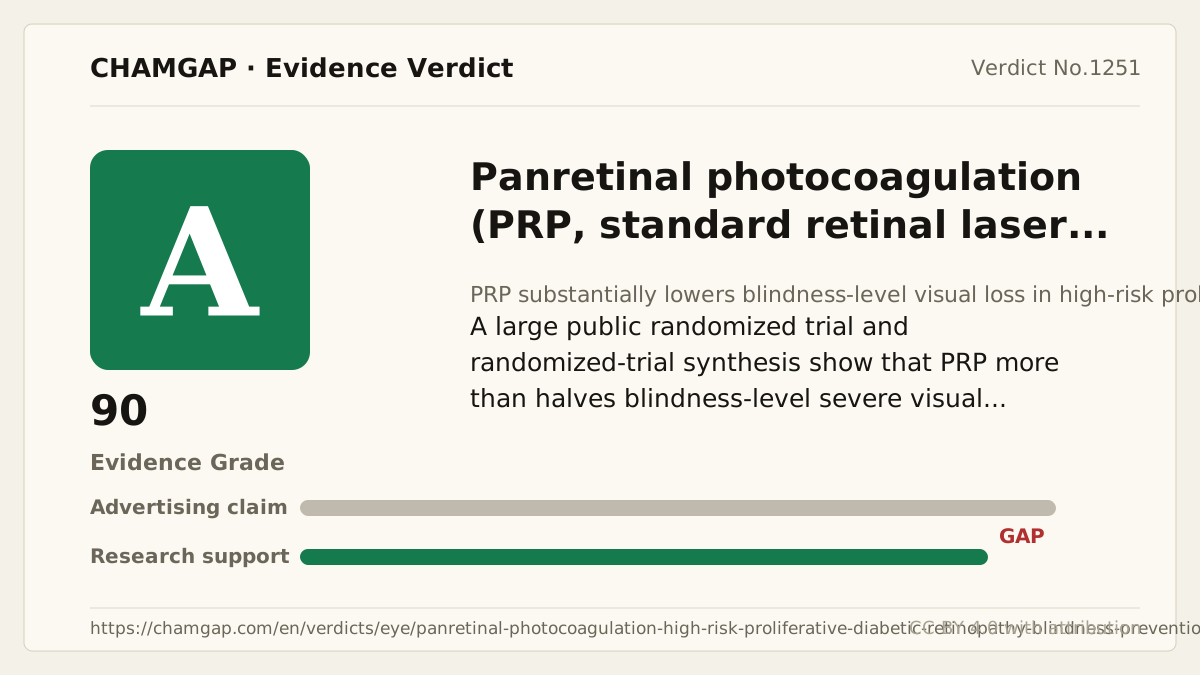
[Chamgap] Panretinal photocoagulation x prevention of severe visual loss and blindness in high-risk proliferative diabetic retinopathy — Evidence Grade A·90. 3 cited sources checked. Source: https://chamgap.com/en/verdicts/eye/panretinal-photocoagulation-high-risk-proliferative-diabetic-retinopathy-blindness-prevention/ · CC BY 4.0CC BY 4.0 — free to use with attribution; do not distort grades, numbers, or verdict meaning.
What this document does and does not do
Chamgap is an information source. It reports what research has and has not confirmed; it does not tell readers what to take or buy. That decision belongs to readers and, when needed, medical or legal professionals. This verdict reflects literature available up to the search date and may change as new research appears. Nothing here is medical advice.