
Teprotumumab,
does it really help with Proptosis response in active moderate-to-severe thyroid eye disease?
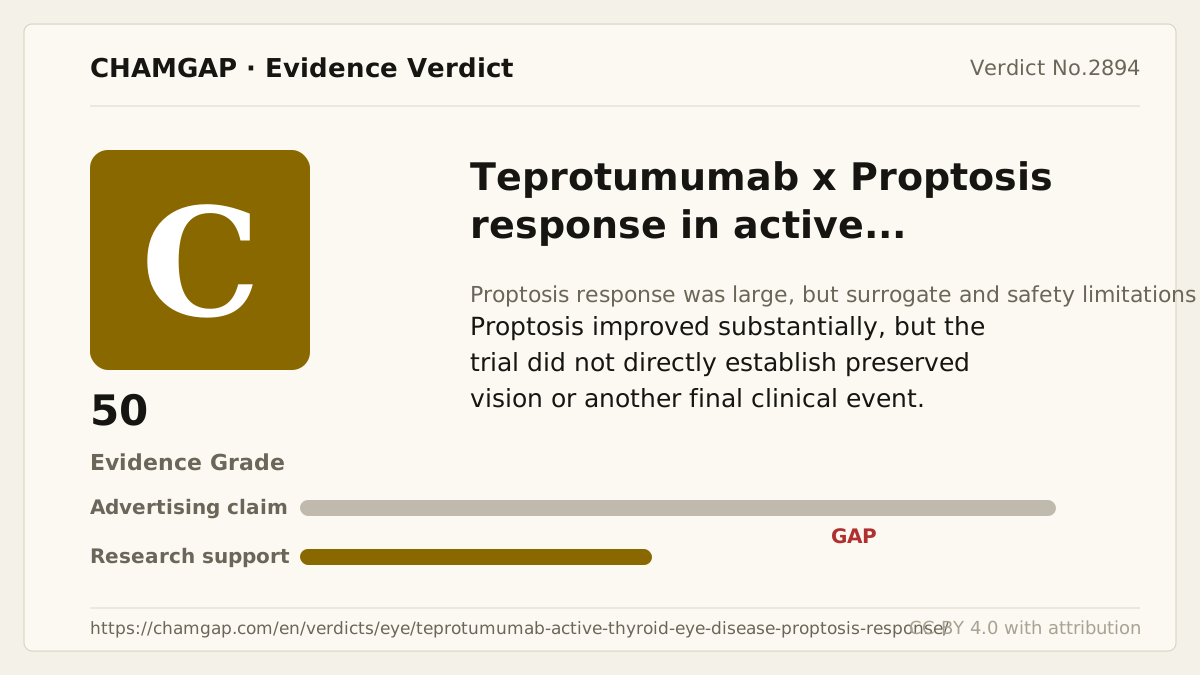
research showsGrade C. At week 24, a proptosis reduction of at least 2 mm occurred in 29/42 (69%) versus 9/45 (20%), an absolute difference of 49 points. This was an instrument-measured surrogate in one manufacturer-sponsored 88-person trial.
ads claimA 2-mm instrument response is not equivalent to preserved vision, avoidance of surgery, or durable quality-of-life benefit.
Useful facts when choosing a product
- Hyperglycemia occurred in about 12% of teprotumumab recipients in the 2017 trial.
- A later placebo-controlled trial reported hearing impairment in 5 patients versus none.
- Korean Tepezza authorization could not be confirmed in publicly accessible sources as of 2026-08-26.
Chamgap Semantic Classification Code
Candidate index · review held
UNK.teprotumumab.UNK.proptosis-response-in-active-moderate-to-severe-thyroid-eye-disease.assess.placeboUnknown > Teprotumumab > Unknown > Proptosis response in active moderate-to-severe thyroid eye disease > Association or change assessment > Placebo
An automated migration candidate, not an issued permanent code; exact claim scope remains under review. This machine-generated migration candidate helps retrieval but is not a permanent assignment. The original verdict ID and URL remain authoritative.
What the research actually shows
① Defect: fewer than 200 participants. ② This is the listed small-study item. ③ The paper randomized 88 participants. ④ Thyroid eye disease is uncommon, but international multicenter recruitment above 200 was not shown to be impossible, so it was counted. The trial was double-blind and placebo-controlled with objective proptosis measurement. River Vision sponsored it and company-affiliated authors were included.
Why this is classified as C (50)
A large measured response remains one small manufacturer-sponsored surrogate trial, giving C, 50.
Counterpoint. Glucose and hearing should be assessed and monitored.
Rejudgment record. Source checked — Instrument-measured proptosis response in one 88-person manufacturer-sponsored placebo trial
| Endpoint | S | Surrogate marker - laboratory or imaging measures |
| Replication | R1 | Single confirmatory trial |
| Independence | I0 | Evidence comes only from manufacturer studies |
| Effect size | E+ | Meets the clinically important threshold |
Stored derived and displayed grades match; this is not a current recalculation or validity check (C).
Sub-claim grades by effect
This ingredient is marketed for several effects. A single overall grade blends strong and weak claims together, so each effect is graded separately here. The overall grade reflects the strongest disconfirming or core claim.
| Effect (sub-claim) | Grade | Basis |
|---|---|---|
| At least 2-mm proptosis response | C | 69% versus 20%, but it is a surrogate. |
Cross-check — AI research and Codex final gate
Evidence Table
| Study | Design | Sample | Funding | Endpoint | Result | Weight |
|---|---|---|---|---|---|---|
| Teprotumumab phase 2, 2017 | Double-blind placebo-controlled randomized trial | 88 randomized, 87 in primary analysis | Sponsored by River Vision with company-affiliated authors | At least 2-mm proptosis response at week 24 | 29/42 (69%) vs 9/45 (20%); absolute difference 49 points | Pivotal surrogate evidence |
Receipt — 1 References
All 1 cited sources were verified for existence at the original page (as of 2026-08-26).
Final verification and publication gate: Codex · Evidence date: 2026-08-26 · Corrections: none
Cite this verdict
[Chamgap] Benefit of Teprotumumab for Proptosis Response in Active Moderate-to-Severe Thyroid Eye Disease, a Surrogate Outcome — Evidence Grade C·50. 1 cited sources checked. Source: https://chamgap.com/en/verdicts/eye/teprotumumab-active-thyroid-eye-disease-proptosis-response/ · CC BY 4.0CC BY 4.0 — free to use with attribution; do not distort grades, numbers, or verdict meaning.
What this document does and does not do
Chamgap is an information source. It reports what research has and has not confirmed; it does not tell readers what to take or buy. That decision belongs to readers and, when needed, medical or legal professionals. This verdict reflects literature available up to the search date and may change as new research appears. Nothing here is medical advice.