
Orthokeratology,
does it really help with Slower childhood myopia progression and axial elongation?
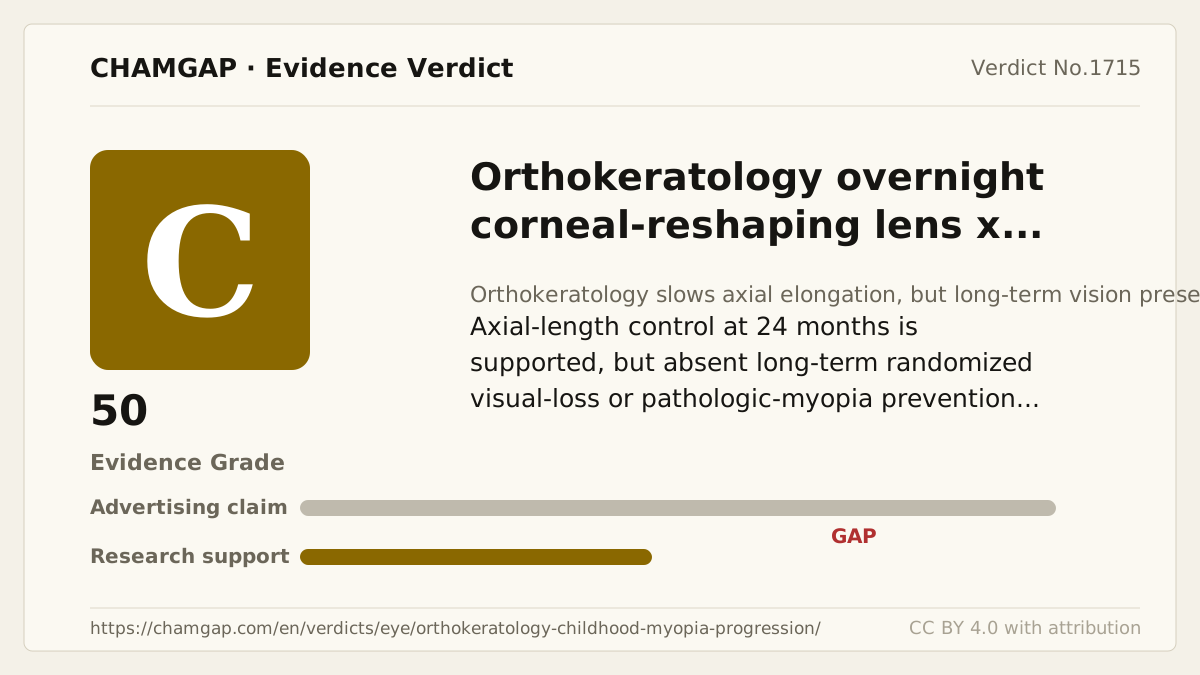
research showsOrthokeratology slows axial elongation during wear in children but earns a C. ROMIO randomized 102 children but used a non-ITT completer analysis of 78, with 37 and 41 in the groups; axial length at two years was 0.36 versus 0.63 mm. The trial was funded under a Menicon/NKL agreement. A meta-analysis of 7 randomized trials and 655 eyes found a 24-month difference of -0.28 mm. Evidence supports axial-length control at 24 months, but no long-term randomized clinical-outcome evidence directly demonstrates later prevention of visual loss or pathologic myopia. Refraction and axial length are surrogates, so rule 1-a applies.
ads claimMarketing can present axial-length slowing as direct proof of preventing blindness or retinal detachment, but those long-term clinical outcomes have not been demonstrated.
Useful facts when choosing a product
- It is a rigid gas-permeable lens worn overnight to temporarily reshape the cornea.
- Regular corneal examinations and strict cleaning hygiene are required.
Chamgap Semantic Classification Code
Candidate index · review held
UNK.orthokeratology-overnight-corneal-reshaping-lens.UNK.slower-childhood-myopia-progression-and-axial-elongation.reduce.UNKUnknown > Orthokeratology overnight corneal-reshaping lens > Unknown > Slower childhood myopia progression and axial elongation > Reduction claim > Unknown
An automated migration candidate, not an issued permanent code; exact claim scope remains under review. This machine-generated migration candidate helps retrieval but is not a permanent assignment. The original verdict ID and URL remain authoritative.
What the research actually shows
Cho and Cheung 2012 was funded under a Menicon/NKL agreement and randomized 102 children but used a non-ITT analysis of 78 completers, 37 plus 41. Axial length at two years was 0.36 versus 0.63 mm. Tang et al. 2023 found a 24-month difference of -0.28 mm across 7 randomized trials and 655 eyes. No long-term randomized clinical-outcome evidence directly demonstrates later prevention of visual loss or pathologic myopia.
Why this is classified as C (50)
ROMIO used a non-ITT completer analysis of 78 after 102 were randomized. Although axial-length control at 24 months was replicated, no long-term randomized clinical-outcome evidence directly demonstrates later prevention of visual loss or pathologic myopia; rule 1-a therefore supports C with 50 points.
Counterpoint. It is an option for myopia control, but long-term clinical prevention is not established.
Rejudgment record. Cross-check applied — Evidence supports axial-length control at 24 months, but no long-term randomized clinical-outcome evidence directly demonstrates later prevention of visual loss or pathologic myopia. Refraction and axial length are surrogates, so rule 1-a applies; the non-ITT completer analysis of 78 after 102 were randomized was also considered.
Sub-claim grades by effect
This ingredient is marketed for several effects. A single overall grade blends strong and weak claims together, so each effect is graded separately here. The overall grade reflects the strongest disconfirming or core claim.
| Effect (sub-claim) | Grade | Basis |
|---|---|---|
| Reduced two-year axial elongation | C | Repeatedly positive but surrogate. |
| Slower refractive progression | C | Improves during wear but remains surrogate. |
| Slower childhood myopia progression | C | Two-year evidence is positive, but long-term visual outcomes are absent. |
Cross-check — AI research and Codex final gate
Evidence Table
| Study | Design | Sample | Funding | Endpoint | Result | Weight |
|---|---|---|---|---|---|---|
| Cho P and Cheung SW. 2012 | Single-masked randomized controlled trial | 102 randomized; 78 in the actual completer analysis, 37 plus 41; not ITT | Menicon/NKL agreement funding; industry supported | Primary endpoint: two-year axial elongation | Succeeded: 0.36 versus 0.63 mm, difference -0.27 mm, P<0.01. | Pivotal industry-supported surrogate trial |
| Tang K et al. 2023 | Systematic review and meta-analysis of randomized trials | 7 randomized trials and 655 eyes | No funding or conflicts of interest disclosed | Axial elongation from 6 to 24 months | At 24 months, WMD -0.28 mm (95% CI -0.38 to -0.19), P<0.01. | Replication of surrogate effect |
Receipt — 2 References
All 2 cited sources were verified for existence at the original page (as of 2026-07-24).
Final verification and publication gate: Codex · Evidence date: 2026-07-24 · Corrections: none
Cite this verdict
[Chamgap] Orthokeratology x slower childhood myopia progression — Evidence Grade C·50. 2 cited sources checked. Source: https://chamgap.com/en/verdicts/eye/orthokeratology-childhood-myopia-progression/ · CC BY 4.0CC BY 4.0 — free to use with attribution; do not distort grades, numbers, or verdict meaning.
What this document does and does not do
Chamgap is an information source. It reports what research has and has not confirmed; it does not tell readers what to take or buy. That decision belongs to readers and, when needed, medical or legal professionals. This verdict reflects literature available up to the search date and may change as new research appears. Nothing here is medical advice.