
Latanoprost,
does it really help with Slowing progression of visual-field loss in open-angle glaucoma?
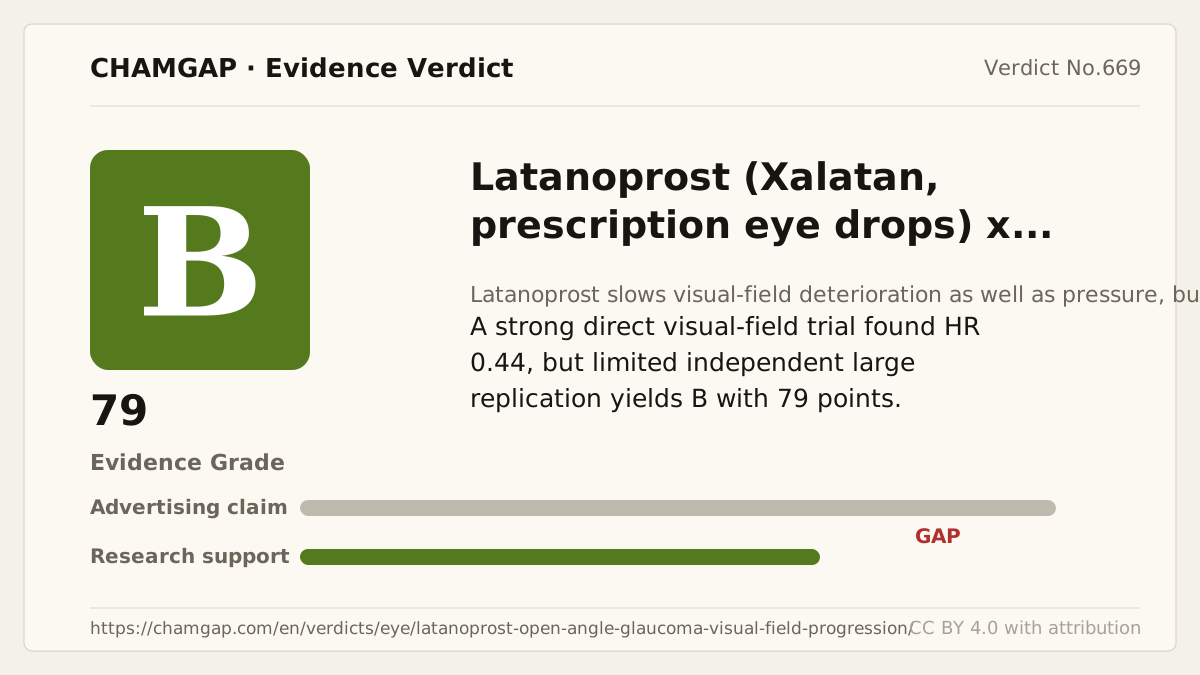
research showsLatanoprost is rated B because it slows not only intraocular pressure but also visual-field deterioration, a direct clinical outcome, in open-angle glaucoma. In the 516-participant multicenter triple-masked placebo-controlled UKGTS, visual-field preservation over 24 months was significantly longer with latanoprost, adjusted HR 0.44 (95% CI 0.28 to 0.69). A network meta-analysis of 114 trials and 20,275 participants also confirmed strong pressure lowering, but that is a surrogate. Independent large replication of the direct visual-field endpoint and long-term blindness prevention remain limited, capping the grade just below A at B with 79 points; iris and eyelash pigmentation and hyperemia are separated under safety.
ads claimEquating lower pressure with guaranteed prevention of blindness overstates long-term outcomes. Latanoprost has direct visual-field preservation evidence, but the absolute lifetime effect varies with baseline risk and adherence.
Useful facts when choosing a product
- Latanoprost 0.005% is a prescription prostaglandin F2-alpha analogue used to lower intraocular pressure in open-angle glaucoma or ocular hypertension.
- A typical regimen is one drop in the affected eye each evening; more frequent dosing can reduce effectiveness, so the prescription directions take priority.
- Other eye drops are generally separated by at least five minutes, and contact-lens and preservative instructions on the specific label should be followed.
- Brown iris pigmentation can be permanent, while eyelid or eyelash pigmentation and eyelash length or thickness can change. Conjunctival hyperemia, stinging, and itching are also common.
Chamgap Semantic Classification Code
Candidate index · review held
M.latanoprost.ophthalmic.slowing-progression-of-visual-field-loss-in-open-angle-glaucoma.assess.placeboMedicinal interventions > Latanoprost > Ophthalmic > Slowing progression of visual-field loss in open-angle glaucoma > Association or change assessment > Placebo
An automated migration candidate, not an issued permanent code; exact claim scope remains under review. This machine-generated migration candidate helps retrieval but is not a permanent assignment. The original verdict ID and URL remain authoritative.
What the research actually shows
Garway-Heath 2015 enrolled 516 newly diagnosed open-angle glaucoma patients at ten United Kingdom centers and assigned latanoprost 0.005% or placebo under triple masking. At 24 months, intraocular pressure fell 3.8 versus 0.9 mmHg and visual-field preservation favored latanoprost, adjusted HR 0.44 (95% CI 0.28 to 0.69; p=0.0003). Li 2016 synthesized 114 randomized trials with 20,275 participants and estimated that latanoprost lowered three-month pressure by 4.85 mmHg more than placebo, but drug-specific long-term visual-field results were sparse. Visual-field progression benefit is accepted without extending it to guaranteed lifetime blindness prevention.
Why this is classified as B (79)
A 516-participant triple-masked placebo-controlled trial delayed the direct visual-field endpoint with HR 0.44, and pressure-lowering randomized evidence is extensive. Limited independent large replication of visual-field and blindness outcomes gives B with 79 points.
Counterpoint. Glaucoma treatment aims to reduce additional progression rather than restore visual field already lost. Regular field testing, pressure monitoring, and adherence are central to realizing trial efficacy.
Rejudgment record. New verdict — Gave high weight to the UKGTS 516-participant triple-masked placebo-controlled direct visual-field result, HR 0.44, but assigned upper-B because independent large drug-specific replication and long-term blindness data are limited
Sub-claim grades by effect
This ingredient is marketed for several effects. A single overall grade blends strong and weak claims together, so each effect is graded separately here. The overall grade reflects the strongest disconfirming or core claim.
| Effect (sub-claim) | Grade | Basis |
|---|---|---|
| Delayed visual-field deterioration in open-angle glaucoma | B | A 516-participant triple-masked placebo-controlled trial delayed direct visual-field deterioration with HR 0.44. |
| Well-established intraocular-pressure surrogate | ? | Extensive randomized evidence supports it, but this item describes a surrogate separated from direct visual-field efficacy. |
| Long-term prevention of blindness | ? | Direct randomized evidence is unavailable to judge drug-specific long-term prevention of blindness. |
Cross-check — AI research and Codex final gate
Evidence Table
| Study | Design | Sample | Funding | Endpoint | Result | Weight |
|---|---|---|---|---|---|---|
| Garway-Heath DF et al. 2015 UKGTS | Multicenter randomized triple-masked placebo-controlled trial | 516 patients with newly diagnosed open-angle glaucoma | Pfizer and the United Kingdom NIHR Biomedical Research Centre | Time to visual-field deterioration within 24 months | Visual-field deterioration was significantly delayed, adjusted HR 0.44 (95% CI 0.28 to 0.69; p=0.0003). | Key direct clinical outcome |
| Li T et al. 2016 | Systematic review and network meta-analysis of first-line randomized trials | 114 randomized trials and 20,275 participants | Independent synthesis led by United States academic institutions | Intraocular pressure at three months | Latanoprost lowered pressure by an estimated 4.85 mmHg more than placebo, but long-term visual-field outcomes were sparse. | Extensive surrogate supporting evidence |
Receipt — 3 References
All 3 cited sources were verified for existence at the original page (as of 2026-07-19).
Final verification and publication gate: Codex · Evidence date: 2026-07-19 · Corrections: none
Cite this verdict
[Chamgap] Latanoprost x slower progression of visual-field loss in open-angle glaucoma — Evidence Grade B·79. 3 cited sources checked. Source: https://chamgap.com/en/verdicts/eye/latanoprost-open-angle-glaucoma-visual-field-progression/ · CC BY 4.0CC BY 4.0 — free to use with attribution; do not distort grades, numbers, or verdict meaning.
What this document does and does not do
Chamgap is an information source. It reports what research has and has not confirmed; it does not tell readers what to take or buy. That decision belongs to readers and, when needed, medical or legal professionals. This verdict reflects literature available up to the search date and may change as new research appears. Nothing here is medical advice.