
Dorzolamide 2%,
does it really help with Lower intraocular pressure in open-angle glaucoma and ocular hypertension?
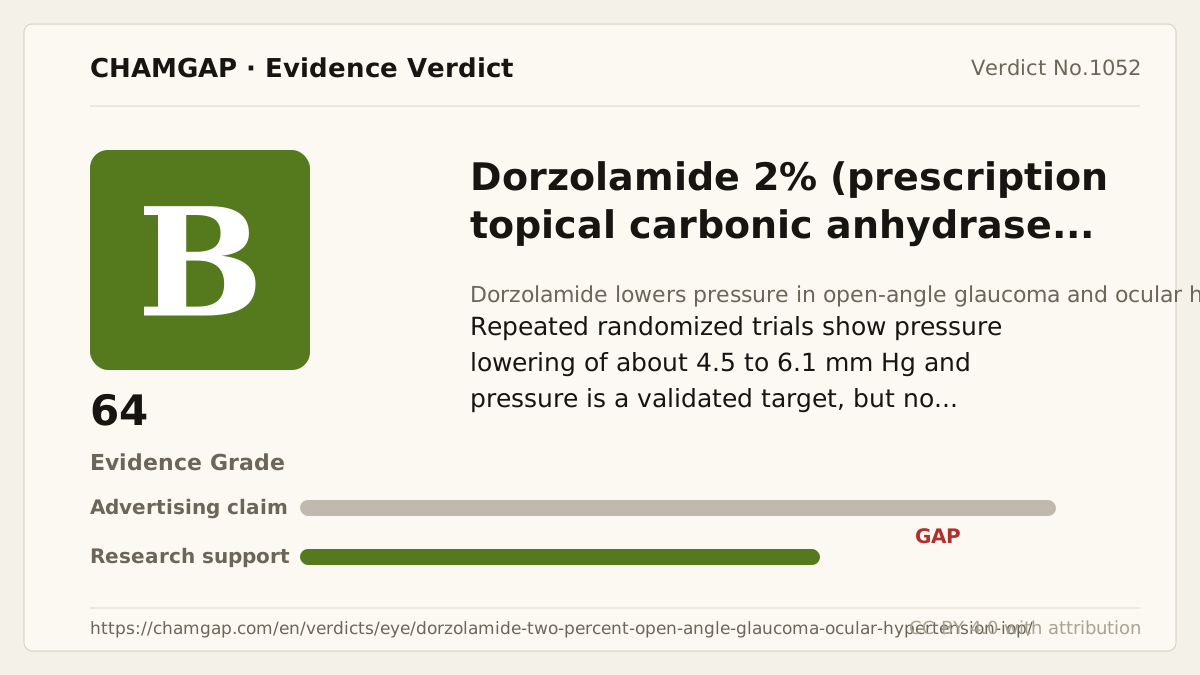
research showsDorzolamide 2% ophthalmic solution is rated B with 64 points because it produces a clinically meaningful reduction in intraocular pressure in open-angle glaucoma and ocular hypertension. In a randomized double-blind placebo-controlled dose-response trial of 333 participants, peak pressure reduction at six weeks was 16% to 18% with 2% dorzolamide versus 4% to 7% with placebo. A 73-participant placebo-controlled trial also found mean all-day reductions of 18% to 22%, or 4.5 to 6.1 mm Hg, with three-times-daily dosing. The Ocular Hypertension Treatment Study and Early Manifest Glaucoma Trial validate pressure as a causal treatment target for glaucoma onset and progression, but no trial was identified that directly tested long-term visual-field preservation specifically with dorzolamide. The pressure-lowering claim is therefore B, consistent with brinzolamide and other prescription eye drops in the corpus. Ocular irritation, dysgeusia, sulfonamide hypersensitivity, and corneal risk are separate safety issues.
ads claimThe phrase treats glaucoma can be expanded into restoration of lost vision or guaranteed prevention of blindness. Dorzolamide directly lowers pressure; achievement of target pressure and preservation of the visual field and optic nerve require separate longitudinal monitoring and, when necessary, combination or switching therapy.
Useful facts when choosing a product
- Dorzolamide 2% is a prescription ophthalmic solution available as Trusopt-associated and generic products. A representative labeled monotherapy regimen is one drop in the affected eye or eyes three times daily; the individual prescription takes priority.
- When another ophthalmic medicine is used, follow the recommended spacing between products and avoid touching the bottle tip to the eye, hand, or another surface. Brief nasolacrimal occlusion after instillation can reduce systemic absorption.
- Transient stinging or burning, conjunctival irritation, blurred vision, and bitter or unusual taste can occur. Severe pain, persistent redness, or a change in vision requires medical review.
- Dorzolamide is a sulfonamide with potential for serious hypersensitivity, and impaired corneal endothelium increases concern for corneal edema. Severe renal impairment and concomitant oral carbonic anhydrase inhibitors require clinician review.
Chamgap Semantic Classification Code
Candidate index · review held
M.dorzolamide-2-percent.MULTI.intraocular-pressure-in-open-angle-glaucoma-and-ocular-hypertension.reduce.placeboMedicinal interventions > Dorzolamide 2% > Multiple: primary unresolved > intraocular pressure in open-angle glaucoma and ocular hypertension > Reduction claim > Placebo
An automated migration candidate, not an issued permanent code; exact claim scope remains under review. This machine-generated migration candidate helps retrieval but is not a permanent assignment. The original verdict ID and URL remain authoritative.
What the research actually shows
Lippa and colleagues in 1992 randomized 73 participants with primary open-angle glaucoma or ocular hypertension to dorzolamide 0.7%, 1.4%, 2%, or placebo under double masking. Dorzolamide 2% three times daily reduced pressure by a mean of 18% to 22%, or 4.5 to 6.1 mm Hg, across the day. Strahlman and colleagues in 1996 randomized 333 adults to 0.2%, 0.7%, or 2% dorzolamide or placebo for six weeks; peak reduction was 16% to 18% with 2% compared with 4% to 7% with placebo. The subsequent open and active-treatment extension supported persistence but was not a long-term placebo-controlled visual-field trial. The 1,636-participant Ocular Hypertension Treatment Study validated pressure as a treatment target by reducing five-year primary open-angle glaucoma development, but it was not dorzolamide-specific. Authorization defines labeled use and was not counted as independent evidence for B.
Why this is classified as B (64)
Randomized double-blind placebo-controlled trials of 333 and 73 participants repeatedly demonstrated pressure lowering with dorzolamide 2%; three-times-daily dosing produced reductions of about 18% to 22%, or 4.5 to 6.1 mm Hg. The Ocular Hypertension Treatment Study validates pressure lowering as a clinical treatment target, so the claim is not reduced to C. No product-specific long-term visual-field trial exists, however, and pivotal evidence was concentrated in the manufacturer development program. Parity with brinzolamide at B with 64 points supports B with 64 points. Ocular irritation, dysgeusia, hypersensitivity, and corneal risk are separate safety issues.
Counterpoint. When pressure remains above target or the visual field or optic nerve progresses, instillation technique and adherence should be reviewed and another class, laser, or surgery considered. Pressure reduction with dorzolamide alone does not establish long-term success.
Rejudgment record. New verdict — Applied B in parity with other prescription pressure-lowering eye drops because randomized double-blind placebo-controlled trials repeatedly demonstrated pressure reduction with dorzolamide 2% and pressure is clinically validated by the Ocular Hypertension Treatment Study, while product-specific long-term visual-field evidence is absent and pivotal development evidence is manufacturer concentrated
Sub-claim grades by effect
This ingredient is marketed for several effects. A single overall grade blends strong and weak claims together, so each effect is graded separately here. The overall grade reflects the strongest disconfirming or core claim.
| Effect (sub-claim) | Grade | Basis |
|---|---|---|
| Intraocular-pressure reduction with dorzolamide 2% in open-angle glaucoma | B | Multiple randomized double-blind trials showed significant diurnal pressure reduction versus placebo. |
| Intraocular-pressure reduction with dorzolamide 2% in ocular hypertension | B | Placebo-controlled dose-response trials including ocular-hypertension participants repeatedly found pressure reductions of about 16% to 22%. |
| Long-term visual-field preservation specifically attributable to dorzolamide 2% | ? | Pressure lowering is clinically validated, but no human efficacy trial directly testing long-term visual-field preservation with dorzolamide alone was identified. |
Cross-check — AI research and Codex final gate
Evidence Table
| Study | Design | Sample | Funding | Endpoint | Result | Weight |
|---|---|---|---|---|---|---|
| Strahlman E et al. 1996 | Multinational randomized double-blind placebo-controlled dose-response trial with extension | 333 adults with open-angle glaucoma or ocular hypertension | Merck dorzolamide development program; several core authors were manufacturer employees | Peak and trough pressure reduction at six weeks and persistence in a one-year extension | Peak six-week reduction was 16% to 18% with 2% dorzolamide versus 4% to 7% with placebo, a net effect of 11% to 14%. | Core placebo-controlled randomized evidence for direct pressure lowering |
| Lippa EA et al. 1992 | Randomized double-blind placebo-controlled parallel dose-response trial | 73 participants with bilateral primary open-angle glaucoma or ocular hypertension | Merck Sharp & Dohme development research | Repeated diurnal intraocular-pressure curves | Dorzolamide 2% three times daily reduced pressure by a mean of 18% to 22%, or 4.5 to 6.1 mm Hg, throughout the day. | Repeated placebo-controlled effect-size evidence |
| Kass MA et al. 2002 Ocular Hypertension Treatment Study | Randomized observation-controlled long-term treatment-strategy trial | 1,636 participants with ocular hypertension | Public support including the United States National Eye Institute | Five-year primary open-angle glaucoma development through visual-field or optic-disc deterioration | Various topical pressure-lowering treatments reduced five-year glaucoma development from 9.5% to 4.4%. | Clinical validation of the pressure target; not dorzolamide-specific evidence |
Receipt — 3 References
All 3 cited sources were verified for existence at the original page (as of 2026-07-21).
Final verification and publication gate: Codex · Evidence date: 2026-07-21 · Corrections: none
Cite this verdict
[Chamgap] Dorzolamide 2% x lower intraocular pressure in open-angle glaucoma and ocular hypertension — Evidence Grade B·64. 3 cited sources checked. Source: https://chamgap.com/en/verdicts/eye/dorzolamide-two-percent-open-angle-glaucoma-ocular-hypertension-iop/ · CC BY 4.0CC BY 4.0 — free to use with attribution; do not distort grades, numbers, or verdict meaning.
What this document does and does not do
Chamgap is an information source. It reports what research has and has not confirmed; it does not tell readers what to take or buy. That decision belongs to readers and, when needed, medical or legal professionals. This verdict reflects literature available up to the search date and may change as new research appears. Nothing here is medical advice.