
Tenecteplase,
does it really help with Reduced disability and dependence and improved functional independence at 90 days in eligible acute ischemic stroke?
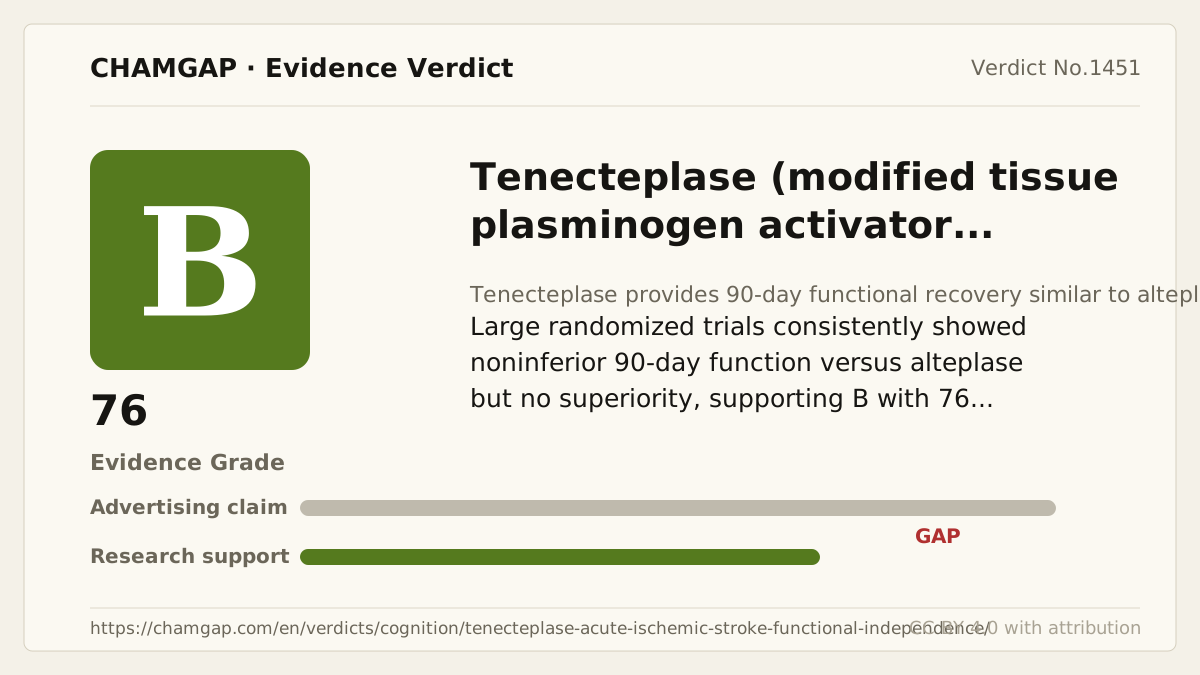
research showsTenecteplase is rated B because 90-day functional outcomes were noninferior to alteplase in thrombolysis-eligible acute ischemic stroke. In the 1,577-patient AcT analysis, modified Rankin Scale scores of 0 to 1 occurred in 36.9% versus 34.8% and met the prespecified noninferiority criterion. ATTEST-2 replicated noninferiority for the 90-day modified Rankin Scale distribution but did not show superiority. This is therefore B with 76 points for active-control noninferiority, not A inherited from placebo-controlled evidence for alteplase.
ads claimThe single-bolus format and newer formulation can be portrayed as producing better recovery than alteplase. The supported conclusion is similar 90-day function in eligible patients.
Useful facts when choosing a product
- Tenecteplase is a modified tissue plasminogen activator; stroke trials generally used 0.25 mg/kg, up to 25 mg, as one intravenous bolus.
- A specialist stroke team must confirm thrombolysis eligibility and the treatment window and exclude intracranial hemorrhage before administration.
- A single bolus simplifies transfer and linkage to thrombectomy compared with a one-hour alteplase infusion, but convenience is not evidence of superior functional recovery.
- Major risks include symptomatic intracranial hemorrhage, systemic bleeding, and angioedema; active bleeding, recent surgery, uncontrolled hypertension, and other contraindications require assessment.
Chamgap Semantic Classification Code
Candidate index · review held
M.tenecteplase.intravenous.disability-and-dependence-and-improved-functional-independence-at-in-eligible-acute-ischemic-stroke.reduce.activeMedicinal interventions > Tenecteplase > Intravenous > disability and dependence and improved functional independence at in eligible acute ischemic stroke > Reduction claim > Active comparator
An automated migration candidate, not an issued permanent code; exact claim scope remains under review. This machine-generated migration candidate helps retrieval but is not a permanent assignment. The original verdict ID and URL remain authoritative.
What the research actually shows
The AcT trial by Menon and colleagues assigned thrombolysis-eligible patients presenting within 4.5 hours to tenecteplase 0.25 mg/kg as a single bolus or alteplase 0.9 mg/kg. Among 1,577 patients in the intention-to-treat analysis, a modified Rankin Scale score of 0 to 1 at 90 to 120 days occurred in 36.9% versus 34.8%, meeting noninferiority, with similar safety outcomes. ATTEST-2 by Muir and colleagues randomized 1,777 patients and confirmed noninferiority for the 90-day modified Rankin Scale distribution but not superiority (common odds ratio 1.07, 95% CI 0.90 to 1.27; superiority p=0.43). These stroke trials are also distinct from streptokinase evidence in myocardial infarction.
Why this is classified as B (76)
AcT with 1,577 patients and ATTEST-2 with 1,777 patients replicated noninferiority to alteplase on 90-day modified Rankin outcomes, but superiority was not established. Large direct randomized evidence is weighted highly, while the active-control noninferiority rule limits the verdict to B with 76 points.
Counterpoint. Obtaining similar functional outcomes with a simpler single dose has clinical value. It must not be confused with independent placebo-controlled superiority or superiority over alteplase.
Rejudgment record. New verdict — Credited the large AcT and ATTEST-2 randomized trials with direct 90-day functional endpoints, but applied the active-control noninferiority boundary because tenecteplase was noninferior to alteplase without demonstrated superiority
Sub-claim grades by effect
This ingredient is marketed for several effects. A single overall grade blends strong and weak claims together, so each effect is graded separately here. The overall grade reflects the strongest disconfirming or core claim.
| Effect (sub-claim) | Grade | Basis |
|---|---|---|
| Excellent functional outcome at 90 days (modified Rankin Scale 0 to 1) | B | AcT established noninferiority to alteplase. |
| Preservation of the overall 90-day disability and dependence distribution | B | ATTEST-2 replicated noninferiority for the modified Rankin Scale distribution. |
| Superior 90-day functional recovery versus alteplase | C | The ATTEST-2 superiority test was negative, so superiority is unproven. |
Cross-check — AI research and Codex final gate
Evidence Table
| Study | Design | Sample | Funding | Endpoint | Result | Weight |
|---|---|---|---|---|---|---|
| Menon BK et al. AcT, 2022 | Multicenter open-label, blinded-endpoint randomized active-control noninferiority trial | 1,600 randomized; 1,577 in the intention-to-treat analysis | Canadian public and academic support | Modified Rankin Scale score 0 to 1 at 90 to 120 days | Rates were 36.9% versus 34.8%, establishing noninferiority of tenecteplase to alteplase. | Key large direct noninferiority trial |
| Muir KW et al. ATTEST-2, 2024 | Multicenter open-label, blinded-endpoint randomized active-control trial | 1,777 participants | United Kingdom public research support with study drug supply reported | Full modified Rankin Scale distribution at 90 days | Noninferiority was met, but superiority was not shown (common odds ratio 1.07, 95% CI 0.90 to 1.27). | Independent large replication trial |
Receipt — 2 References
All 2 cited sources were verified for existence at the original page (as of 2026-07-23).
Final verification and publication gate: Codex · Evidence date: 2026-07-23 · Corrections: none
Cite this verdict
[Chamgap] Tenecteplase x 90-day functional independence in eligible acute ischemic stroke — Evidence Grade B·76. 2 cited sources checked. Source: https://chamgap.com/en/verdicts/cognition/tenecteplase-acute-ischemic-stroke-functional-independence/ · CC BY 4.0CC BY 4.0 — free to use with attribution; do not distort grades, numbers, or verdict meaning.
What this document does and does not do
Chamgap is an information source. It reports what research has and has not confirmed; it does not tell readers what to take or buy. That decision belongs to readers and, when needed, medical or legal professionals. This verdict reflects literature available up to the search date and may change as new research appears. Nothing here is medical advice.