
OnabotulinumtoxinA,
does it really help with Reduced monthly headache days in adults with chronic migraine?
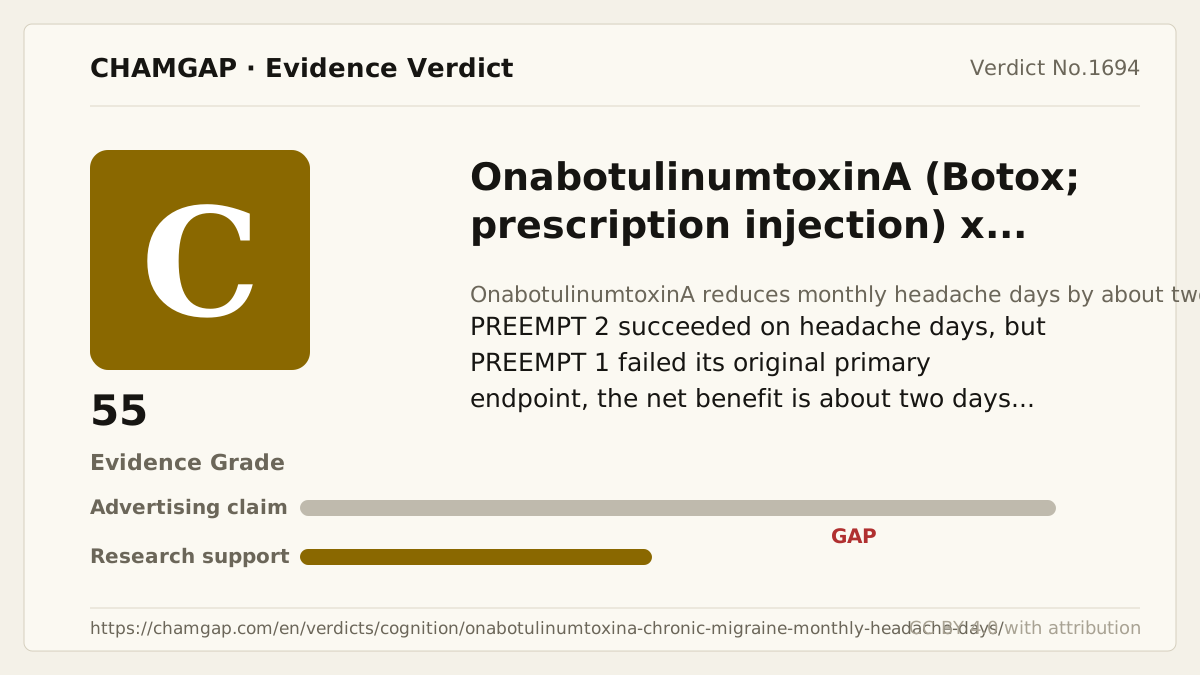
research showsOnabotulinumtoxinA is rated C despite reducing monthly headache days in adults with chronic migraine. The prespecified primary endpoint in PREEMPT 1 (Aurora 2010) was change in headache episodes and failed at -5.2 versus -5.3, P=.344. The prespecified primary endpoint in PREEMPT 2 (Diener 2010) was change in headache days and succeeded at -9.0 versus -6.7, P<.001. Both trials were Allergan led, no adequately sized nonmanufacturer independent randomized trial of the same regimen was identified, and the net benefit is about 1.9 to 2.3 days per month. Applying rules 1-b and 2-b together yields C with 55 points.
ads claimMarketing may imply that Botox nearly eliminates chronic migraine or is a simple one-time procedure like cosmetic Botox. The evidence concerns preventive treatment in diagnosed adult chronic migraine using 155 to 195 units across multiple head and neck sites every 12 weeks.
Useful facts when choosing a product
- The PREEMPT protocol injects 155 to 195 units across 31 to 39 head and neck sites, usually repeated every 12 weeks.
- The pivotal population had at least 15 headache days per month, including at least eight days with migraine features.
- Neck pain, weakness, eyelid droop, and injection-site pain can occur, and treatment requires a trained prescriber.
- Benefit is not permanent; headache days and function should be reviewed after several cycles to decide whether to continue.
Chamgap Semantic Classification Code
Candidate index · review held
M.onabotulinumtoxina.UNK.monthly-headache-days-with-chronic-migraine.reduce.placeboMedicinal interventions > OnabotulinumtoxinA > Unknown > monthly headache days with chronic migraine > Reduction claim > Placebo
An automated migration candidate, not an issued permanent code; exact claim scope remains under review. This machine-generated migration candidate helps retrieval but is not a permanent assignment. The original verdict ID and URL remain authoritative.
What the research actually shows
The prespecified primary endpoint in PREEMPT 1 (Aurora 2010) was change in headache episodes and failed at -5.2 versus -5.3, P=.344. The prespecified primary endpoint in PREEMPT 2 (Diener 2010) was change in headache days and succeeded at -9.0 versus -6.7, P<.001. Both trials were Allergan led, and no adequately sized nonmanufacturer independent randomized trial of the same regimen was identified. The net benefit is about 1.9 to 2.3 days per month.
Why this is classified as C (55)
PREEMPT 1 failed its prespecified headache-episode primary endpoint at -5.2 versus -5.3, P=.344. PREEMPT 2 succeeded on its prespecified headache-day primary endpoint at -9.0 versus -6.7, P<.001. Both were Allergan led, no adequately sized nonmanufacturer independent randomized trial of the same regimen was identified, and the net benefit is about 1.9 to 2.3 days monthly. Applying rules 1-b and 2-b together yields C with 55 points.
Counterpoint. Average benefit is small, but individual responders can exist, making a headache diary important for deciding continued treatment.
Rejudgment record. Cross-check applied — Applied rules 1-b and 2-b together to the failed prespecified headache-episode primary endpoint in PREEMPT 1, successful prespecified headache-day primary endpoint in PREEMPT 2, net benefit of 1.9 to 2.3 days monthly, Allergan leadership of both trials, and absence of an adequately sized nonmanufacturer independent randomized replication
Sub-claim grades by effect
This ingredient is marketed for several effects. A single overall grade blends strong and weak claims together, so each effect is graded separately here. The overall grade reflects the strongest disconfirming or core claim.
| Effect (sub-claim) | Grade | Basis |
|---|---|---|
| Reduction in monthly headache days in chronic migraine | C | The PREEMPT 2 primary endpoint succeeded, but the net effect was 2.3 days within the same manufacturer program. |
| Reduction in monthly migraine days | C | The pooled effect is about two days monthly versus placebo and is heavily industry funded. |
| Improvement in headache-related disability | C | HIT-6 and quality-of-life outcomes were positive but were secondary patient-reported endpoints in the pivotal program. |
Cross-check — AI research and Codex final gate
Evidence Table
| Study | Design | Sample | Funding | Endpoint | Result | Weight |
|---|---|---|---|---|---|---|
| Diener HC et al. 2010, PREEMPT 2 | Multicenter phase 3 randomized double-blind placebo-controlled trial | 705 randomized and included in the intention-to-treat primary analysis (347/358) | Sponsored by Allergan; manufacturer employees were coauthors and editorial support was funded | Primary: change from baseline in headache days per 28 days at week 24 | Primary endpoint succeeded: -9.0 versus -6.7 days, between-group difference -2.3 days, P<.001. | Positive pivotal trial with manufacturer dependence |
| Aurora SK et al. 2010, PREEMPT 1 | Multicenter phase 3 randomized double-blind placebo-controlled trial | 679 randomized and included in the intention-to-treat analysis (341/338) | Sponsored by Allergan; manufacturer employees were coauthors | Primary: change in headache episodes per 28 days at week 24 | Primary endpoint failed: -5.2 versus -5.3, P=.344; headache days were positive as a secondary endpoint. | Conflicting pivotal trial from the same program |
| Herd CP et al. 2018 | Cochrane systematic review and meta-analysis of randomized trials | 28 trials and 4,190 participants overall; two pivotal chronic-migraine trials and 1,384 participants | Academic and public Cochrane and NIHR support; 16 included trials were manufacturer funded | Monthly migraine days and adverse events | About 2.0 fewer days per month than placebo in chronic migraine (95% CI 1.1 to 2.8). | Effect-size and industry-concentration assessment |
Receipt — 3 References
All 3 cited sources were verified for existence at the original page (as of 2026-07-24).
Final verification and publication gate: Codex · Evidence date: 2026-07-24 · Corrections: none
Cite this verdict
[Chamgap] OnabotulinumtoxinA x reduced monthly headache days in chronic migraine — Evidence Grade C·55. 3 cited sources checked. Source: https://chamgap.com/en/verdicts/cognition/onabotulinumtoxina-chronic-migraine-monthly-headache-days/ · CC BY 4.0CC BY 4.0 — free to use with attribution; do not distort grades, numbers, or verdict meaning.
What this document does and does not do
Chamgap is an information source. It reports what research has and has not confirmed; it does not tell readers what to take or buy. That decision belongs to readers and, when needed, medical or legal professionals. This verdict reflects literature available up to the search date and may change as new research appears. Nothing here is medical advice.