
Melatonin 3 mg,
does it really help with Reduction of monthly migraine days and prevention of adult migraine?
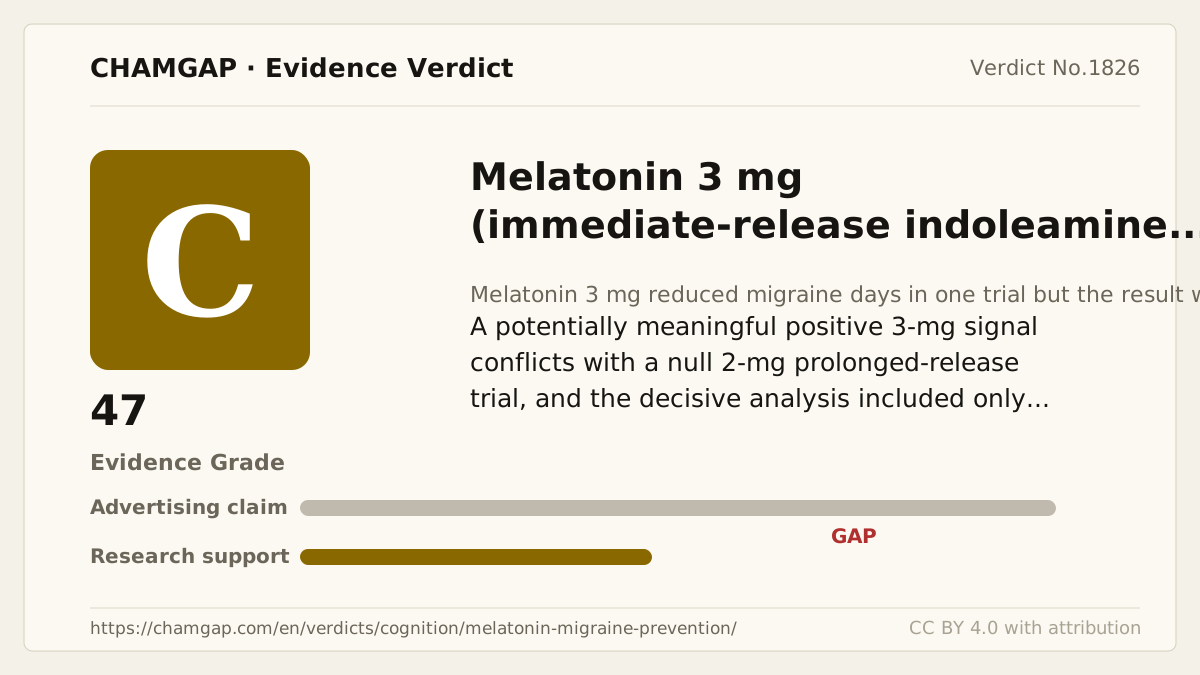
research showsImmediate-release melatonin 3 mg reduced monthly migraine days by about 1.6 more days than placebo in a 12-week confirmatory trial, but another formulation failed, yielding C. Goncalves 2016 randomized 196 participants and analyzed 178 who took study medication and were followed. The monthly migraine-day primary endpoint succeeded: minus 2.7 days with melatonin versus minus 1.1 with placebo, P=0.009. Amitriptyline 25 mg was an active comparator, but the placebo comparison drives the grade. A 48-person crossover trial of prolonged-release melatonin 2 mg was null, P=0.497.
ads claimA positive 12-week result for one formulation is expanded into an established long-term preventive effect for every melatonin formulation.
Useful facts when choosing a product
- The 3-mg trial used immediate-release melatonin 30 minutes before bedtime for 12 weeks and included placebo and amitriptyline 25 mg comparators.
- For comparison, verdict 100, which is C with 48 points, concerns sleep; verdict 1087, which is C with 44 points, concerns weight; verdict 1148, which is F with 18 points, concerns delirium prevention. Their melatonin evidence was not transferred to migraine.
- For comparison, verdict 1091, which is B with 74 points, concerns topiramate; verdict 129, which is B with 66 points, concerns riboflavin; verdict 1675, which is C with 45 points, concerns oral magnesium. Evidence from these different migraine interventions was not pooled.
Chamgap Semantic Classification Code
Candidate index · review held
UNK.melatonin.UNK.monthly-migraine-days-and-prevention-of-adult-migraine.prevent.MULTIUnknown > Melatonin > Unknown > monthly migraine days and prevention of adult migraine > Occurrence-prevention claim > Multiple: primary unresolved
An automated migration candidate, not an issued permanent code; exact claim scope remains under review. This machine-generated migration candidate helps retrieval but is not a permanent assignment. The original verdict ID and URL remain authoritative.
What the research actually shows
Goncalves and colleagues randomized 196 participants to melatonin 3 mg, amitriptyline 25 mg, or placebo and analyzed 178 who took medication and were followed. The 12-week monthly migraine-day primary endpoint changed by minus 2.7, minus 2.2, and minus 1.1 days; melatonin versus placebo was successful at P=0.009. FAPESP provided public funding. Alstadhaug and colleagues randomized 48 people in a crossover comparison of prolonged-release melatonin 2 mg and placebo; the migraine-frequency primary result was null, P=0.497. The paper disclosed a Nycomed lecture fee to the first author, but study-product provision or research support was not confirmed.
Why this is classified as C (54)
The profile is P, R0, I2, E+, and B1. The successful 3-mg primary endpoint is accepted, but formulation-level conflict and a decisive analysis of 178 participants yield C with 54 points.
Counterpoint. If tried, the formulation and dose should match the evidence and a headache diary can assess individual response over eight to twelve weeks.
Rejudgment record. Cross-check applied — Accepted the successful patient-reported primary endpoint for immediate-release 3 mg while applying ceilings for conflicting formulations and a small decisive trial; a lecture-fee disclosure was not treated as trial funding
| Endpoint | P | Symptom or function itself is the target - including patient reports and performance tests |
| Replication | R0 | Trials conflict in direction |
| Independence | I2 | Decisive evidence is publicly or non-profit funded |
| Effect size | E+ | Meets the clinically important threshold |
Stored derived and displayed grades match; this is not a current recalculation or validity check (C).
Sub-claim grades by effect
This ingredient is marketed for several effects. A single overall grade blends strong and weak claims together, so each effect is graded separately here. The overall grade reflects the strongest disconfirming or core claim.
| Effect (sub-claim) | Grade | Basis |
|---|---|---|
| Reduction in monthly migraine days with immediate-release 3 mg | C | The primary endpoint succeeded, but the actual analysis included 178 participants. |
| Reduction in migraine attack frequency with prolonged-release 2 mg | D | The placebo-controlled crossover trial was null. |
| Long-term migraine prevention across all melatonin formulations | C | Results conflict across formulations and long-term confirmation is absent. |
Cross-check — AI research and Codex final gate
Evidence Table
| Study | Design | Sample | Funding | Endpoint | Result | Weight |
|---|---|---|---|---|---|---|
| Goncalves AL et al. 2016 | Randomized double-blind placebo- and active-controlled parallel trial | 196 randomized and 178 who took medication and were followed analyzed | Public funding from the Sao Paulo Research Foundation, FAPESP | Change in monthly migraine days at 12 weeks | Melatonin minus 2.7 days versus placebo minus 1.1, P=0.009; primary endpoint successful. Amitriptyline changed by minus 2.2 days. | Pivotal positive trial |
| Alstadhaug KB et al. 2010 | Randomized double-blind placebo-controlled crossover trial | 48 randomized; 46 reported in the crossover analysis | No confirmed study support or product provision; the first author disclosed a Nycomed lecture fee | Migraine attack frequency over eight weeks | Prolonged-release 2 mg did not significantly reduce frequency versus placebo, P=0.497; primary result failed. | Independent null replication |
Receipt — 2 References
All 2 cited sources were verified for existence at the original page (as of 2026-07-24).
Final verification and publication gate: Codex · Evidence date: 2026-07-24 · Corrections: none
Cite this verdict
[Chamgap] Melatonin 3 mg x migraine prevention — Evidence Grade C·54. 2 cited sources checked. Source: https://chamgap.com/en/verdicts/cognition/melatonin-migraine-prevention/ · CC BY 4.0CC BY 4.0 — free to use with attribution; do not distort grades, numbers, or verdict meaning.
What this document does and does not do
Chamgap is an information source. It reports what research has and has not confirmed; it does not tell readers what to take or buy. That decision belongs to readers and, when needed, medical or legal professionals. This verdict reflects literature available up to the search date and may change as new research appears. Nothing here is medical advice.