
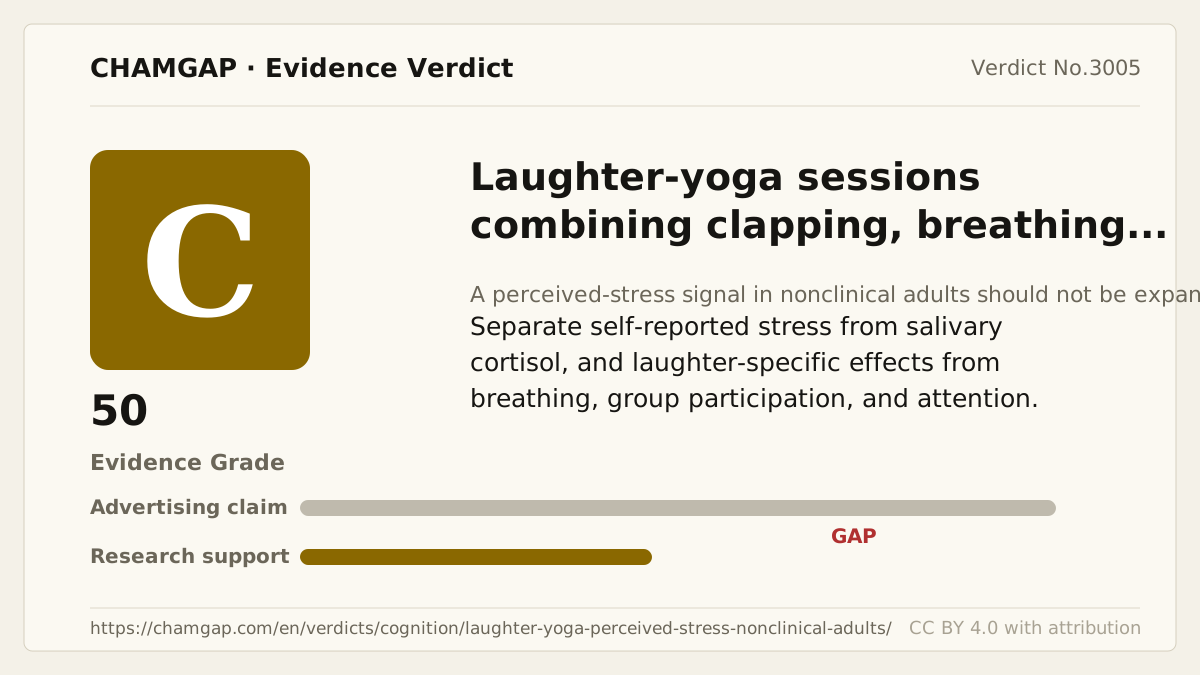
Laughter-yoga sessions combining clapping, breathing, and group activities,
does it really help with Reduced perceived stress in nonclinical students and nurses?
research showsGrade C with 50 points. In a 70-person trial of psychiatric nurses, the PSS group-by-time result was F(1,68)=251.56, P<.001, partial eta-squared .787. A no-intervention control, lack of blinding, combined instructor-assessor role, and registration-timing concerns limit confirmation, while cortisol findings were inconsistent across studies and sessions.
ads claimThe claim that laughter lowers cortisol and therefore treats depression extends nonclinical stress scales and inconsistent biomarkers to treatment of disease.
Useful facts when choosing a product
- Laughter yoga combines laughter with clapping, breathing, playful movement, and group interaction.
- Humorous video is a separate intervention and cannot be credited to laughter yoga.
- Psychiatric nurses are not psychiatric patients.
Chamgap Semantic Classification Code
Permanent code issued
X.laughter-yoga.behavioral.perceived-stress.reduce.no-interventionBehaviors, exposures and policies > Laughter-yoga sessions combining clapping, breathing, and group activities > Behavioral delivery > Reduced perceived stress in nonclinical students and nurses > Reduction claim > No intervention
Codex retrospectively verified the principal intervention, delivery, population, endpoint, and comparator from the existing reviewed verdict and issued a permanent semantic code. Secondary outcomes on the page are not transferred as separate claims. The code identifies the intervention and claim; it never contains the evidence grade, score, or safety result.
Exact Claim Classification
These independent facets prevent evidence from different forms, routes, populations, effects, and comparators from being mixed.
| Intervention class | X · Behavior, exposure, or policy |
|---|---|
| Canonical ingredient or intervention | Laughter-yoga sessions combining clapping, breathing, and group activities |
| Source or part used | Plant source not applicable; specified behavior or training |
| Formulation or processing | Laughter-yoga sessions combining clapping, breathing, and group activities |
| Route | Behavioral delivery |
| Dose | Laughter-yoga sessions combining clapping, breathing, and group activities |
| Duration | Eight sessions in the principal direct trial |
| Population | 70 psychiatric nurses, 35 versus 35, all completed |
| Effect or condition | Reduced perceived stress in nonclinical students and nurses |
| Primary endpoint | PSS, GHQ, and burnout after eight sessions |
| Comparator | No intervention |
| Duplicate-detection key | laughter-yoga|behavioral|70 psychiatric nurses, 35 versus 35, all completed|perceived-stress|Eight sessions in the principal direct trial |
What the research actually shows
A 120-person healthy-student trial acutely compared laughter yoga, humorous video, and reading. Trials in 75 and 83 nursing students and 70 psychiatric nurses compared five-week or eight-session group programs with controls. None tested treatment of psychiatric patients.
Why this is classified as C (50)
A patient-reported endpoint with R1 and I2 is capped by unclear prespecification EX and small, short, unblinded B2 studies, giving C with 50 points.
Counterpoint. Cortisol is weaker, around C46, because session-level results were mixed and precise between-group intervals were unavailable.
Rejudgment record. Cross-check applied — Separated stress and mental-symptom scales from cortisol, did not transfer humorous-video or group-participation effects to laughter yoga, and incorporated retrospective registration and conflicting statistical descriptions
| Endpoint | P | Symptom or function itself is the target - including patient reports and performance tests |
| Replication | R1 | Single confirmatory trial |
| Independence | I2 | Decisive evidence is publicly or non-profit funded |
| Effect size | EX | The clinical size of the effect could not be judged |
Stored derived and displayed grades match; this is not a current recalculation or validity check (C).
Sub-claim grades by effect
This ingredient is marketed for several effects. A single overall grade blends strong and weak claims together, so each effect is graded separately here. The overall grade reflects the strongest disconfirming or core claim.
| Effect (sub-claim) | Grade | Basis |
|---|---|---|
| Reduced perceived stress in nonclinical adults | C | Positive trials exist, but no-intervention controls, prespecification, and blinding remain concerns. |
| Reduced salivary cortisol | C | Laughter specificity and session-to-session consistency are insufficient, leaving a weaker C46-level signal. |
| Treatment of depressive or anxiety disorders | ? | The main populations were healthy students and nurses, not patients treated for diagnosed disorders. |
Cross-check — AI research and Codex final gate
Evidence Table
| Study | Design | Sample | Funding | Endpoint | Result | Weight |
|---|---|---|---|---|---|---|
| Bilgihan S and Dost A. 2026 | Randomized controlled trial | 70 psychiatric nurses, 35 versus 35, all completed | Reported no external funding or conflicts; instructor also assessed outcomes | PSS, GHQ, and burnout after eight sessions | PSS group-by-time F(1,68)=251.56, P<.001, partial eta-squared .787; trial and registration dates raised timing concerns | Key symptom trial with prespecification concern |
| Yaş MA et al. 2025 | Randomized controlled trial | 83 analyzed, 41 versus 42 | Not verified | Well-being, perceived stress, and academic self-efficacy | A null between-group abstract statement coexisted with a multivariate interaction F=10.69, P<.001; registration was retrospective | Interpretation and registration qualifier |
| Ozturk FO and Tezel A. 2021 | Eight-session randomized controlled trial | 75 first-year nursing students | Not verified | Mental symptoms and salivary cortisol | Mental symptoms favored intervention; cortisol was between-group positive in only three of eight sessions | Symptom support and mixed biomarker evidence |
| Fujisawa A et al. 2018 | Three-arm laughter-yoga, humorous-video, and reading randomized trial | 120 healthy university students | Not verified | Acute salivary cortisol and DHEA | Cortisol changed over time, humorous video also changed it, and DHEA was null | Laughter-specificity qualifier |
Receipt — 4 References
Of 4 cited sources, 1 had limited original-page access (blocked or summary-only) and were verified via index/summary, marked partial; the rest were verified at the original page. As of 2026-09-07.
Final verification and publication gate: Codex · Evidence date: 2026-09-07 · Corrections: none
Cite this verdict
[Chamgap] Laughter Yoga for Perceived Stress—Improvement Signal With Unclear Prespecification and Controls — Evidence Grade C·50. 4 cited sources checked. Source: https://chamgap.com/en/verdicts/cognition/laughter-yoga-perceived-stress-nonclinical-adults/ · CC BY 4.0CC BY 4.0 — free to use with attribution; do not distort grades, numbers, or verdict meaning.
What this document does and does not do
Chamgap is an information source. It reports what research has and has not confirmed; it does not tell readers what to take or buy. That decision belongs to readers and, when needed, medical or legal professionals. This verdict reflects literature available up to the search date and may change as new research appears. Nothing here is medical advice.