
Atomoxetine,
does it really help with Reduced core inattention, hyperactivity, and impulsivity symptoms in adult ADHD?
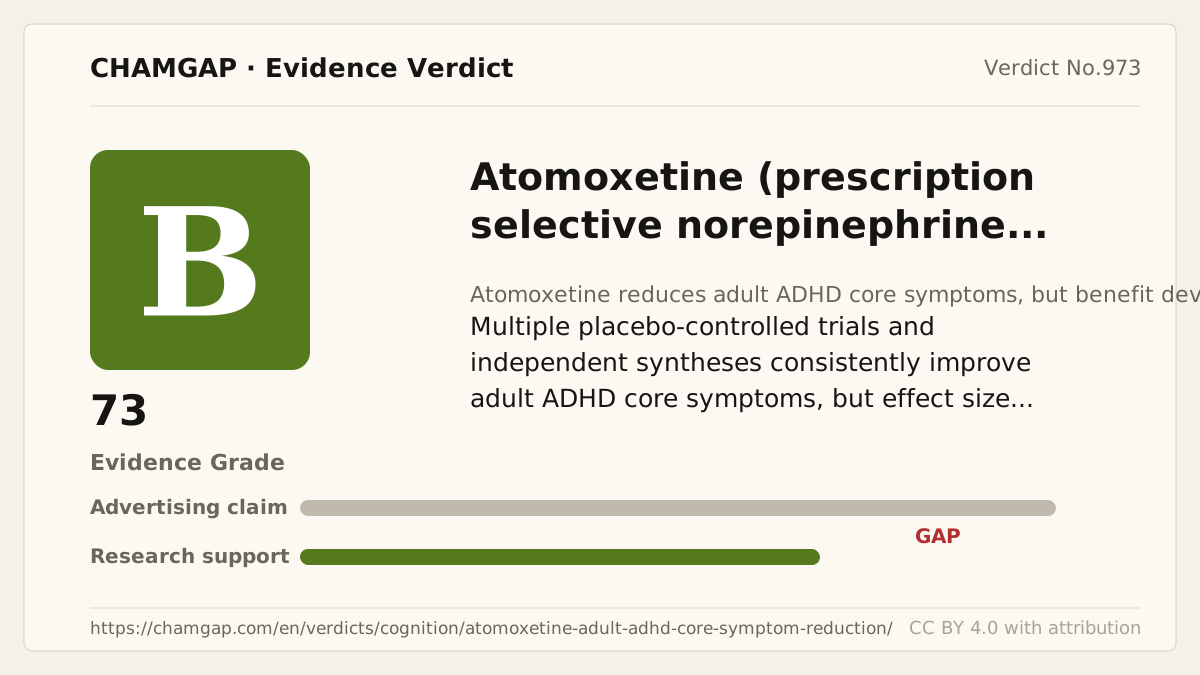
research showsAtomoxetine is rated B because it reduces core inattention and hyperactivity or impulsivity symptoms versus placebo in adults with diagnosed ADHD. A meta-analysis of 13 randomized trials and 1,824 participants found standardized mean differences of -0.45 for total symptoms, -0.42 for inattention, and -0.36 for hyperactivity or impulsivity; an independent network meta-analysis also found -0.45 for clinician-rated adult symptoms. Average effects are modest to moderate, trials emphasize short-term rating scales, and much of the primary evidence is manufacturer sponsored. Mean efficacy is lower than for stimulants, and full benefit can build over several weeks. This is treatment evidence for ADHD and is categorically different in population and purpose from verdict 856, which rated methylphenidate D for cognitive enhancement in healthy people.
ads claimPromotion may recast a nonstimulant as a side-effect-free focus drug or a productivity enhancer for healthy people. The evidence concerns treatment of core symptoms in properly assessed adults with ADHD and does not guarantee immediate benefit, complete normalization, or cognitive enhancement in healthy users.
Useful facts when choosing a product
- Atomoxetine is a prescription selective norepinephrine reuptake inhibitor rather than a controlled stimulant and is used to treat diagnosed ADHD.
- A signal can appear during the first week, but an adequate response often develops over several weeks, so prescribed dose and assessment duration matter.
- Nausea, dry mouth, reduced appetite, constipation, insomnia or somnolence, and sexual adverse effects can occur, and blood pressure and heart rate can rise.
- Warnings include suicidal thinking in children, adolescents, and younger patients, rare severe liver injury, and possible manic or psychotic symptoms. Jaundice, dark urine, severe upper-abdominal pain, or suicidal thoughts require prompt assessment.
Chamgap Semantic Classification Code
Candidate index · review held
M.atomoxetine.UNK.core-inattention-hyperactivity-and-impulsivity-symptoms-adhd.reduce.placeboMedicinal interventions > Atomoxetine > Unknown > core inattention, hyperactivity, and impulsivity symptoms ADHD > Reduction claim > Placebo
An automated migration candidate, not an issued permanent code; exact claim scope remains under review. This machine-generated migration candidate helps retrieval but is not a permanent assignment. The original verdict ID and URL remain authoritative.
What the research actually shows
Ravishankar 2016 pooled 13 placebo-controlled randomized trials with 1,824 adults and reported SMD -0.45 for total symptoms, -0.42 for inattention, and -0.36 for hyperactivity or impulsivity. The Eli Lilly database analysis by Asherson 2014 combined six short-term trials with 1,961 participants and three six-month trials with 1,413 participants, finding better symptom scores and response rates than placebo. The independent Cortese 2018 network meta-analysis found atomoxetine SMD -0.45 among efficacy data from 8,131 adults near 12 weeks, compared with -0.79 for amphetamines, and found insufficient 26- and 52-week evidence. A pooled analysis of two six-month trials with 1,003 adults found effect size increased from 0.45 at week 4 to 0.52 at week 26, supporting gradual onset.
Why this is classified as B (73)
Multiple placebo-controlled trials, a 13-trial meta-analysis, and an independent network meta-analysis consistently improved total, inattentive, and hyperactive or impulsive adult ADHD symptoms. These are direct symptom endpoints, so a surrogate ceiling does not apply, but modest-to-moderate effect size, lower average efficacy than stimulants, concentration of manufacturer trials, and limited long-term functional outcomes yield B with 73 points. Cardiovascular, psychiatric, and hepatic risks are assessed separately under safety.
Counterpoint. A nonstimulant can fit adults with substance-use risk, tics, anxiety, stimulant adverse effects, or a preference to avoid stimulants. After an adequate dose and duration, both symptoms and real work, study, relationship function, and adverse effects should be reassessed.
Rejudgment record. Cross-check revision — Accepted consistent direct improvement in adult ADHD core symptoms across a 13-trial meta-analysis and independent network meta-analysis while accounting for modest effect size, lower average efficacy than stimulants, concentration of manufacturer trials, and limited long-term functional outcomes
Sub-claim grades by effect
This ingredient is marketed for several effects. A single overall grade blends strong and weak claims together, so each effect is graded separately here. The overall grade reflects the strongest disconfirming or core claim.
| Effect (sub-claim) | Grade | Basis |
|---|---|---|
| Reduced total core symptoms of adult ADHD | B | Thirteen randomized trials and an independent network meta-analysis showed a consistent direct symptom effect around 0.45. |
| Reduced inattention symptoms in adult ADHD | B | The meta-analytic SMD was -0.42, slightly larger than the average hyperactivity or impulsivity effect. |
| Reduced hyperactivity and impulsivity symptoms in adult ADHD | B | The meta-analytic SMD was a significant -0.36, smaller than the inattention effect. |
Cross-check — AI research and Codex final gate
Evidence Table
| Study | Design | Sample | Funding | Endpoint | Result | Weight |
|---|---|---|---|---|---|---|
| Ravishankar V et al. 2016 | Meta-analysis of placebo-controlled randomized trials in adults | 13 randomized trials and 1,824 participants | Academic authors and separate from the manufacturer database analysis | Total ADHD, inattention, and hyperactivity or impulsivity symptom scales | SMDs versus placebo were -0.45 overall, -0.42 for inattention, and -0.36 for hyperactivity or impulsivity, all significant. | Key pooled direct-symptom evidence |
| Asherson P et al. 2014 | Integrated individual-patient database analysis | Six short-term trials with 1,961 participants and three six-month trials with 1,413 | All trials sponsored by Eli Lilly, with several employee or shareholder authors | CAARS core symptoms, CGI severity, and response rates | Changes favored atomoxetine at -12.2 versus -8.1 short term and -13.2 versus -9.7 at six months. | Large repeated database with industry concentration |
| Cortese S et al. 2018 | Systematic review and network meta-analysis of double-blind randomized trials | 133 trials; 8,131 adults in short-term efficacy analyses | Supported by Eunethydis and the United Kingdom NIHR | Clinician-rated ADHD core symptoms and tolerability near 12 weeks | Adult atomoxetine SMD was -0.45 (95% CI -0.58 to -0.32), versus -0.79 for amphetamines, with insufficient long-term data. | Independent comparative synthesis |
Receipt — 4 References
All 4 cited sources were verified for existence at the original page (as of 2026-07-21).
Final verification and publication gate: Codex · Evidence date: 2026-07-21 · Corrections: none
Cite this verdict
[Chamgap] Atomoxetine x reduced core symptoms of adult ADHD — Evidence Grade B·73. 4 cited sources checked. Source: https://chamgap.com/en/verdicts/cognition/atomoxetine-adult-adhd-core-symptom-reduction/ · CC BY 4.0CC BY 4.0 — free to use with attribution; do not distort grades, numbers, or verdict meaning.
What this document does and does not do
Chamgap is an information source. It reports what research has and has not confirmed; it does not tell readers what to take or buy. That decision belongs to readers and, when needed, medical or legal professionals. This verdict reflects literature available up to the search date and may change as new research appears. Nothing here is medical advice.