
Acetaminophen,
does it really help with Pain freedom within two hours during an acute episodic tension-type headache?
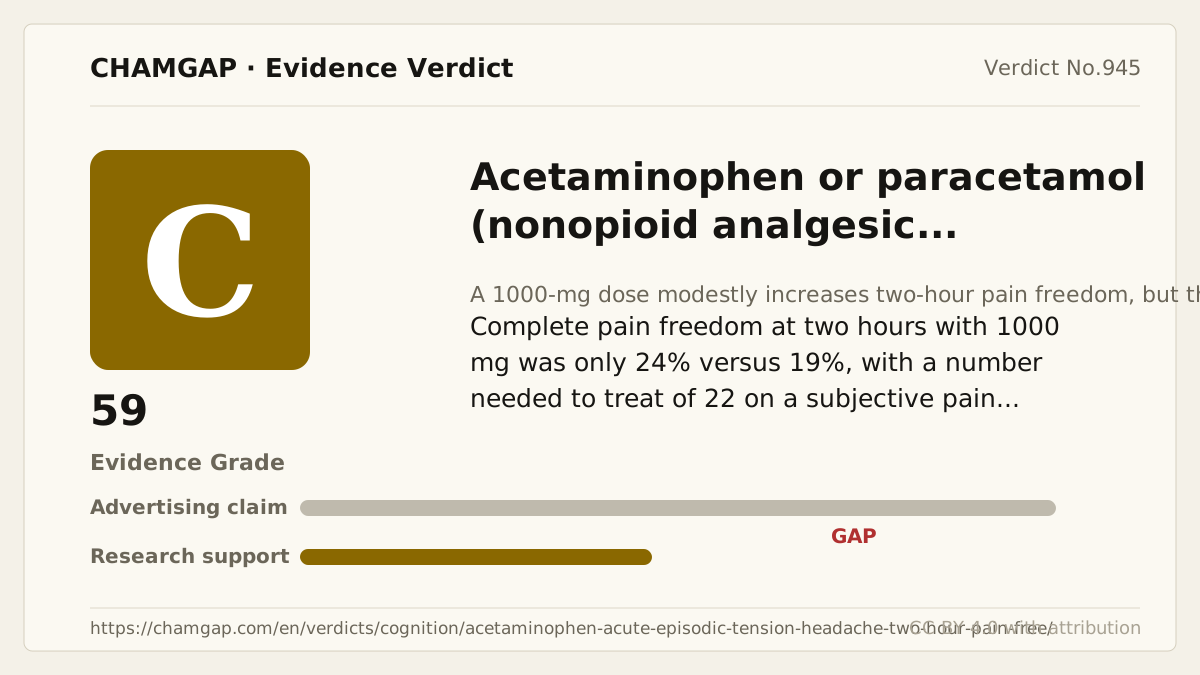
research showsAcetaminophen 1000 mg is rated C. Complete pain freedom at two hours was 24% versus 19% with placebo, a small gain with a number needed to treat of 22, while the one-hour result was null. Because this is a subjective pain endpoint with a small effect, boundary rule ① caps the rating at C. Positive signals for pain-free or mild pain and avoidance of rescue medication keep it above D, yielding 59 points. This indication differs from verdict 546, rated F for sustained osteoarthritis pain.
ads claimClaims of fast and certain headache elimination hide the small absolute difference in complete pain freedom at two hours and the null result at one hour. Single-dose efficacy for an acute tension-type episode must also not be expanded into prevention or causal treatment of chronic recurrent headache.
Useful facts when choosing a product
- The core tension-type headache evidence comes from a single 1000-mg dose used for an acute moderate or severe episode in adults.
- Limited data for 500 to 650 mg did not show clear superiority to placebo, so the 1000-mg result cannot be transferred unchanged to every lower-dose product.
- Cold remedies and combination analgesics can also contain acetaminophen, and duplicate dosing increases overdose-related hepatotoxicity. The product-specific single-dose and daily maximum must be followed.
- Frequent repeated analgesic use can cause medication-overuse headache, while a new sudden severe headache, neurologic signs, or fever with neck stiffness requires urgent assessment rather than self-treatment.
Chamgap Semantic Classification Code
Candidate index · review held
M.acetaminophen-or-paracetamol.UNK.pain-freedom-within-during-an-acute-episodic-tension-type-headache.assess.MULTIMedicinal interventions > Acetaminophen or paracetamol > Unknown > Pain freedom within during an acute episodic tension-type headache > Association or change assessment > Multiple: primary unresolved
An automated migration candidate, not an issued permanent code; exact claim scope remains under review. This machine-generated migration candidate helps retrieval but is not a permanent assignment. The original verdict ID and URL remain authoritative.
What the research actually shows
The Stephens 2016 Cochrane review included 23 trials and 8,079 adults with frequent episodic tension-type headache. For 1000 mg versus placebo, complete pain freedom at two hours had a number needed to treat of 22 across eight trials and 5,890 participants, while pain-free or mild pain had a number needed to treat of 10 across five trials and 5,238 participants; complete pain freedom at one hour did not differ. The Prior 2002 randomized trial found that acetaminophen 1000 mg and naproxen 375 mg both improved six-hour pain-summary outcomes over placebo without differing from one another. The Alnasser 2023 network meta-analysis of 14 trials and 6,521 participants found both acetaminophen and ibuprofen superior to placebo for two-hour pain freedom; the difference between the two drugs was not statistically clear, although the point estimate was slightly larger for ibuprofen.
Why this is classified as C (59)
Across eight trials and 5,890 participants, complete pain freedom at two hours with 1000 mg was 24% versus 19% with placebo, with a number needed to treat of 22, and the one-hour result was null. Boundary rule ① caps this small effect on a subjective pain endpoint at C. Positive pain-free-or-mild and rescue-medication outcomes keep the claim above D, yielding C with 59 points. Short-term tolerability at recommended dosing, overdose hepatotoxicity, and medication-overuse headache are safety issues separate from efficacy.
Counterpoint. Liver disease, heavy alcohol use, undernutrition, and use of other acetaminophen-containing medicines alter safety. Recurrent headache or increasing analgesic-use days calls for diagnostic and medication-overuse assessment rather than continued dose escalation.
Rejudgment record. Cross-check revision — A number needed to treat of 22 for two-hour pain freedom and the small effect on a subjective endpoint invoke the C ceiling under boundary rule ①, while positive pain-relief signals place the result at the top of C
Sub-claim grades by effect
This ingredient is marketed for several effects. A single overall grade blends strong and weak claims together, so each effect is graded separately here. The overall grade reflects the strongest disconfirming or core claim.
| Effect (sub-claim) | Grade | Basis |
|---|---|---|
| Complete pain freedom at two hours in acute episodic tension-type headache | C | Complete pain freedom with 1000 mg was 24% versus 19% with placebo, a small effect with a number needed to treat of 22 that invokes the C ceiling for a subjective pain endpoint. |
| Pain-free or mild pain at two hours in acute episodic tension-type headache | C | Across five trials and 5,238 participants, a number needed to treat of 10 provides a pain-relief signal above D, while the limitations of a single-dose subjective endpoint remain. |
| Reduced rescue-analgesic use in acute episodic tension-type headache | C | Across six trials and 1,856 participants, the number needed to treat to prevent rescue-medication use was 7.8, while frequent repeated use carries medication-overuse-headache risk. |
Cross-check — AI research and Codex final gate
Evidence Table
| Study | Design | Sample | Funding | Endpoint | Result | Weight |
|---|---|---|---|---|---|---|
| Stephens G et al. 2016 | Cochrane systematic review and meta-analysis of randomized double-blind placebo-controlled trials | 23 trials and 8,079 participants; eight trials and 5,890 participants for two-hour complete pain freedom | Cochrane review with reviewer conflicts disclosed and mixed sponsorship across included trials | Complete pain freedom at two hours, pain-free or mild pain, rescue-medication use, and adverse events | For 1000 mg, numbers needed to treat were 22 for complete pain freedom, 10 for pain-free or mild pain, and 7.8 for avoiding rescue medication; the one-hour result was null. | Key high-quality direct synthesis |
| Prior MJ et al. 2002 | Multicenter randomized double-blind placebo- and active-controlled single-dose trial | 757 adults with moderate-to-severe tension-type headache | Product evaluation with investigators from McNeil Consumer & Specialty Pharmaceuticals | Six-hour pain-intensity and pain-relief summaries and two-hour response | Both 1000 mg and naproxen 375 mg were superior to placebo, with no significant difference between the active treatments. | Large direct single-dose randomized trial |
| Alnasser A et al. 2023 | Systematic review and network meta-analysis of randomized trials | 14 trials and 6,521 participants | Academic research with mixed sponsorship among included trials | Complete pain freedom at one and two hours, rescue medication, and adverse events | Odds ratios for two-hour pain freedom were 1.62 with acetaminophen and 1.73 with ibuprofen versus placebo, with no significant difference between the drugs. | Current active-comparator context |
Receipt — 3 References
All 3 cited sources were verified for existence at the original page (as of 2026-07-21).
Final verification and publication gate: Codex · Evidence date: 2026-07-21 · Corrections: none
Cite this verdict
[Chamgap] Acetaminophen x pain freedom within two hours during acute episodic tension-type headache — Evidence Grade C·59. 3 cited sources checked. Source: https://chamgap.com/en/verdicts/cognition/acetaminophen-acute-episodic-tension-headache-two-hour-pain-free/ · CC BY 4.0CC BY 4.0 — free to use with attribution; do not distort grades, numbers, or verdict meaning.
What this document does and does not do
Chamgap is an information source. It reports what research has and has not confirmed; it does not tell readers what to take or buy. That decision belongs to readers and, when needed, medical or legal professionals. This verdict reflects literature available up to the search date and may change as new research appears. Nothing here is medical advice.