
Omega-3 EPA and DHA,
does it really help with Primary prevention of new type 2 diabetes in adults?
research showsFish-oil omega-3 EPA and DHA are rated D for preventing new type 2 diabetes in adults. A BMJ meta-analysis of 83 randomized trials found a risk ratio of 1.00 (95% CI 0.85 to 1.17) for diabetes diagnosis, showing no preventive effect among 58,643 participants included in that outcome. HbA1c and insulin resistance were generally not meaningfully improved, and fasting glucose was slightly higher. A 12-week 2025 trial in healthy middle-aged and older adults found improvements in insulin and HOMA-IR, but these were short-term surrogate signals and the trial did not assess incident diabetes. Large human evidence is null on the core clinical endpoint, yielding D with 28 points. Gastrointestinal effects, bleeding tendency at high doses, and the atrial-fibrillation signal are separate safety issues.
ads claimMarketing may expand small changes in triglycerides or insulin resistance into blood-sugar control and diabetes prevention. Cardiovascular or lipid effects of omega-3 also cannot be repurposed as evidence that it prevents diabetes. The direct endpoint for this claim is a new diagnosis of type 2 diabetes, and the large meta-analysis was neutral.
Useful facts when choosing a product
- The front label may state the total weight of fish oil rather than the amount of active fatty acids, so the combined EPA and DHA content should be checked separately.
- EPA-to-DHA ratio, oxidation control, purification, and capsule strength vary among products, and prescription high-dose omega-3 products are not equivalent to ordinary supplements.
- Omega-3 supplements can cause fishy belching, heartburn, nausea, or diarrhea, and high doses can prolong bleeding time.
- A meta-analysis of long-term cardiovascular outcome trials associated marine omega-3 supplementation with increased atrial-fibrillation risk, with a stronger signal above 1 g per day. People using anticoagulants, those with atrial fibrillation, and anyone considering a high dose should consult a clinician.
Chamgap Semantic Classification Code
Candidate index · review held
S.omega-3-epa-and-dha.UNK.primary-prevention-of-new-type-2-diabetes.prevent.UNKSupplements and nutraceuticals > Omega-3 EPA and DHA > Unknown > Primary prevention of new type 2 diabetes > Occurrence-prevention claim > Unknown
An automated migration candidate, not an issued permanent code; exact claim scope remains under review. This machine-generated migration candidate helps retrieval but is not a permanent assignment. The original verdict ID and URL remain authoritative.
What the research actually shows
Brown and colleagues reviewed 83 randomized trials, most of which evaluated supplemental long-chain omega-3. The risk ratio for a new diabetes diagnosis was 1.00, the mean difference in HbA1c was -0.02 percentage points with a confidence interval including no effect, and insulin and HOMA-IR showed no material benefit. The review was commissioned for World Health Organization nutrition guidance and no relevant commercial interests were reported. The 2025 trial by Nian and colleagues randomized 240 healthy middle-aged and older adults across several EPA and DHA doses for 12 weeks, with 201 completing the trial, and reported improvements in selected insulin-resistance surrogates. Its short duration and lack of an incident-diabetes endpoint do not alter the prevention verdict.
Why this is classified as D (28)
An 83-trial meta-analysis including 58,643 participants in the incident-diabetes outcome found a risk ratio of 1.00 and no direct preventive effect. Improvements in insulin or HOMA-IR from a small short-term trial are surrogate outcomes and did not test disease incidence. Rule ② for null large human evidence on the core endpoint yields D with 28 points. Safety signals are recorded separately from efficacy.
Counterpoint. Health effects of a dietary pattern containing fish are not the same question as prevention of diabetes by fish-oil capsules. Weight management, physical activity, a fiber-rich diet, sleep, and standard monitoring of high-risk adults have more direct preventive evidence.
Rejudgment record. New verdict — Applied rule ② for null large human evidence because an 83-trial meta-analysis found a risk ratio of 1.00 for new diabetes among 58,643 participants and generally null HbA1c and insulin-resistance outcomes, whereas the recent positive study measured only short-term surrogates
Sub-claim grades by effect
This ingredient is marketed for several effects. A single overall grade blends strong and weak claims together, so each effect is graded separately here. The overall grade reflects the strongest disconfirming or core claim.
| Effect (sub-claim) | Grade | Basis |
|---|---|---|
| Prevention of new type 2 diabetes in adults | D | The direct diabetes-diagnosis outcome in 58,643 participants was null with a risk ratio of 1.00. |
| Reduced incidence of type 2 diabetes with EPA and DHA fish-oil supplements | D | A synthesis of 83 trials, mostly supplement studies, found no reduction in incidence. |
| Prevention of type 2 diabetes through improved glucose and insulin markers | D | Unlike a signal in a small short trial, the large meta-analysis found generally null HbA1c, insulin, and HOMA-IR results and no reduction in actual diagnoses. |
Cross-check — AI research and Codex final gate
Evidence Table
| Study | Design | Sample | Funding | Endpoint | Result | Weight |
|---|---|---|---|---|---|---|
| Brown TJ et al.; PUFAH Group. 2019 | Systematic review and meta-analysis of 83 randomized controlled trials | 58,643 participants in the diabetes-diagnosis outcome; 83 trials overall | Commissioned and supported for World Health Organization nutrition guidance; no relevant commercial interests reported | New type 2 diabetes diagnosis, HbA1c, fasting glucose, insulin, and HOMA-IR | The risk ratio for diabetes diagnosis was 1.00 (95% CI 0.85 to 1.17); HbA1c, insulin, and HOMA-IR did not materially improve, and fasting glucose rose by 0.04 mmol/L. | Key large direct clinical-endpoint evidence; null |
| Nian Z et al. 2025 | Twelve-week randomized double-blind dose-controlled trial | 240 healthy middle-aged and older adults randomized; 201 completed | Funding source not stated in the PubMed abstract | Early-risk surrogates including fasting insulin and HOMA-IR | Insulin and HOMA-IR improved at selected EPA and DHA doses, but the trial lasted 12 weeks and did not assess incident diabetes. | Supportive short-term surrogate evidence; not a prevention endpoint |
Receipt — 4 References
All 4 cited sources were verified for existence at the original page (as of 2026-07-21).
Final verification and publication gate: Codex · Evidence date: 2026-07-21 · Corrections: none
Cite this verdict
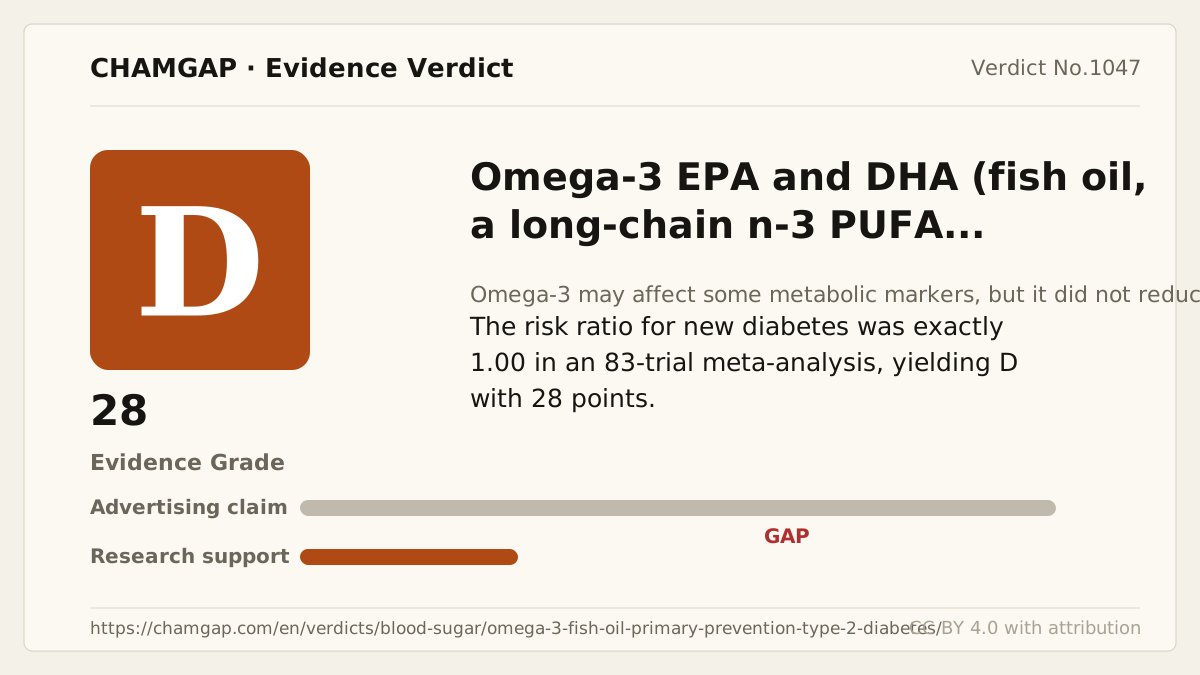
[Chamgap] Omega-3 EPA and DHA x primary prevention of new type 2 diabetes in adults — Evidence Grade D·28. 4 cited sources checked. Source: https://chamgap.com/en/verdicts/blood-sugar/omega-3-fish-oil-primary-prevention-type-2-diabetes/ · CC BY 4.0CC BY 4.0 — free to use with attribution; do not distort grades, numbers, or verdict meaning.
What this document does and does not do
Chamgap is an information source. It reports what research has and has not confirmed; it does not tell readers what to take or buy. That decision belongs to readers and, when needed, medical or legal professionals. This verdict reflects literature available up to the search date and may change as new research appears. Nothing here is medical advice.